
Vandaag of morgen in huis

Kwaliteit gegarandeerd

Welkomstaanbiedingen ontgrendelen: GRATIS bezorging | Tot 80% korting | Gratis 30 dagen JoyPlus-proefperiode
Download de app
A rubber basketball may seem straightforward to choose, but small differences can have a big impact on comfort and durability. A ball that’s too large for a child will feel heavy. One with little grip can be difficult to control on wet surfaces. And a ball supplied without a pump means an extra expense straight away.
So watch out for these three common pitfalls:
The official basketball size depends on its circumference, the player’s age and how it will be used. Use this guide:
Age isn’t the only factor. Consider hand size, playing experience and any competition requirements too. A smaller ball can give a child who’s learning to dribble more control. For official training sessions, it’s best to follow the size requirements of the club or competition.
A rubber basketball is a practical choice for asphalt, concrete, driveways, playgrounds and parks. Its outer layer can withstand regular contact with rough surfaces. A dimpled surface and deep grooves can help with grip and dribbling.
It’s worth knowing the difference between:
Claims about better bounce or long-lasting air pressure should be viewed in context. According to Longsail’s own product information, certain models are designed to retain air for around 48 hours when inflated correctly. This is a claim made by the brand, not an independent test result. So check the ball’s pressure and shape regularly after buying it.
Training basketballs are often supplied without accessories. This can make buying one less convenient if you don’t already have the equipment you need. According to their product descriptions, several Longsail models come with:
A basketball with a pump is handy for use at home, school or your club. A basketball with a carry bag is particularly useful when you’re taking it to a court, beach or swimming pool.
The product information recommends an inflation pressure of 7–9 PSI for certain models. Always use the recommended pressure for the specific product. Clean the ball with a damp cloth and store it somewhere cool and dry. Even a water-resistant basketball can be damaged by prolonged exposure to direct sunlight, heat or sharp surfaces.

Why it suits this profile: Size 3 is manageable for young players and comes as a complete set with a pump, needles and carry bag.
The smaller size means a young player won’t have to start out with a ball that’s too heavy. The product description says it can be used indoors, outdoors and on wet surfaces.
Approximately 57 cm in circumference, rubber outer layer, hand pump, two needles and carry bag, according to the product information.
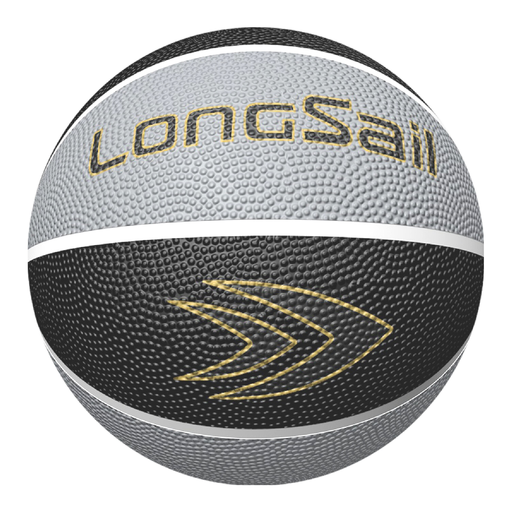
Why it suits this profile: This model is a good match for young players looking for a size 5 ball for training and recreational matches.
The product information mentions a textured surface and deep grooves. This makes it clearer what the grip claim is based on than it would be with a smooth ball.
Size 5 with a circumference of approximately 70 cm, rubber construction, hand pump, needles and carry bag, according to the product listing.
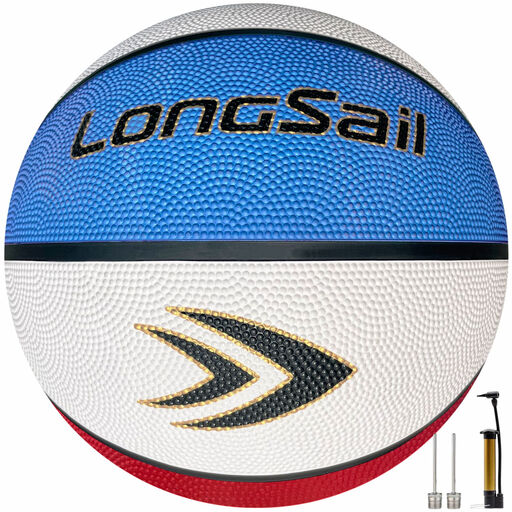
Why it suits this profile: Size 7 is suitable for older teenagers and adults using a rubber basketball on a court, driveway or during outdoor training.
The size is clearly listed as 29.5 inches and approximately 75 cm. According to the product description, the rubber outer layer is designed for use on a range of surfaces.
Official size 7 according to the product listing, textured surface, pump, two needles and carry bag.
We’ve put together a complete, up-to-date list of products that meet these strict selection criteria and the applicable European safety regulations.
It varies by model. The product information for several of the products listed recommends 7–9 PSI. Use a suitable pump with a needle and check that the ball keeps its shape. An underinflated ball bounces less predictably, while one that’s overinflated may feel uncomfortable.
Its lifespan depends on the surface, how often and intensely it’s used, how it’s stored and its air pressure. Asphalt and concrete generally cause more wear than a smooth sports floor. Clean the ball, don’t leave it in the sun for long periods, and check it regularly for cracks, misshaping and valve damage.
Often, yes, but always check the product description. A rubber ball is a practical outdoor basketball and can also be used in a sports hall. The feel of a composite or leather ball may be different for intensive indoor play. If you’re looking for one ball to use in different places, focus on its grip, size, care requirements and the surfaces it’s listed as suitable for.
