
Maker with a small workspace
Wants to make project files available locally and checks in advance that the router, external drive and cables will all fit.


For project files on your own network, a router with supported USB storage and local file sharing may be enough, provided the router, drive and cables all fit together. Choose separate network storage if the router’s features or user settings don’t suit the way you collaborate. Either way, keep a separate backup, as shared storage isn’t automatically a backup.
Wants to make project files available locally and checks in advance that the router, external drive and cables will all fit.
Needs access from several devices and checks which local sharing method and user permissions the chosen model offers.
Prioritises access security, router updates and a separate backup. VeiligInternetten recommends regularly backing up important files elsewhere.
Suitable for: files that mainly need to be available on the same home or work network, provided the model supports your chosen drive and sharing method.
Bear in mind: the drive, plug and cables also take up space, and you’ll still need a separate backup.
Suitable for: teams that need separate user groups or more control than basic USB sharing offers.
Bear in mind: extra settings require management and may take up more space; Synology lists the RT6600ax as 175 × 320 × 200 mm with its antennas upright.
Suitable for: situations where your storage, collaboration or backup needs go beyond the USB features of a particular router model.
Bear in mind: a separate storage device needs extra space and a connection; don’t assume it will always be faster than every router.
| Consideration | What should you check? | Who is this important for? |
|---|---|---|
| Space and USB storage | Check that USB storage and your preferred local sharing method are supported. Measure the space available for the router, drive, plugs and cables. | If I want to share files locally without a large device taking up space on my desk, I look at the complete setup; around 36% of consumers prioritise space and easy sharing. |
| User permissions | Check which accounts and sharing permissions are available, and whether the devices you use can access them. | For a small team, I want to share files without giving everyone the same access; around 29% of consumers give collaboration and permissions top priority. |
| Network connections | Compare the USB and LAN ports on the exact model and work out which devices can be connected by cable. | If files need to be copied between devices, I want to know which connections my setup offers; around 21% of consumers prioritise useful network connections. |
| Security and backup | Check the access settings and update process. Also plan a backup in a separate location. | For important project files, I want to prevent loss and unwanted access; around 14% of consumers give data protection top priority. |
You’ll need to connect the USB drive too. The router’s dimensions don’t tell you how much room the whole setup needs.
Measure the space available in advance, allowing for the position of the drive, plugs and cables.
Being able to open files from several computers is not the same as keeping a backup. If the shared drive fails, you could lose that one storage location.
Decide where and how often you’ll back up your files in addition to the shared working drive.
Local file sharing and access over the internet are different ways of connecting. TP-Link makes this distinction in its description of the USB sharing feature too.
Use local sharing if you only need access on the same network. Consider separately whether you need remote access and how you’ll secure it.
FRITZ! describes the FRITZ!Box 4060 as a router that connects to a modem or an existing internet connection; it doesn’t have a built-in DSL, cable or fibre-optic modem.
Before replacing any equipment, check what role your provider’s device currently serves and which connection settings you’ll need for your own router.
You may need to keep your existing modem and configure the new router separately.
TP-Link Netherlands lists a USB 3.0 port for sharing on the Archer AX73. TP-Link also describes local SMB access for routers that support the relevant USB feature.
The Dutch specifications for the RT-AX58U list USB 3.2 Gen 1, Samba Server and shared folder permissions.
FRITZ! describes the FRITZ!Box 4060 as a router with NAS functionality, USB storage and access via protocols including SMB.
Synology describes USB storage management via SRM and settings for separate networks on the RT6600ax.
This selection includes compact or portable Wi-Fi routers. Before choosing one for project files, check whether the exact model supports USB storage and your preferred local sharing method.
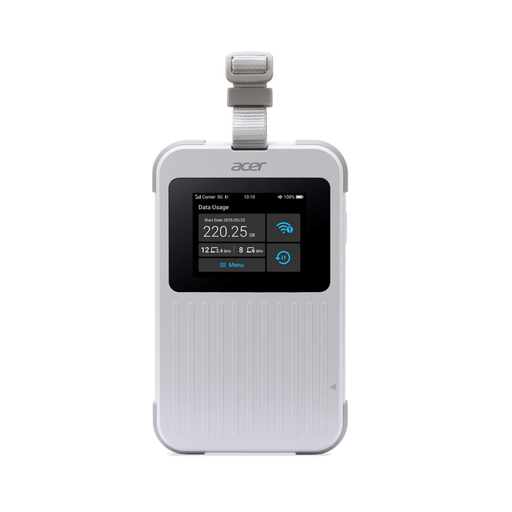 Image unavailable
Its portable design could suit a small or mobile Wi-Fi setup. Before choosing it for your project files, check that it supports the USB storage and local sharing you need.
The product description lists dimensions of 16,7 × 106 × 66 mm and microSD support up to 32 GB. Memory card support alone doesn’t confirm that the router can share files.
 Image unavailable
The listed dimensions can help you work out whether this router will fit in a small workspace. Check separately whether the exact model is suitable for the file sharing you need.
The product details list Wi-Fi 6, three 1Gbps Ethernet ports and dimensions of 190 × 126 × 45 mm.
 Image unavailable
Its portable size suits a mobile Wi-Fi setup. Check that the model offers the USB storage and local sharing method you need for your project files.
The product description lists dimensions of 16,7 × 106 × 66 mm and microSD support up to 32 GB. Support for a memory card doesn’t automatically mean that files can be shared through the router.
No. Check whether the exact model supports USB storage and your preferred local sharing method. TP-Link explicitly lists USB sharing for the Archer AX73.
First set up the USB sharing feature, then configure access permissions. TP-Link recommends Secure Sharing for the method described; the available permissions and steps vary by model.
No. Keep a separate backup too, for example on another external drive or with a suitable cloud service. VeiligInternetten recommends regularly storing important files somewhere else.
According to ACM ConsuWijzer, you’re free to choose your own router. A provider may refuse your own device under the stated conditions if it’s unsafe; ask for the connection settings you need and keep your router up to date. The right connection depends on your internet service.
Radio equipment must meet the applicable European requirements and carry the CE mark. According to the Dutch Inspectorate for Digital Infrastructure, stricter RED cybersecurity requirements also apply to relevant wireless equipment placed on the European market from 1 August 2025. Check the requirements for the specific item; general model specifications don’t automatically confirm that it meets every applicable requirement.