When choosing a roll for a school holiday lunch, don’t rely on the search term ‘thick cut’: it doesn’t give you a useful measure of the roll’s thickness or firmness. First decide which type of bread and preparation method suit your lunch, then compare the weight per roll, ingredients, allergens and pack instructions. How easy a roll is to fill also depends on the filling you plan to use.
Who are these choices relevant to?
Parents who pay attention to the type of bread
When choosing lunch for their children, they compare wholemeal labelling, ingredients and fibre per 100 g. The Netherlands Nutrition Centre provides information about bread choices for children aged 4 to 12; the name ‘thick cut’ tells you nothing about a roll’s nutritional information.
Families looking for a roll that’s easy to fill
For lunch or a snack with a firm or juicy filling, they want to know whether the roll is easy to handle. Weight per roll and preparation method can help when comparing products, but they don’t prove how well a roll will hold that filling.
Families who plan lunches in advance
If you want to prepare rolls on different days, check how many are in the pack, the storage instructions and how to prepare bake-at-home or frozen rolls.
What should you look for when choosing?
First choose the type of bread for your lunch, then check whether the size, preparation method and pack size fit your plans. Wholemeal, multigrain and white describe the type of bread; frozen describes how a product is stored, so a frozen roll can also be a particular type of bread.
| What to consider | Check | Who is this important to? |
|---|
| Type of bread and nutritional information |
Read the product name and ingredients, and check the fibre per 100 g. Don’t assume multigrain means entirely wholemeal. |
If I want to pay attention to the type of bread in my child’s lunch, I compare what’s actually in the roll. Around 33% of consumers put this first. |
| Size and filling |
Compare the weight per roll and look at its shape; decide for yourself how well it works with your chosen filling. |
With a firm or juicy filling, I mainly want a roll that’s easy to fill and hold. This is the main priority for around 27% of consumers. |
| Preparation and storage |
Check whether the rolls are ready-baked or frozen, and follow the preparation and storage instructions on the pack. |
When lunch plans vary, I want to be able to prepare rolls on the day I need them. This flexibility comes first for around 20% of consumers. |
| Pack size |
Compare the number of rolls with the number of lunches you have planned, and check how to store any leftovers. |
If not everyone is having lunch every day, I want to avoid leaving rolls unused. Around 20% of consumers say this kind of planning is their top priority. |
Common mistakes
-
Assuming multigrain means wholemeal
The name multigrain tells you that more than one type of grain has been used, not that the whole roll is entirely wholemeal. PLUS lists 56% wholemeal wheat flour in its multigrain rolls, among other ingredients; don’t assume other products have the same composition.
To compare types of bread, read the ingredients and compare the fibre values on the same basis, for example per 100 g.
-
Using ‘thick cut’ as a measure of firmness
This search term doesn’t tell you how thick a roll is or how well it holds a heavy or juicy filling. Weight per roll isn’t a measure of firmness either.
Compare the type of bread, size and preparation method. If the filling is a key consideration, try one roll first to see how easy it is to handle.
-
Guessing allergens from the colour of the bread
A white, brown or multigrain label doesn’t tell you which allergens are present in a particular roll. Ingredients and warnings can also vary between products.
If you have an allergy, always check the current ingredients and allergen information on the pack you’ve chosen.
-
Refreezing frozen rolls after defrosting
Jumbo says that its brown frozen rolls must not be refrozen after defrosting.
Plan how many rolls you need and follow the storage instructions for the product you buy.
Brands and ranges to consider
Albert Heijn
A useful comparison of individual wholemeal rolls with different weights per roll.
- Albert Heijn describes its wholemeal roll as made with 100% wholemeal flour and lists it at 70 g each; according to the product information, the Liefde & Passie sourdough wholemeal roll weighs 115 g.
- These weights tell you nothing about slice thickness or how well a roll holds its filling. Check the current pack for ingredients and allergen information.
Jumbo
A range to consider if you’re comparing different bake-at-home and frozen rolls.
- Jumbo offers white, multiseed and brown frozen rolls, among other options. It also provides instructions for using its brown frozen rolls after defrosting.
- The type of bread and storage instructions vary by product, so check the pack you choose.
PLUS
A useful comparison of the ingredients and nutritional information for white and multigrain bake-at-home rolls.
- PLUS lists 56% wholemeal wheat flour and 7 g of fibre per 100 g for its multigrain rolls. Its white rolls contain 2.7 g of fibre per 100 g.
- These values apply to the products listed, not every multigrain or white roll. Always follow the preparation instructions on the individual pack.
Dirk
A useful comparison of packs containing four white or rustic multigrain rolls.
- Dirk lists four rolls with a total weight of 300 g for both of the packs mentioned.
- A description such as ‘rustic’ doesn’t tell you how well the roll will hold its filling.
Lidl
A range to consider if you’re looking for in-store baked rolls or white rolls to bake at home.
- Lidl lists a white roll in its in-store bakery range, as well as 700 g packs of white rolls for baking at home.
- The in-store bakery range can vary between branches. For nutritional and allergen information, check the details for the product you choose.
Rolls at Joybuy
These white rolls are a simple option if you’re looking for something to serve at lunch or as a snack. Check for yourself whether the size and preparation method suit your filling and lunch plans.
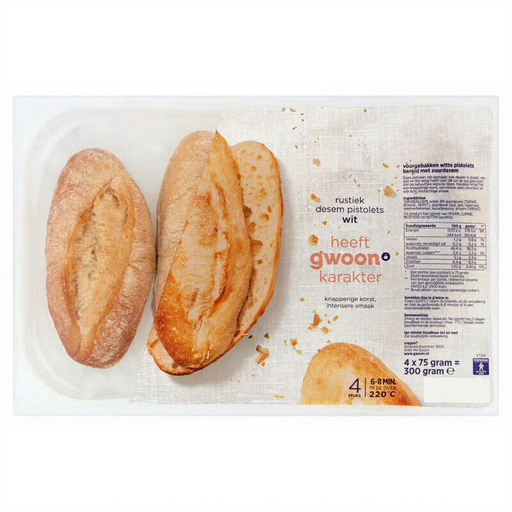 Image unavailable
g'woon white rustic rolls, 4 pack
A white roll for anyone looking for something to serve at lunch or as a snack.
The pack contains four rolls. The available ingredients information lists wheat flour, 8% sourdough and iodised salt. If you have an allergy, check the current pack. You should also check the weight per roll, preparation method and whether it’s suitable for a heavy or juicy filling.
View at Joybuy
Frequently asked questions
Does ‘thick cut’ mean a roll is firmer?
No. On its own, the term doesn’t tell you how thick or firm a roll is. Compare the size and type of bread, and if you’re using a heavy or juicy filling, see how the roll holds up in practice.
Is a multigrain roll also wholemeal?
Not necessarily: multigrain and wholemeal describe different qualities. Read the ingredients for the roll you’ve chosen, and only compare fibre values when they’re given on the same basis, such as per 100 g.
Can I cook a bake-at-home roll in an air fryer?
It depends on the instructions for the product you’ve chosen. PLUS gives both oven and air fryer instructions for the rolls it reviewed; don’t assume the temperature and cooking time are the same for a different roll.
Does every roll contain iodine?
Don’t assume it does: check the salt listed in the ingredients for the roll you’ve chosen. The Netherlands Nutrition Centre highlights the importance of baker’s salt as a source of iodine in bread; the Dutch term for baker’s salt refers to iodised table salt.
What should I check if I have an allergy?
Read the current allergen information on the specific pack. Ingredients and warnings about the possible presence of allergens can vary between rolls, so don’t try to work this out from the bread’s colour or product name.


