What factors determine the choice?
White, wholemeal and multigrain rolls meet different needs. First, choose the type of bread based on what you want to offer, then check that the products you select will work in your canteen. The considerations below reflect the main priorities of people choosing rolls for a staff canteen.
Wholemeal rolls
Choose these when: wholemeal bread should be the basis of your lunch menu. According to the Netherlands Nutrition Centre, wholemeal grain products contain more fibre than white varieties made with refined flour.
Bear in mind: some staff may prefer the flavour or texture of a white roll.
White rolls
Choose these when: you want to offer a separate option for people who prefer white bread, alongside wholemeal.
Bear in mind: if fibre is a purchasing priority, a white roll cannot replace a wholemeal option.
Multigrain rolls
Choose these when: you want to offer an additional option made with several types of grain.
Bear in mind: multigrain does not automatically mean wholemeal; the product name and ingredients determine what you are offering.
| What to consider |
What to check when buying |
Who this matters to |
| Fibre and type of bread |
Check that the roll is labelled as wholemeal and compare fibre per 100 g or on the same portion basis. |
If fibre is a priority for my lunch menu, I want to be able to identify wholemeal rolls without relying on their brown colour. This is the top priority for roughly 42% of these consumers. |
| Flavour and choice |
See whether a separate white option would work alongside wholemeal; assess multigrain rolls by their own ingredients and product name. |
For a lunch buffet, I also want to offer something to staff who prefer a white roll. This freedom of choice is the top priority for around 33% of consumers. |
| Preparation and product information |
Check the oven instructions and storage information on the packaging, along with the latest ingredient and allergen information. |
During the lunch rush, I need to prepare the rolls on time and provide accurate product information. For around 25% of consumers, practical considerations like these are the main concern. |
A white roll as an additional option
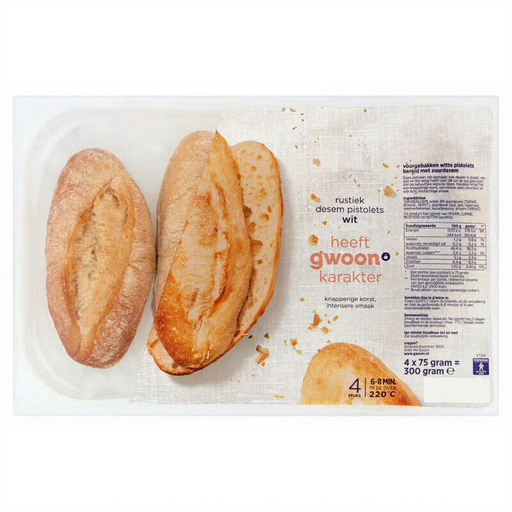
This white roll is suited to a canteen that wants to offer a white option alongside a separately chosen wholemeal one. Check the packaging and preparation method before adding the rolls to your lunch plan.
 No image available
g'woon White Rustic Pistolet, pack of 4
A white option for staff who want a white roll alongside the wholemeal selection. The product name states that there are four rolls per pack; check the latest packaging for preparation instructions, storage information and allergens when planning lunch.
View at Joybuy
Frequently asked questions
Is a multigrain roll the same as a wholemeal roll?
No, multigrain does not automatically mean wholemeal. Check the product name and ingredients. If you are choosing with fibre in mind, compare the nutritional information on the same basis too.
What allergen information should a canteen check for rolls?
Check the latest allergen information for every roll you serve, even if the rolls look similar. Use the information for the specific product to answer staff questions, and do not assume a product is suitable for a particular diet based on the name of the bread.
How should you store opened packs of bake-at-home rolls?
First, follow the storage instructions on the packaging for the rolls you have chosen. As a general guideline for opened packs of bake-at-home rolls, the Netherlands Nutrition Centre recommends 2–4 days in the fridge and 1–3 months in the freezer. Match your order to the pack size and planned use.
Does every roll contain iodine from baker’s salt?
No, do not assume that baker’s salt has been used in every roll. According to the Netherlands Nutrition Centre, bakers are not required to use baker’s salt. Check the ingredients for the product you have chosen or ask the supplier which salt has been used.


