
Host catering for fussy eaters
If not everyone at the table wants the same bread with their split pea soup, serve white and wholemeal rolls separately so they’re easy to tell apart. Everyone can then choose the type they prefer.


If you’re catering for a group with different tastes, serve white and wholemeal rolls side by side so no one has to settle for a roll that isn’t right for them. If you only want to buy one type and a wholemeal base is your priority, check the ingredients and fibre per 100 g; the word ‘multigrain’ alone doesn’t tell you enough. Whatever you choose, check the allergens, preparation instructions and whether the product contains iodised salt or baker’s salt.
If not everyone at the table wants the same bread with their split pea soup, serve white and wholemeal rolls separately so they’re easy to tell apart. Everyone can then choose the type they prefer.
If you’re looking for a roll with a wholemeal base, look beyond the name on the front of the pack. The ingredients and fibre per 100 g can help you compare specific products.
If you want to bake the rolls just before eating, the pack instructions will tell you when to get started. For frozen rolls, you’ll also need to check the defrosting and storage instructions.
First, decide whether your choice of rolls for split pea soup will be guided by different tastes, a confirmed wholemeal base or when you plan to serve the meal. Then check the packaging of the rolls you want to buy.
| What to consider | What to check before buying | Who is this important to? |
|---|---|---|
| Different preferences | Choose white and wholemeal rolls separately, and keep the two types clearly distinguishable. | If not everyone at the table wants the same bread, I can offer both types without choosing for anyone else. For around 33% of consumers, having that choice comes first. |
| Wholemeal base and fibre | Read the ingredients and compare the fibre per 100 g shown on the pack; assess multigrain rolls individually. | I want to know whether my roll genuinely has a wholemeal base, even if it says ‘multigrain’ on the pack. Around 42% of consumers say this clarity is their top priority. |
| Serving warm | Check the cooking time and, for frozen products, the instructions for after defrosting. | When the soup is nearly ready, I want to know when the rolls need to go in the oven or air fryer. Timing is the main concern for around 17% of consumers. |
| Where to shop | See which type is available at your chosen shop, then check the packaging of the specific product. | I want to be able to choose white or wholemeal rolls as part of my usual shop. For around 8% of consumers, this practical choice of shop matters most. |
Multigrain refers to different types of grain; it doesn’t necessarily mean the product has a wholemeal base. According to the Netherlands Nutrition Centre, multigrain bread contains at least three types of grain.
Read the ingredients and compare the fibre per 100 g. For example, PLUS lists 56% wholemeal wheat flour and 7 g of fibre per 100 g for its multigrain rolls. Check other rolls against their own packaging.
According to the Netherlands Nutrition Centre, bread does not have to be made with baker’s salt. So you can’t tell whether it has been used just from the labels white, wholemeal or multigrain.
For packaged rolls, check the ingredients for ‘baker’s salt’ or ‘iodised salt’. If you’re buying unpackaged bread, ask which salt has been used.
According to the product information, Jumbo Frozen White Rolls must not be refrozen after defrosting and should be prepared and eaten within 24 hours.
Read the instructions for your chosen product before taking rolls out of the freezer, and make sure you have the right amount for your soup meal.
If you defrost rolls but don’t use them in line with the storage and preparation instructions, you may not be able to keep them for another soup meal.
The individual AH White Roll and AH Wholemeal Roll make it easy to compare the same type of product; according to Albert Heijn, both weigh 70 g each.
Jumbo offers several types of bake-at-home and frozen rolls, including white and multigrain varieties.
PLUS offers white and multigrain bake-at-home rolls in 300 g bags, so you can compare them pack by pack.
Dirk offers white and multigrain rolls from 1 de Beste, both sold in packs of four.
ALDI offers an individual white roll for anyone at the table who prefers white bread.
Lidl offers bread rolls, bread baps and bake-at-home bread in its bakery range.
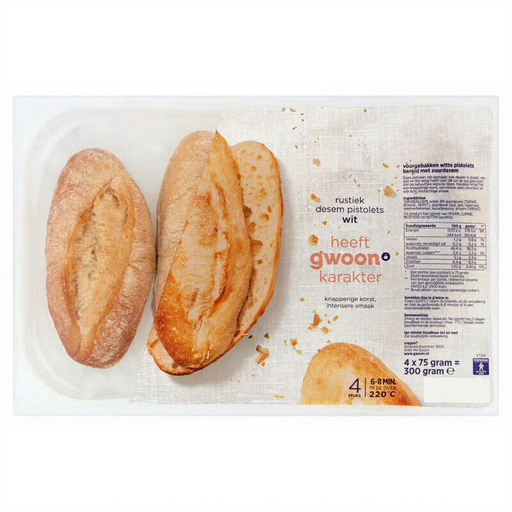
This white roll is a good fit for the part of the bread basket set aside for anyone who prefers white bread. If you want to offer both white and wholemeal, choose a separate roll with a confirmed wholemeal base.
 No image available
A white option for a table where you also want to offer wholemeal rolls separately.
Pack size: 4 rolls. If you want to serve them warm, check the preparation instructions on the pack.
Serve white and wholemeal rolls side by side if people at the table have different preferences. If you want just one type and a wholemeal base matters most to you, read the ingredients and compare the fibre per 100 g; you’ll need to check multigrain rolls in the same way.
Not necessarily: ‘multigrain’ and ‘wholemeal’ don’t mean the same thing. According to the Netherlands Nutrition Centre, multigrain bread contains at least three types of grain. Check the pack to see which flours and how much fibre a specific roll contains.
No. According to the Netherlands Nutrition Centre, bread does not have to be made with baker’s salt. For packaged rolls, look for ‘baker’s salt’ or ‘iodised salt’ in the ingredients list; if you’re buying unpackaged bread, ask.
Follow the instructions on the pack you choose. PLUS recommends baking its white and multigrain rolls for 8–10 minutes in an oven at 220 °C, or for 4 minutes in a preheated air fryer at 200 °C. These timings don’t necessarily apply to other products.
Check the current allergen information for every roll you serve. The AH white and wholemeal rolls described contain wheat and gluten; the PLUS multigrain rolls described contain wheat, rye, barley and oats, and may also contain soya, milk and sesame.