
Regular buyer who bakes at home
If you eat rolls often and use an oven or air fryer, start by looking at packs that state the weight and number of rolls. Also check how many you’re likely to use.


For regular use, packaged part-baked rolls are a practical choice if you can bake them at home. If you want to serve them straight away, look for fresh rolls. Multigrain and sourdough do not, in themselves, tell you how much wholegrain or fibre a roll contains, so check the ingredients and nutritional information for the specific variety.
If you eat rolls often and use an oven or air fryer, start by looking at packs that state the weight and number of rolls. Also check how many you’re likely to use.
If you want to serve the rolls straight away, a fresh roll is a different choice from a pack that still needs baking. Sourdough is one option for that kind of occasion, but it doesn’t tell you how another product is prepared.
For multigrain or multiseed rolls, the name and colour don’t tell you exactly how much wholegrain the product contains. Check the ingredients, fibre per 100 g and allergen information for the specific roll.
First decide whether you want to bake the rolls or serve them straight away. Then compare the quantity you need and, if the ingredients matter to you, check the label for the variety you’ve chosen.
| What to consider | What to check | Who it matters to |
|---|---|---|
| Quantity for everyday use | Weight, number of rolls and whether you need to bake them at home. | If I eat rolls regularly, I want to choose a pack I can use all of. For around 42% of consumers, quantity comes first. |
| Ready to serve | Whether the rolls are sold fresh and when you plan to eat them. | For breakfast or lunch with guests, I don’t want to have to bake them first. The occasion is the deciding factor for around 33% of consumers. |
| Ingredients and allergens | Wholegrain claims, fibre per 100 g and allergen information for the specific variety. | When I choose a multigrain roll or need to avoid an allergen, I want to know what’s actually in it. Checking the ingredients comes first for around 25% of consumers. |
A roll sold individually and a 300 g pack don’t tell you the same thing about quantity. There’s also a difference between rolls you can eat straight away and those you still need to bake at home.
For packaged rolls, check the weight and number of rolls. For a single roll, consider the occasion you’re buying it for.
The grain mix varies from product to product. PLUS states that its multigrain rolls contain 56% wholemeal wheat flour; Jumbo lists both wheat flour and wholemeal wheat flour in its Multiseed rolls.
Look for a wholegrain claim in the ingredients list, then compare the fibre per 100 g.
According to the Voedingscentrum, using baker’s salt when baking isn’t compulsory. So a claim on one pack doesn’t automatically apply to other rolls.
If the iodine content matters to you, check the label for the specific variety for iodised salt or baker’s salt.
Ordinary white and multigrain rolls can contain allergens too. Ingredients and information about possible cross-contamination vary by product.
Before eating, read the current allergen information on the packaging, even if you’ve bought the product before.
These ranges show the different options available, from individual fresh rolls to packaged varieties. Check the current ingredients and preparation method for each product.
Fresh white and wholemeal rolls, alongside Liefde & Passie sourdough varieties.
Part-baked rolls, including white, multiseed, frozen and sourdough varieties.
A white wheat roll available fresh in store.
An individual roll for eating straight away.
White and multigrain part-baked rolls, plus a separate gluten-free variety.
1 de Beste white and multigrain part-baked rolls, both sold in packs of four weighing 300 g.
This pack of four white rolls could suit anyone looking for rolls for breakfast or lunch. Check the preparation method before choosing them to serve straight away.
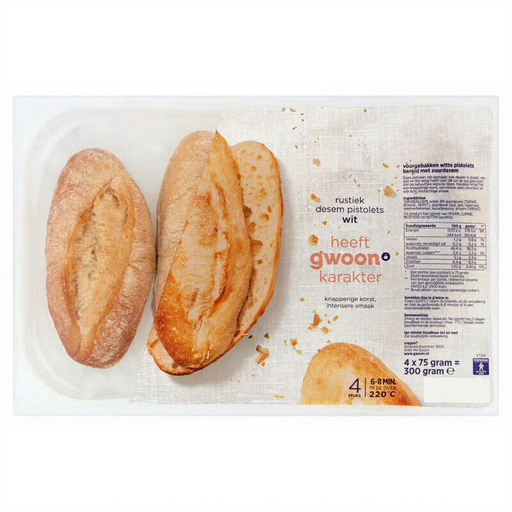 Image unavailable
A pack of white rolls for breakfast or lunch, with four rolls to enjoy.
Check the packaging to see whether they need baking, and read the latest ingredients and allergen information.
No. The name multigrain doesn’t tell you how much wholegrain a roll contains. PLUS states that its multigrain rolls contain 56% wholemeal wheat flour; always check the ingredients list for any other variety.
No. According to the Voedingscentrum, using baker’s salt when baking isn’t compulsory. Check the label for the specific roll if you want to know whether iodised salt has been used.
Read the ingredients and allergen information for the specific variety, including any statements about possible cross-contamination. Don’t rely on the words white, multigrain or gluten-free alone; check the current packaging too.
Choose a pack you can use in full and follow the storage instructions. For the Jumbo frozen rolls mentioned, Jumbo advises that you don’t refreeze them after defrosting and that you prepare and eat them within 24 hours.