What should you look for when choosing?
Before your fakeaway night, decide which feature of the roll matters most to you. Then use the packaging to compare the type of bread, nutritional value and preparation method of specific products.
| What to consider |
What to look for |
Who it matters to |
| Bread style and crust |
Check the type of bread and ingredients, such as sourdough, and follow the baking instructions for the product you choose. |
If you want the roll to give your meal a rustic feel, focus on its style and preparation. Around 36% of consumers put this bread experience first. |
| Fibre and ingredients |
Compare the wholemeal flour content and fibre per 100 g; if you wish, check whether iodised salt is listed in the ingredients. |
If you’re serving a generously filled meal, you may want to see which roll best suits your preferences for fibre and ingredients. This is the main consideration for around 29% of consumers. |
| Easy-bake convenience |
Check the instructions for your oven or air fryer, as well as the product’s storage instructions. |
If everything needs to be ready at the same time, you’ll want to know whether the rolls can be ready in time. Predictable preparation comes first for around 21% of consumers. |
| Pack size |
Check how many rolls are in the pack and how to store any unused rolls according to the packaging. |
If you’re making a small meal, you may not want to open more rolls than you need. That’s why around 14% of consumers prioritise a suitable quantity. |
Brands to compare
These brands offer different types of rolls. Always compare the specific product: the type of bread, nutritional information and preparation method can vary even within the same range.
Albert Heijn
Albert Heijn offers, among other options, a white AH roll sold individually in store.
- The ingredients information for this roll lists iodised salt.
- It’s a white wheat roll. If wholemeal flour or fibre is your priority, compare it with other types of bread too.
Jumbo
Jumbo offers white, multigrain and sourdough rolls, including SlooOW’s rustic rolls.
- According to SlooOW’s product information, that specific variant contains organic ingredients and 20% sourdough.
- A sourdough or organic label doesn’t tell you whether a roll is wholemeal; check the ingredients of the variant you choose.
PLUS
PLUS offers Korenlanders sourdough rolls in both white and multigrain varieties.
- For the multigrain variety it tested, PLUS lists 34% wholemeal wheat flour and 5.8 g of fibre per 100 g.
- These figures apply to this variant, not all PLUS rolls. Check the current packaging if fibre or allergens are important to you.
Dirk
Under the 1 de Beste brand, Dirk offers white bake-at-home rolls and rustic multigrain rolls, among other options.
- The white variety is sold in packs of four, which makes it easier to plan how many rolls you need.
- Don’t choose solely on the ‘rustic multigrain’ label if fibre content or specific ingredients are important; check the packaging.
Lidl
Lidl lists white rolls in its fresh in-store bakery range and also offers rolls to bake at home.
- A fresh in-store roll could be a good choice if you want to pick up individual rolls for your meal.
- According to Lidl, its fresh bread range can vary from store to store. Check which variety is available in store and what product information comes with it.
Rolls at Joybuy
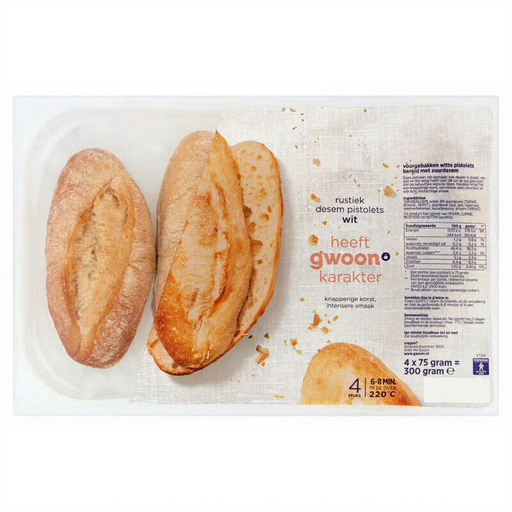
This Joybuy pick is suited to anyone looking for a white, rustic sourdough roll for fakeaway night. Check the preparation method and nutritional information separately on the current packaging.
 No image available
g'woon white rustic rolls, 4 pieces
An option for a generously filled sandwich if you’re looking for a white, rustic variety. The pack contains four rolls; the Joybuy product description lists wheat flour and sourdough. Check the current packaging for allergens, nutritional information and baking instructions.
View at Joybuy
Frequently asked questions
How should I choose a roll for fakeaway night?
Start by thinking about the role the roll will play in your meal: are you after a rustic style, mainly focused on fibre, or looking for something quick to bake? Then compare the ingredients, nutritional information and preparation method of the rolls you’re considering. ‘Premium’ on its own isn’t a measure of taste or nutritional value.
Can I bake rolls in an air fryer?
You can if the packaging for your rolls includes air fryer instructions. For the Korenlanders varieties it tested, PLUS gives a baking time of four minutes in a preheated air fryer at 200 °C; don’t use that time and temperature for other rolls.
Do rolls always contain iodised salt?
No, don’t assume they do. According to the Netherlands Nutrition Centre (Voedingscentrum), not all bread is baked with iodised baker’s salt. Check the ingredients list for the specific product for ‘iodised salt’ or ‘baker’s salt’.
Where can I find allergen information for rolls?
For packaged rolls, read the current ingredients and allergen information; for unwrapped rolls, you can ask the seller. The Netherlands Food and Consumer Product Safety Authority also explains that customers must be given allergen information for unwrapped foods. Don’t rely on the allergen information for a different variant.
Does sourdough or organic mean a roll contains more fibre?
No, those labels don’t tell you how much fibre a roll contains. Compare the nutritional information per 100 g and check which flour has been used. Jumbo lists 3.5 g of fibre per 100 g for its white organic SlooOW rolls; PLUS lists 5.8 g per 100 g for the Korenlanders multigrain rolls it tested.


