
Vandaag of morgen in huis

Kwaliteit gegarandeerd

Welkomstaanbiedingen ontgrendelen: GRATIS bezorging | Tot 80% korting | Gratis 30 dagen JoyPlus-proefperiode
Download de app
A roll-on deodorant may seem like a straightforward purchase, but the difference between deodorant and an antiperspirant roll-on is important. Deodorant mainly targets body odour, while an antiperspirant is designed to reduce perspiration. If you only look at the scent or a claim such as “48-hour protection”, you may end up choosing a product that does not fit your daily routine.
Packaging often features claims such as 48-hour protection or 72-hour protection. These are product claims made by the brand and do not guarantee that everyone will stay dry and fresh for the entire period. According to Dove’s own information, the Fresh Care variant offers 48-hour protection against perspiration. NIVEA states that several of its products provide up to 72 hours of protection against sweat and odour.
Your actual experience depends on factors including physical activity, temperature, skin type and the amount of product you apply. Treat the stated number of hours as a point of comparison between products, rather than a guaranteed result.
A regular deodorant can help mask or reduce body odour, but generally allows perspiration to continue. According to the product description, the Fa Fiji Dream roll-on deodorant is not an antiperspirant. This may be suitable if you mainly want a fresh scent while allowing natural perspiration to continue.
If your main priority is protection against sweat and body odour, look for ingredients such as aluminium chlorohydrate or aluminium sesquichlorohydrate. These substances are found in several antiperspirant roll-ons in the range. Always check the current ingredients list on the packaging.
An alcohol-free deodorant may be appealing if you prefer to avoid alcohol on your underarm skin. However, “0% alcohol” does not mean that a product will be irritation-free for everyone. Fragrances such as limonene, linalool, citronellol and geraniol can cause a reaction in some people.
When choosing a deodorant for sensitive skin, several details are therefore relevant:
If irritation or a rash occurs, stop using the product. Do not apply a roll-on to damaged or irritated skin.
First, decide what matters most to you. A classic deodorant may be the better choice for odour control without restricting perspiration. For less moisture and extra protection, choose an antiperspirant roll-on. Product names can be confusing, so also check the product type and ingredients.
A 50 ml deodorant is a common size for everyday use and fits easily into a wash bag. A 75 ml bottle, such as the Fresh Brown Sugar Roll-on Deodorant, may be appealing if you want a little more product. When comparing multipacks, look not only at the total price but also at the price per 50 ml or per bottle.
A deodorant multipack is particularly practical when you already know that the scent and formula suit you. A 3-pack or 6-pack may reduce the cost per item, but it also increases the cost of a poor purchase if you do not like the variant.
Fragrance is a personal choice. According to the product descriptions, Dove Original and Dove Classic have a recognisable, soft scent. NIVEA Fresh Sensation combines floral and berry notes, according to the brand. Rexona Aloe Vera contains, among other ingredients, aloe vera juice in the listed formula.
Also look out for caring ingredients. Dove lists moisturising cream in several variants. This is a product feature, not a medical effect. If your skin often feels tight, you may wish to consider a formula containing glycerine or caring oils, but always check that the perfume and other ingredients are suitable for you.
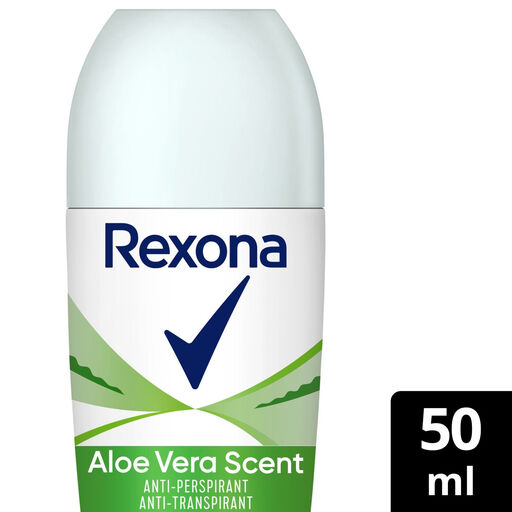
Why it suits this profile: A familiar 50 ml size for everyday use, without having to buy a multipack straight away. The aloe vera variant has a fresh positioning and a practical roller.
The product information specifies 50 ml and provides a clear ingredients list. This lets you check the size and formula instead of relying solely on fragrance claims.
50 ml; roll-on containing aloe vera juice in the stated formula; also available as a 3-pack and 6-pack.
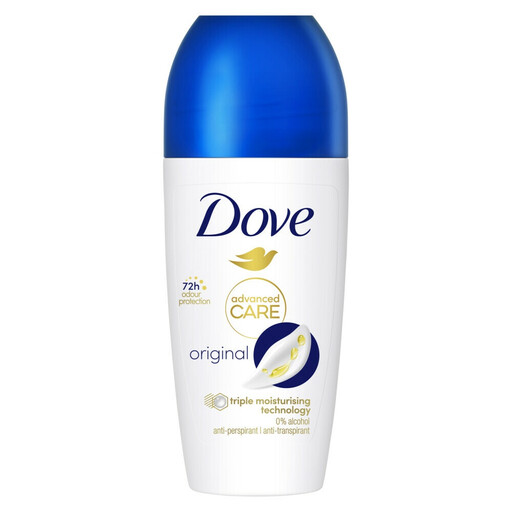
Why it suits this profile: For anyone who wants protection as well as an alcohol-free formula and a cared-for skin feel.
The product description mentions 0% alcohol, an active antiperspirant ingredient and instructions to allow the roller to dry on clean, dry skin.
50 ml; up to 48-hour protection according to Dove; triple moisturising technology and 0% alcohol.
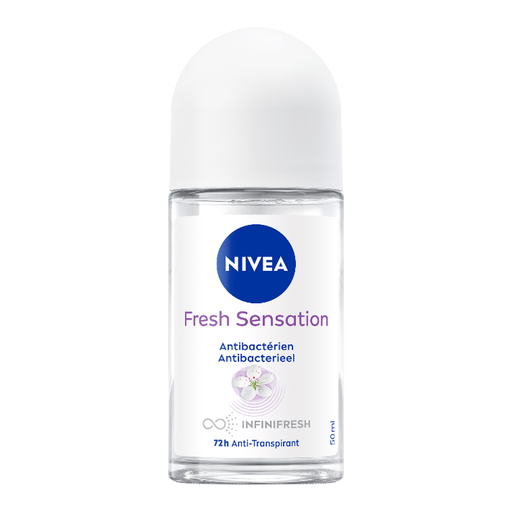
Why it suits this profile: For busy days when you want an antiperspirant with a distinctive fresh scent and a longer claimed protection period.
The 72-hour claim appears alongside specific information about 0% ethyl alcohol, fragrance allergens and use on dry underarms. This allows you to assess protection and skin preferences together.
50 ml; 72-hour protection against sweat and odour according to NIVEA; floral and berry fragrance; dermatologically tested according to the product description.
Apply the roll-on deodorant to clean, dry underarms in a thin, even layer. Allow the product to dry completely before getting dressed. This helps reduce marks and a sticky feeling. Preferably use an antiperspirant according to the instructions on the label and replace the cap after use.
Check the packaging each time you buy a product for its ingredients, contents, batch information and shelf life. Manufacturers may change their formulas. The information on the packaging should therefore be treated as the definitive source, especially if you have an allergy or sensitivity to perfume.
We have compiled a complete, up-to-date list of products that fully meet these strict selection criteria and the applicable European safety regulations.
That depends on your preference. A roll-on applies liquid directly and evenly to the underarm skin and is often compact enough for a wash bag. However, you need to wait for the product to dry. Some users find that a spray dries more quickly, but it disperses product into the air. Above all, consider the product type, ingredients and fragrance.
This varies from person to person and depends on how often you use it. With daily use, a bottle may last several weeks or longer. A thin layer is usually sufficient; applying more does not automatically extend its effectiveness. If you use the same variant regularly, you can compare the price per bottle with a 3-pack or 6-pack.
It may be an option, but alcohol-free does not mean that every skin type will tolerate the product well. Check the ingredients for perfume and fragrance allergens, and follow the warnings on the packaging. Stop using the product if irritation occurs, and do not apply the roll-on to damaged skin.
