
Listeners in a spacious living room
You listen from different spots and want to know how one speaker sounds in each. Consumentenbond’s test method looks at sound reproduction at different volume levels.


If you listen in different parts of the living room, compare a larger Wi-Fi speaker. If you want separate left and right positions, look for a compatible stereo pair. Then check how you can play your albums on the exact model you’re considering: a line input, AirPlay and built-in voice control are different features. Manufacturers’ specifications alone can’t predict how rock albums will sound in your room; Consumentenbond also points out that sound can change at higher volumes.
You listen from different spots and want to know how one speaker sounds in each. Consumentenbond’s test method looks at sound reproduction at different volume levels.
You want to position instruments to the left and right, and have room for two compatible speakers. Sonos and Apple describe stereo-pair options for specific models.
You want to know in advance whether you can connect your streaming library, device or CD player to the speaker. Sonos, Apple and Denon describe different playback and connection options for their models.
First decide where you listen and whether you want one speaker or two separate positions. Then check the playback options and controls that suit your albums.
| What to consider | What should you check? | Who should give this more weight? |
|---|---|---|
| Sound in different parts of the room | If possible, listen to familiar albums from your usual spot and elsewhere in the room, at normal and higher volumes. Also check the model’s placement guidance. | I want to know how my albums sound from my seat and elsewhere in the room, including when I turn up the volume. This matters most to around 28% of consumers who prioritise sound in several listening spots. |
| Separate left and right channels | Check whether the exact model can form a stereo pair with a second compatible speaker, and whether you can position the two speakers to the left and right. | If I want to hear instruments separately on the left and right, I need room for two suitable speakers. Around 22% of consumers give separate stereo positions top priority. |
| Playback options for your albums | Check whether your music service and control device work with the playback options for the exact model, such as through an app, AirPlay or Bluetooth. | I want to keep using my existing music library without having to switch playback options first. This is the top priority for around 22% of consumers. |
| Connection for an external source | Compare your CD player’s audio output with the speaker’s input, and check which cable or adapter you need. | If I also want to play CDs, the connection between my player and speaker needs to be right. Around 17% of consumers prioritise connecting a physical album source. |
| Voice control and privacy | Check which voice-control features the model offers, how to control its microphone and which privacy settings are available. | I want to weigh up hands-free control against the microphone and account settings. Around 11% of consumers see this combination as their main consideration. |
A spatial-audio feature isn’t the same as two separately positioned speakers with left and right channels. First decide which listening setup you want, then check whether the exact model supports pairing.
Compare how your albums are played and how the speakers need to be positioned before you choose. Sonos describes Dolby Atmos Music for the Era 300, whereas a stereo pair consists of two compatible speakers.
Sonos describes the Era 300’s USB-C port as a line input that requires a separate adapter. So the port isn’t necessarily a direct audio connection for every source.
Before buying, check your CD player’s output, the adapter you need and the right cable.
This kind of description alone doesn’t tell you how rock albums will sound in different parts of your living room or at different volumes. Consumentenbond’s test method looks at factors including balance, dynamics and distortion, and notes that sound can change at higher volumes.
Compare independent test information and, if possible, listen to familiar albums in the spots and at the volumes you use at home.
The Era 300 is a larger option; the Era 100 is more compact, while the Era 100 SL doesn’t have built-in voice control.
The HomePod (2nd generation) is worth considering if you use a suitable Apple device and a supported playback option.
The Home 350 is a HEOS model to consider if you’re looking for features such as a built-in analogue input.
The Nest Audio is worth considering if Google Assistant control is important to you.
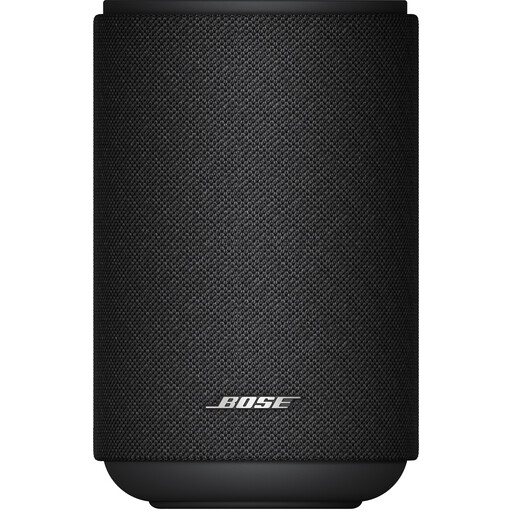
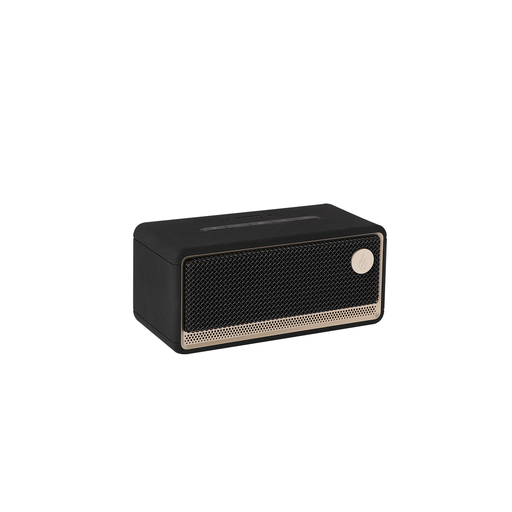
These Joybuy picks are designed for wireless music playback: the Bose is an option if you’re considering a stereo pair, while the Edifier product title lists WLAN, Bluetooth, USB and AUX connections.
 No image available
An option if you want to position two speakers as a stereo pair and your music source is compatible.
The product information says an app or service is required to use it. Check that it works with your playback option before buying.
 No image available
Suited to anyone looking for wireless playback options and a connection for an external source.
The product title lists WLAN, Bluetooth, USB and AUX. Check that the connection matches your source’s output.
You’ll need a stable Wi-Fi network for Wi-Fi and app features. A model with Bluetooth can also receive audio from a paired device; check which features are available without Wi-Fi for the exact model.
That depends on your CD player’s output and the speaker’s input. Denon lists a 3.5mm analogue input for the Home 350; according to Sonos, the Era 300’s line input requires a separate adapter.
Read the privacy policy, check your account and microphone settings, and install any available updates. Sonos says that the Era 300’s physical microphone switch also disables features that require the microphone.
When you buy from a business at a distance, you’ll often have a 14-day cooling-off period, according to the Dutch government. This is separate from your statutory rights if a product doesn’t do what you could reasonably expect when used normally; ACM ConsuWijzer explains that the seller is responsible.