
Anyone looking for an alternative to plain rusks
If you’d like to compare a multigrain rusk marketed as robust or a variety with seeds for your afternoon coffee, without treating the product name as a measure of thickness.


A rusk labelled ‘robust’ is not demonstrably thicker than an ordinary rusk. If you’re looking for something different to enjoy with your afternoon coffee, compare multigrain and multiseed varieties; if you prefer a light, crisp rusk, take a look at the classic options. Check the nutritional information and allergens on the packaging, and assess the texture separately.
If you’d like to compare a multigrain rusk marketed as robust or a variety with seeds for your afternoon coffee, without treating the product name as a measure of thickness.
If you’re looking at fibre, salt and ingredients, compare the nutritional values on a like-for-like basis, for example per 100 g.
If you’re looking for a light, crisp variety, check the packaging you choose to see whether ingredients such as egg, gluten-containing cereals or sesame are relevant.
First decide whether the type of rusk, its nutritional profile or a light, crisp texture is your priority for coffee time. A name suggesting a robust rusk says nothing in itself about its physical thickness or how easy it is to chew.
| What to consider | What to check when buying | Who it matters to |
|---|---|---|
| Robust or multigrain | Check the product description and number of rusks; don’t treat ‘robust’ as a stated measure of thickness. | With my coffee, I’d rather have a multigrain variety marketed as robust than standard plain rusks; this product choice comes first for around 44% of consumers. |
| Nutritional profile | Compare fibre and salt on the same basis, such as per 100 g, and check the serving size if needed. | If I’m keeping an eye on fibre and salt, I want to be able to compare packs easily; the nutritional profile is the top buying priority for around 33% of consumers. |
| Crispness and allergens | Read the description of the texture and check the current ingredients and allergen information. | I’m mainly looking for a light, crisp rusk to have with coffee, but I also want to check the allergens; this classic choice, with allergen checks, comes first for around 23% of consumers. |
A product name or description such as ‘crisp’ doesn’t provide a comparable measure of thickness, hardness or ease of chewing. This is particularly important if the texture needs to meet a specific requirement.
Use the name to find varieties, not to determine the texture. If an adapted consistency is essential, base your choice on individual professional advice.
The TastyBasics Multiseed Rusks listed contain, among other ingredients, wheat, spelt, egg, sesame and barley. Choosing seeds or a particular nutritional profile doesn’t replace checking the ingredients.
Before buying, read the allergen information on the current packaging for the specific variety.
According to brood.net, the use of iodised baker’s salt is not a legal requirement. Its explanation of the Dutch agreement also mentions differences for imported and organic bakery products.
If the type of salt used matters to you, read the ingredients list on the pack in question rather than drawing conclusions based on the product category.
Worth considering if you want to compare classic rusks with varieties such as Echte Beschuit and Bakkers Beschuit Origineel.
Its varieties include plain, wholemeal and Robust Multigrain Rusks, which you can compare side by side.
Its range includes plain, wholemeal, spelt and multiseed rusks, which you can compare by ingredients and nutritional information.
The Multiseed Rusks variety is worth considering if you want to compare the nutritional value of multiseed rusks.
These varieties suit two choices for afternoon coffee: comparing multiseed or wholegrain rusks, or opting for classic rusks instead. The product names don’t provide a comparable measure of physical thickness.
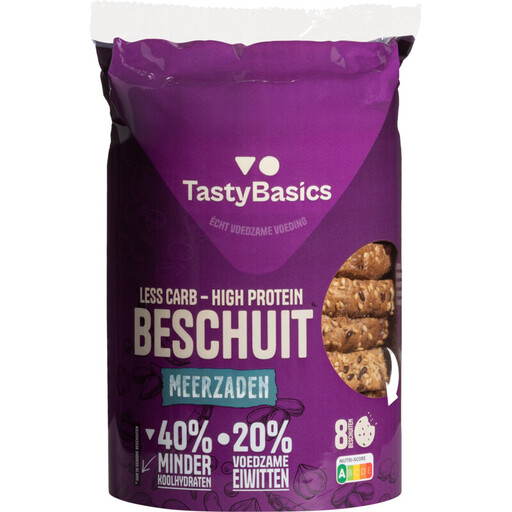 Image unavailable
For anyone who wants to compare the nutritional value of multiseed rusks to have with coffee.
Albert Heijn lists 11 g of fibre, 20 g of protein and 0,59 g of salt per 100 g for this variety. The listed ingredients include wheat, spelt, egg, sesame and barley; check the current packaging.
 Image unavailable
For anyone who wants to look at a rusk variety with seeds for afternoon coffee.
Check the ingredients and allergens on the packaging. The name doesn’t indicate thickness or guarantee a particular texture.
 Image unavailable
For anyone who wants to compare a dark wholemeal variety with other types of rusk.
Check the nutritional information and allergens for this pack separately; ‘dark’ and ‘wholemeal’ don’t determine the physical thickness.
 Image unavailable
For anyone who wants to compare wholemeal rusks for coffee time with multiseed or classic varieties.
Check the nutritional information and allergens on the current packaging. ‘Wholemeal’ doesn’t tell you how thick the rusks are.
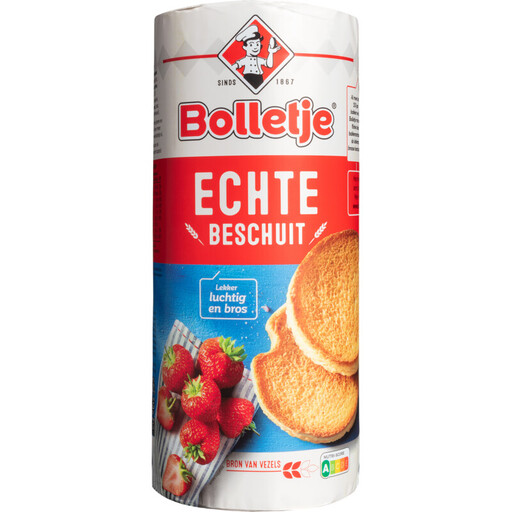 Image unavailable
For anyone who prefers classic rusks rather than a multiseed variety with their coffee.
Bolletje describes Echte Beschuit as light and crisp. This doesn’t indicate that the rusks are thicker or softer; check the allergens on the packaging too.
You can’t tell from the name ‘robust’: it doesn’t provide a comparable measure of thickness or texture. If you need a particular consistency, don’t choose solely on the basis of the product name; seek individual professional advice.
First compare the same unit, such as the nutritional value per 100 g, then check the amount per rusk if it’s listed. The Netherlands Nutrition Centre describes food labels as a useful way to compare fibre and salt, among other things; also check the ingredients and allergens on the current pack.
No, don’t assume they do. The Dutch agreement published in the Government Gazette on 28 October 2008 encourages the use of iodised salt in bread and bread substitutes. According to brood.net, the use of iodised baker’s salt is not a legal requirement; the guidance applies to Dutch bakeries producing for the Dutch market and mentions separate provisions for imported and organic products. Read the ingredients list for the rusks you choose.
Look in the ingredients list for terms such as ‘baker’s salt’ or ‘iodised table salt’. brood.net also lists ‘table salt enriched with iodine’ as a possible description; don’t assume it has been used just because the product is a rusk.