
Vandaag of morgen in huis

Kwaliteit gegarandeerd

Welkomstaanbiedingen ontgrendelen: GRATIS bezorging | Tot 80% korting | Gratis 30 dagen JoyPlus-proefperiode
Download de app
The idea of a perfectly mown lawn without lifting a finger is appealing. An automatic lawnmower that works independently sounds like the ideal solution. But the reality of models with boundary wires—hours spent burying cables, wire breaks, and inflexibility—is a major deterrent for many garden owners. The robotic mower without a boundary wire promises to solve all of this.
However, the market for these smart mowers is full of pitfalls. Manufacturers throw around terms like "AI navigation" and "centimetre-level precision," but what does this actually mean for your garden? Before you invest, it's important to know what to look for.
The 2 Most Common Pitfalls of Wireless Robotic Mowers:
To choose a model that truly works for your situation, it's essential to look beyond the marketing. Focus on the underlying technology and specifications that determine how the mower performs.
The way a robotic mower without a boundary wire finds its path is the most critical factor. There are broadly three systems:
Not every mower is suitable for every garden. Check these specifications carefully:
Based on these criteria, we have selected several models that suit different types of users and gardens.
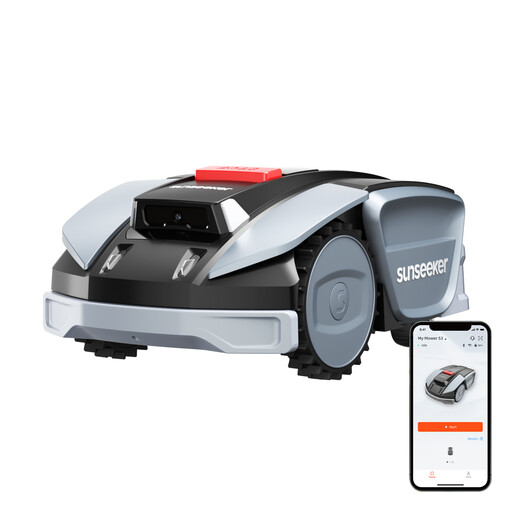
Why This Fits Their Persona: Ideal for owners of a medium-sized garden (up to 800 m?) who want to switch to wireless mowing. This model offers advanced technology without the premium price tag of top-tier models, perfect for a pristine lawn with less hassle.
This model combines RTK navigation with AI vision. This allows it to bypass the pitfall of pure GPS mowers by using visual data in areas where the RTK signal is weaker, such as under trees.
The combination of RTK and vision ensures reliable navigation and smart obstacle detection. The automatic mapping and multi-zone management via the app offer great flexibility.
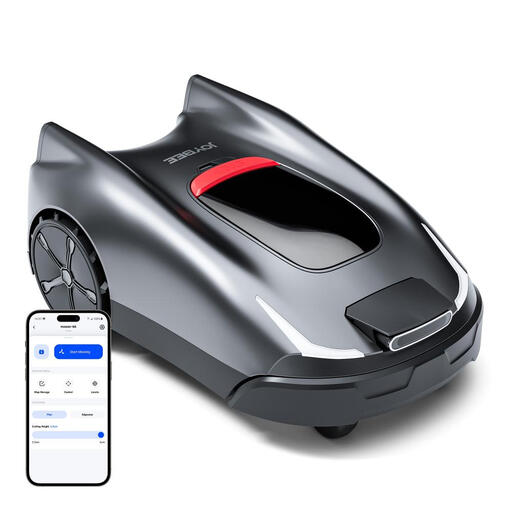
Why This Fits Their Persona: For the homeowner with a very large or complex garden (up to 3000 m?) looking for a powerful and smart solution. This model is built for performance and can handle demanding conditions.
This model tackles the pitfall of poor obstacle detection with a 3D ToF sensor and an auto-lift camera. The system is designed to detect not only static objects but also moving obstacles like pets and children.
Its huge 3000 m? capacity, ability to handle slopes up to 45%, and advanced obstacle detection make this a highly capable machine for the most demanding gardens.
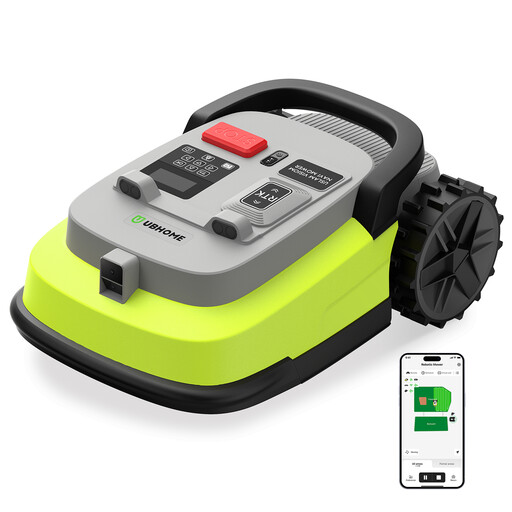
Why This Fits Their Persona: Specifically designed for gardens with challenging terrain. If your lawn has steep slopes or uneven ground where most robotic mowers struggle, this model provides the necessary power and stability.
This model tackles the pitfall of vague navigation claims with a dual approach: dual-frequency RTK for precision and AI image processing to navigate reliably even in areas with a weak signal (like along metal fences).
Its outstanding climbing ability of up to 55% (28.8°) is a decisive factor. Combined with large off-road rear wheels and a powerful motor, this mower is built to conquer difficult terrain with precision.
We have compiled a complete, up-to-date list of products that fully meet these strict selection criteria and local regulations.
The lifespan of a robotic lawnmower depends on maintenance and the quality of its components. The battery is often the first component to wear out, with an average lifespan of 3 to 5 years, depending on usage. The blades typically need to be replaced each season for optimal mowing results. Regular cleaning and storing the mower indoors during the winter will significantly extend its overall lifespan.
Installing an RTK station is generally straightforward. The main requirement is that the station has an unobstructed view of the sky to establish a stable connection with GPS satellites. Therefore, do not place it directly under an overhang, close to a high wall, or under dense tree cover. Most manuals provide clear instructions for optimal placement, which is a one-time setup.
This is where the difference between navigation systems becomes clear. A mower that relies purely on RTK-GPS will likely pause and wait for the signal to be restored. A hybrid model, which is also equipped with cameras or other sensors, can in many cases switch to its visual navigation system to continue mowing or safely return to the charging station. This generally makes a hybrid system more reliable in a complex environment.
