
Vandaag of morgen in huis

Kwaliteit gegarandeerd

Welkomstaanbiedingen ontgrendelen: GRATIS bezorging | Tot 80% korting | Gratis 30 dagen JoyPlus-proefperiode
Download de app
The idea is simple: a lawn that mows itself, without you having to spend hours burying a perimeter wire first. The market for the robotic mower without a boundary wire is growing rapidly, but not every 'smart' mower is equally intelligent. Many models promise a wire-free future but, in practice, introduce new frustrations.
As a Product Recommendation Officer at Joybuy, I see where many buyers go wrong. Before you invest, it's crucial to see through the marketing claims. These are the most common pitfalls:
A wire-free robotic mower navigates using various technologies. The choice between them determines its precision and reliability.
Manufacturers specify a maximum lawn area. It is wise to choose a model with some surplus capacity, especially if your garden is complex. A robotic mower for 1000m? will operate more efficiently on an 800m? lawn than a model pushed to its absolute limit.
Do you have a sloping garden? Then check the maximum slope percentage the mower can handle. A robotic mower for slopes often features all-wheel drive or special high-grip wheels. A typical specification is, for example, 45% (approximately 24 degrees).
A smart mower with an app is standard, but the quality of the app's features varies enormously. Look for the following practical capabilities:
Based on objective specifications, we have selected several models that suit different types of gardens and users.
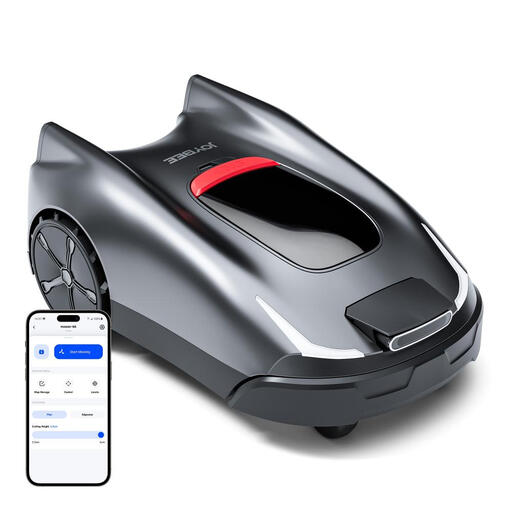
Why This Fits Their Persona: Ideal for owners of large plots (up to 3000 m?) with challenging terrain. This model is designed for performance, with a powerful motor and the ability to handle steep slopes.
The combination of RTK navigation and VSLAM positioning ensures centimetre-level navigation, even in tricky areas under trees or along walls. The 3D TOF sensors provide reliable obstacle detection, which avoids the pitfall of 'vision-only' systems.
Can handle slopes up to 45% and has a large capacity of 3000 m?. The IPX6 water resistance makes cleaning with a garden hose simple.
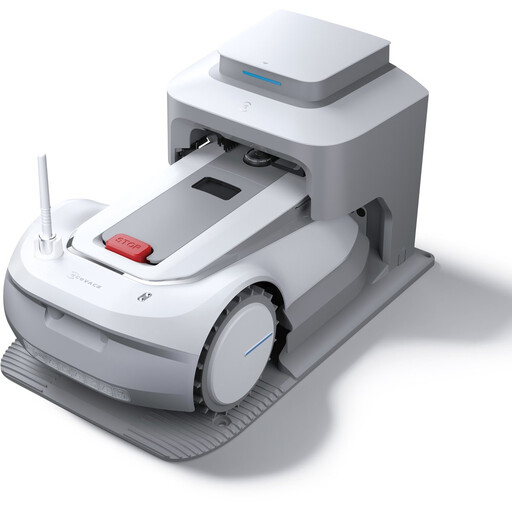
Why This Fits Their Persona: A solid choice for the average garden up to 800 m?. This model offers a good balance between advanced technology and ease of use, perfect for those seeking a reliable and efficient solution without paying a premium price.
The TrueMapping Multi-fusion system combines cameras for an accurate map of the garden. The AIVI 3D algorithm is specifically designed to recognise and avoid obstacles like furniture, toys, and even small animals such as hedgehogs, addressing the pitfall of poor obstacle detection.
The setup is completely wireless and, according to the manufacturer, can be completed in about 20 minutes via the app. It offers the ability to create up to 16 mowing zones.
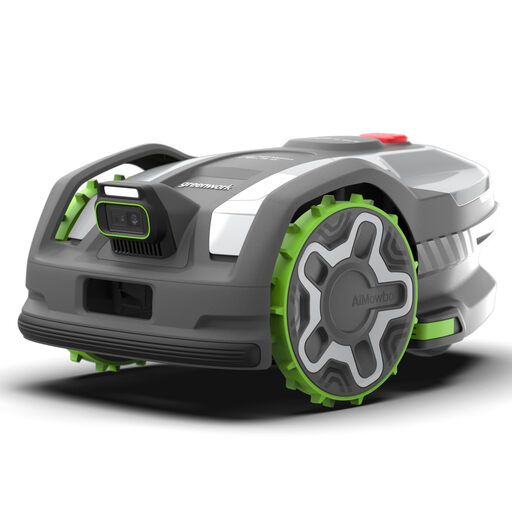
Why This Fits Their Persona: For those looking to switch to a wire-free mower for a small to medium-sized garden (up to 600 m?) and seeking the precision of RTK technology without a premium price tag.
This model combines RTK-GPS with a dual camera and a 3D ToF sensor. According to Greenworks, this 3-layer navigation ensures the mower operates reliably, even at dusk or in shade, addressing the weakness of 'vision-only' systems.
Offers centimetre-level RTK navigation in a more accessible price segment. It can also handle significant slopes up to 45% and is relatively quiet in operation at 58 dB(A).
We have compiled a complete, up-to-date list of products that meet these strict selection criteria and European regulations.
The accuracy heavily depends on the technology used. Models with RTK technology are the most precise and can determine their position down to a few centimetres. This is ideal for mowing in straight lines and navigating complex edges. Mowers that rely solely on cameras (Vision) or GPS generally have a larger margin of error.
This is a valid concern. With models that depend on a GPS or RTK signal, the mower will usually stop and wait for the signal to be restored. More advanced models combine multiple technologies (e.g., RTK + Vision) and can temporarily switch to their cameras and sensors to continue navigating or safely return to an area with better reception.
Safety is a key consideration. Most modern wire-free mowers are equipped with sensors to detect objects. Models with advanced systems like 3D ToF (Time-of-Flight) or AI-driven cameras are generally better at recognising moving and unexpected obstacles, such as a ball, a pet, or a child. Always check which sensors a model has and, to be safe, supervise when children or pets are in the garden.
