
Vandaag of morgen in huis

Kwaliteit gegarandeerd

Welkomstaanbiedingen ontgrendelen: GRATIS bezorging | Tot 80% korting | Gratis 30 dagen JoyPlus-proefperiode
Download de app
A robot vacuum with a mop can tackle everyday dust, crumbs and light marks without you having to vacuum and mop yourself all the time. But a high suction rating or a large docking station doesn’t tell you everything. A home with pets, carpets and high thresholds has different needs from a flat with mostly hard floors.
So don’t focus on marketing terms alone. Consider the combination of suction power, mopping system, navigation, maintenance and floor compatibility.
Suction power is often measured in pascals, for example 8,000 Pa, 12,000 Pa or 30,000 Pa. This is a technical measurement of the suction motor, but it doesn’t fully predict how well the robot will clean your home. The brush, airflow, filter, floor type and selected mode all play a part too.
A powerful robot vacuum can be useful for carpets, cat litter and pet hair. For hard floors, it’s also important to consider how the robot uses its mop and how much water it dispenses.
A robot vacuum with a self-cleaning dock can wash and dry the mop. Some models also empty the dust container or top up the water tank automatically. You’ll usually still need to:
Also check whether the dock uses dust bags. A bagless system means you don’t need replacement bags, while a dust-bag dock can contain dust more effectively when emptying. The right choice depends on your preferences for cost, hygiene and convenience.
A flat mop that continues across a carpet can leave it damp. Look for automatic carpet detection, mop lifting or carpet avoidance. The lifting height varies by model, so make sure it’s suitable for your rugs.
Take extra care with delicate wooden or unsealed floors. Only use the mopping function in line with the manufacturer’s instructions, and set up no-go zones if needed.
For a robot vacuum for pet owners, the main and side brushes are at least as important as the Pa rating. An anti-tangle system can reduce the amount of hair you need to remove by hand, but you’ll still need to check the brushes, especially if you have long-haired pets.
Look for:
The filter type isn’t listed for every product. So don’t buy a model based on a filter claim that doesn’t specify what type it uses.
A robot vacuum with LiDAR navigation uses laser sensors to map rooms. This often lets you set rooms, cleaning routes and no-go zones. It’s useful in homes with multiple rooms or floors.
However, LiDAR won’t prevent every problem. Loose cables, toys, socks and small pet accessories can still get caught. A combination of LiDAR, cliff detection and obstacle recognition is therefore more useful than “smart navigation” as a marketing term on its own.
There are several systems:
Brands may quote specific figures for edge coverage, hair removal or dirt detection in their own information. Treat these as manufacturer claims and focus on comparing the underlying features and instructions for use.
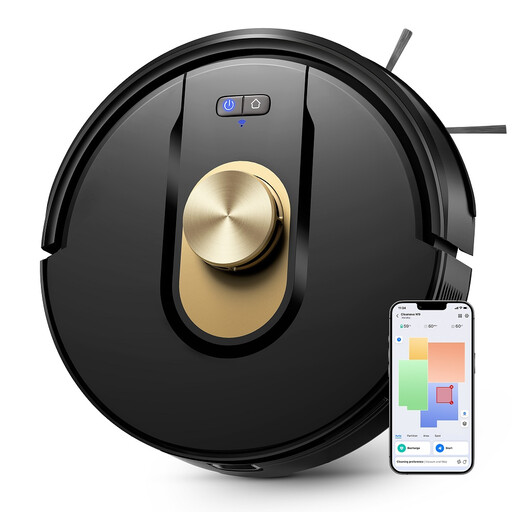
Why it suits this household: This model combines vacuuming and mopping, offers LiDAR navigation and supports multiple maps. It’s a good fit for a small or medium-sized household that wants app control without opting straight for a comprehensive maintenance dock.
The product information lists adjustable water and suction settings, five maps and no-go zones. You’ll still need to check the brush and dust container by hand.
8,000 Pa according to the product information, LiDAR navigation, up to 150 minutes of runtime, and control via the app and voice assistant.
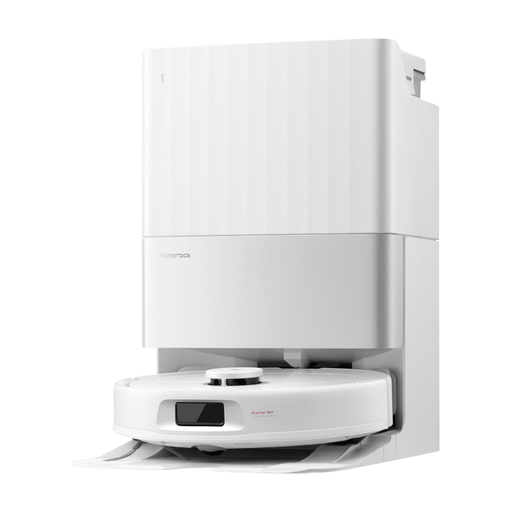
Why it suits this household: A good choice for households looking to combine automated vacuuming and mopping with a comprehensive dock and smart-home control.
According to the product information, the mop is washed and dried automatically. You can include carpets in your cleaning plan using mop lifting and the available settings.
12,000 Pa, PreciSense LiDAR, HEPA 11 filter according to the product specifications, automatic dust emptying and 10 mm mop lifting.
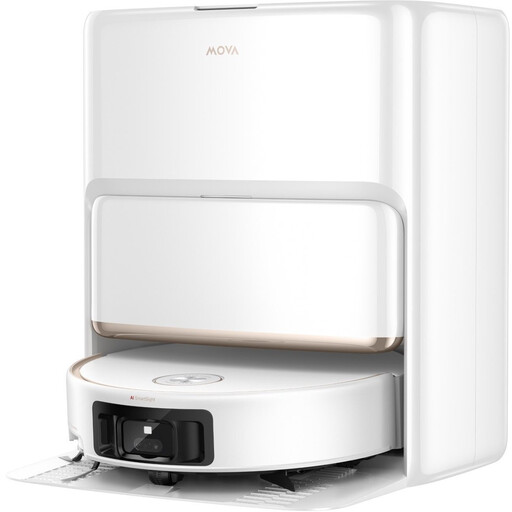
Why it suits this household: This model is designed for homes with pets, hair, carpets and different floor levels. Its extensive features do mean you’ll need enough space for the dock.
The product information lists mop lifting with AutoShield, anti-tangle brushes and a dock that combines dust emptying, mop washing and drying.
Up to 28,000 Pa according to the product specifications, a rotating roller mop, EPA E11 filter, LiDAR navigation and the ability to cross thresholds up to 8 cm high according to the product information.
As well as the purchase price, replacement parts and consumables matter. Check the price and availability of dust bags, filters, side brushes, main brushes, mop rollers and cleaning solution. A bagless robot vacuum means no replacement dust bags, but you may need to empty and clean it by hand more often.
A dock with hot-water cleaning and a drying function also uses extra electricity. The exact running costs depend on how often you clean, the floor area, the suction setting you choose and your electricity tariff. Manufacturer claims such as “days without maintenance” depend on your home and how you use the robot.
We’ve put together a complete, up-to-date list of products that meet these strict selection criteria and the applicable European safety regulations.
Yes, many models can vacuum carpets. To mop carpets safely, you’ll need mop lifting or carpet avoidance. It’s best to set delicate rugs as no-go zones and check the recommended carpet height.
Empty the dirty-water tank and check the mop after use if the dock doesn’t do this automatically. Brushes, sensors and filters need regular cleaning. Follow the app alerts and the manufacturer’s maintenance schedule.
It can be handy if you have pets, a larger home or use the robot every day. You won’t need to empty the dust container by hand as often. Do bear in mind the cost of replacement dust bags and the space the dock takes up.
