
Vandaag of morgen in huis

Kwaliteit gegarandeerd

Welkomstaanbiedingen ontgrendelen: GRATIS bezorging | Tot 80% korting | Gratis 30 dagen JoyPlus-proefperiode
Download de app
A robot vacuum with a mopping function can tackle everyday dust, hair and light stains without you having to vacuum every time. However, not every model is right for every British home. A flat with hard floors calls for something different from a home with deep-pile carpet, pets and several floors.
The product name doesn’t tell you everything, either. Look beyond the marketing claims and check whether the appliance suits your floors, layout and how much time you have for maintenance.
A high figure in pascals sounds appealing, but it doesn’t tell you on its own how clean your floors will be. The brush, airflow, floor detection and navigation all play a part, too. For example, a robot vacuum for pet owners needs a brush that picks up hair effectively and doesn’t clog easily.
So don’t just compare 4,000, 8,000 or 20,000 Pa. Check whether:
Most robots use a damp cloth or rotating mop pads. They’re designed for everyday upkeep and light dirt, not large spills or stubborn, dried-on stains. According to the instructions for the models mentioned, a robot vacuum with a mopping function must not suck up puddles.
Check the water controls. An electronic water tank with several settings is more practical if you have both wooden floors and tiles. Use clean water only, unless the manufacturer explicitly recommends a suitable cleaning solution.
A robot vacuum with a self-cleaning station can wash and dry the mop, and sometimes clean the base plate, too. Some models also empty the dust bin automatically. However, you’ll still need to remove hair, wipe the sensors, empty dirty water and let the mop pads dry when instructed in the manual.
Check in advance:
A robot vacuum with LiDAR navigation scans the room using a laser and usually creates a digital map. This helps it follow systematic routes and lets you select rooms or set virtual walls. Models that store several maps are useful in homes with multiple floors.
LiDAR won’t prevent every problem. Cables, loose clothing, low furniture, full-length mirrors and very dark surfaces can affect navigation. Before the first mapping and cleaning run, put away small items and cables.
If you have a mix of carpet, tiles, laminate and wooden floors, three features are worth considering:
A robot mop won’t replace a thorough manual clean for deep stains. Think of the mopping function as an addition to regular floor care.
A robot vacuum with an auto-empty station is useful if you want to empty the dust bin less often. An all-in-one station can also wash and dry mop pads. Check the dimensions, though: a base station often needs clear space at the sides and in front so you can access it easily.
Also check the noise level, app support and Wi-Fi requirements. Some models only work on a 2.4GHz network. If possible, schedule cleaning for times when the noise won’t be a nuisance.
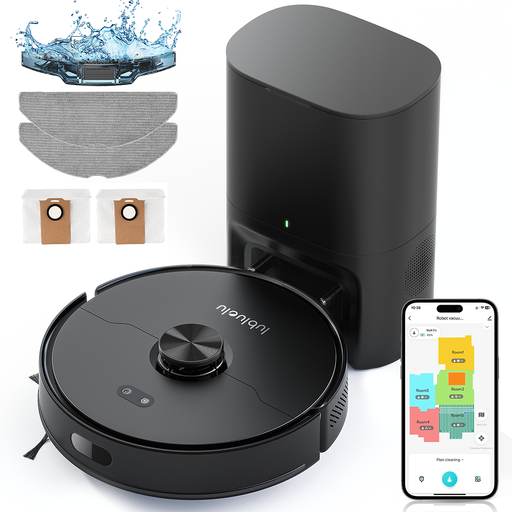
Why it suits this profile: This model combines vacuuming, sweeping and mopping, with app control. The product specifications list 4000Pa suction power, laser navigation, storage for up to five maps and a stated noise level of 55 dB.
The app lets you set rooms, schedules and no-go zones. You can adjust the suction power for carpet. This model doesn’t have an auto-empty station, so bear in mind that you’ll need to empty and clean it manually.
LiDAR maps, app control, storage for five maps and a stated runtime of up to 120 minutes.

Why it suits this profile: This model is designed for households that want extensive automation. According to the product description, the OMNI station automatically empties the dust bin, washes the mop with 75°C water, dries it with 45°C air and refills the water automatically.
The product specifications list automatic carpet detection, several carpet modes and an anti-tangle brush. Before buying, check that the station will fit in your home.
20.000Pa according to the product page, dual rotating mops and TrueMapping 2.0 for multiple floors.
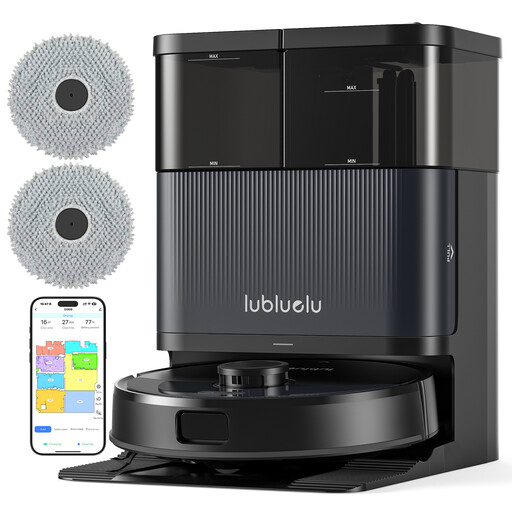
Why it suits this profile: The product specifications list an all-in-one station, LiDAR navigation, app control and stated suction power of up to 10.000Pa. That makes it a good fit for households with pets, carpet and daily cleaning routines.
According to the product information, the model can lift the mop on carpet and return to the station. The mop pads, dust bag and sensors still need regular maintenance, though.
All-in-one station, LiDAR mapping and automatic mop lifting, according to the product description.
We’ve put together a full, up-to-date list of products that meet these strict selection criteria and the applicable European safety regulations.
For occasional manual cleaning, a washable microfibre cloth can be a practical addition. The Micro Fiber Mop, measuring 50 × 60 cm, has a hook-and-loop fastening and is washable at 60°C, according to the product description. See the Micro Fiber Mop 50 × 60 cm for smooth surfaces.
Yes, if the model has carpet detection, a mop lift or separate cleaning settings. Check the maximum pile height, too, and remove the mop module if the manufacturer recommends doing so.
It depends on how often you use it and your household. If you have pets, you may vacuum daily, but brushes and filters will need checking more often. Rinse the mop pad after use and wipe the sensors regularly with a dry cloth.
As well as electricity, you’ll need to allow for dust bags, filters, brushes, mop pads and possibly cleaning solution. An auto-empty station means less hands-on effort, but may increase the use of replacement parts. Check prices and availability before you order.
