
Owners of low, raised furniture
If you want to vacuum under a sofa, bed or cupboard regularly, it’s worth measuring the lowest clearance at several points first.


First, measure the lowest clearance and the gaps under and between your furniture, then compare these with the height of the exact robot model. For a one-off clean, a vacuum cleaner you already own may be more practical; a robot is worth considering mainly if you’ll continue using it regularly after rearranging the room. Also factor in obstacles, thresholds, and the space and maintenance required for any docking station.
If you want to vacuum under a sofa, bed or cupboard regularly, it’s worth measuring the lowest clearance at several points first.
A new layout can change the route because of furniture legs, loose items and thresholds. So, check not only the clearance but also the access route.
An auto-empty or mopping station can suit regular use, but it needs extra space and maintenance. Think ahead about whether you’ll still use these features after changing the room layout.
| What to consider | What should you check? | Who is this most relevant to? |
|---|---|---|
| Clearance | Measure the opening at several points and compare it with the height of the complete model variant. Allow for an uneven or soft furniture edge. | I want to know whether the robot can actually get under the lowest piece of furniture before relying on it to clean there. Around 36% of consumers make clearance their top priority. |
| Route and obstacles | Check the access routes, thresholds and relevant navigation features of the exact model; clear loose items from its path. | I want the robot to reach the intended areas even after I move the furniture, without legs or objects blocking its route. Around 29% of consumers make routes and obstacles their top priority. |
| Station and maintenance | Check how much space the station takes up and what parts or tasks are involved in emptying the robot and maintaining its mop. | If I’m going to keep using the robot regularly, I want to know how much manual maintenance its features really save me, and what I’ll still need to do myself. Around 21% of consumers make ease of maintenance their top priority. |
| Whether it’s worth buying | Think about whether you’ll continue using the robot regularly after rearranging the room, and whether your existing vacuum cleaner can handle a one-off clean. | I want to avoid buying an appliance mainly for a single clean and then barely using it. Around 14% of consumers make the value of the purchase their top priority. |
Clearance can vary from one point to another. ECOVACS specifically warns that a soft, uneven furniture edge may cause the DEEBOT T9 to get stuck; this is not a test of other models.
Measure the opening at several points and leave some clearance rather than relying on an exact match.
You’ll still need to clean any area the robot can’t reach by hand; getting it unstuck also takes time.
A station takes up extra space and won’t make a robot suitable for areas it can’t reach. The Dutch Consumers’ Association also points out that a robot vacuum can’t do everything a standard vacuum cleaner can.
First decide whether you want to use the robot regularly after rearranging the room, and check what maintenance its features require.
An auto-empty station takes up space; a model that uses dust bags also requires suitable replacement bags.
A retractable sensor only changes the height under the stated conditions. A stated height or suction claim alone doesn’t prove better cleaning performance.
Compare the full model name and the conditions attached to the stated height. Don’t use differing suction claims to declare a winner.
eufy lists the C10, which vacuums and comes with an auto-empty station, and the Omni C20, which has a mopping station.
Roborock’s UK presentation of the Qrevo CurvX focuses on cleaning under low furniture with a retractable navigation system.
ECOVACS describes the DEEBOT T50 OMNI Gen3 as a low-profile robot with an OMNI station.
According to Dreame, the X50 Ultra Complete has a retractable height sensor for low-clearance spaces.
These models are intended for regular cleaning after you’ve rearranged the room. Check whether each model’s height and route suit your furniture and access gaps.
 No image available
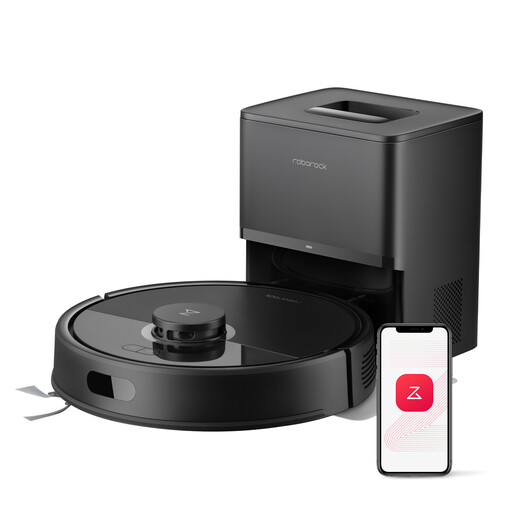
Automatic emptying and the listed navigation features may be useful if you plan to use the robot regularly after rearranging the room; check the access gaps and furniture clearance at home.
The product name lists a mopping function, automatic emptying, LiDAR navigation, a dual anti-tangle system and 8,000 Pa suction power.
 No image available
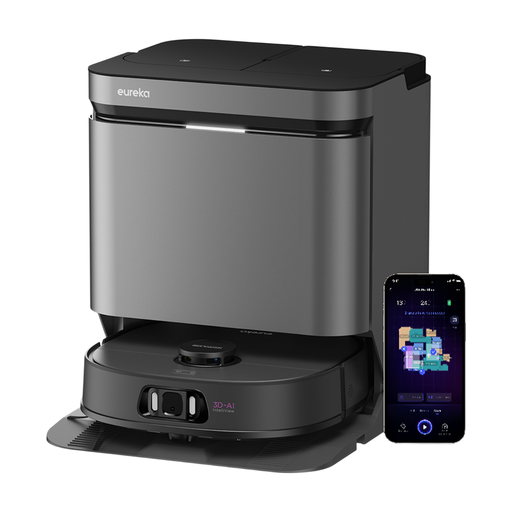
The listed station and obstacle-detection features may suit regular use in a furnished room; measure the clearance under furniture separately.
The product name lists a mopping function, 16,200 Pa, liquid detection, a lifting brush and self-cleaning.
 No image available
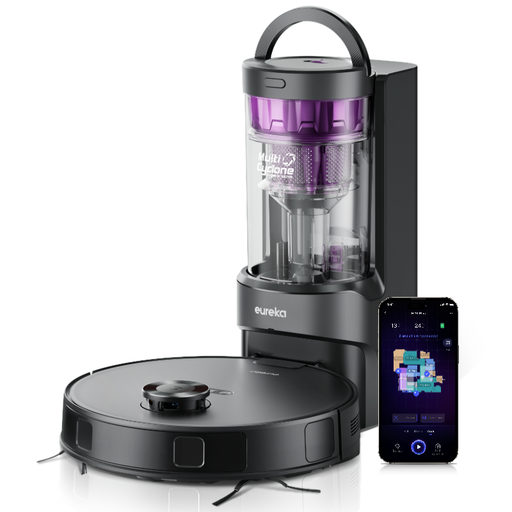
The listed obstacle avoidance and no-go zones may be useful with a new room layout. Also check that the robot can fit under your furniture and through the intended access gaps.
The product name lists 8,000 Pa, a self-emptying station and 3D obstacle avoidance. According to the product information, 2.4GHz Wi-Fi is required for app control.
 No image available
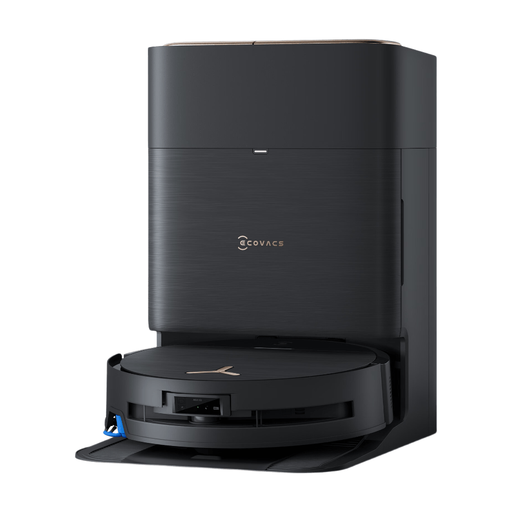
The listed station and obstacle-detection features may be useful for regular cleaning after changing the room layout; check the clearance and route yourself.
The product name lists a mopping function, 16,600 Pa, an OZMO Roller and an OMNI station.
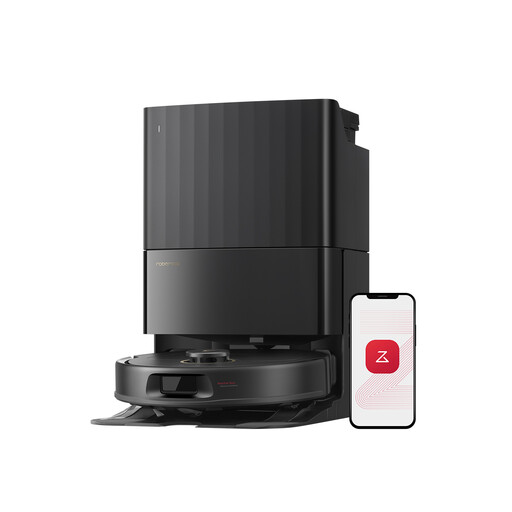 No image available
Automatic emptying and mop maintenance can be handy if you plan to keep using the robot. The listed navigation features don’t, by themselves, tell you whether it will fit under your furniture.
The product name lists 12,000 Pa, FlexiArm mops, a dual anti-tangle system, obstacle avoidance and smart navigation.
Measure the opening at its lowest points and compare it with the full height of the exact model variant. Also look out for sagging upholstery and uneven edges: ECOVACS specifically warns that the T9 may get stuck under soft, uneven furniture edges.
Remove loose items from the route and check whether furniture legs or thresholds block access. The Dutch Consumers’ Association lists objects on the floor and high thresholds as limitations for robot vacuums.
Allow space for the station and check which parts and consumables your model needs. An auto-empty station doesn’t mean the robot is maintenance-free; for example, you’ll need to replace the dust bags in models that use them.
For a standard online consumer purchase, there is generally a statutory 14-day cooling-off period from delivery. ACM ConsuWijzer explains the cooling-off period; check the applicable terms and exceptions. This doesn’t change the need to measure the space under your furniture beforehand.
According to the Dutch government, when you buy a new appliance, you can hand in an old, similar appliance, including when buying online. You can also take it to your local council’s recycling centre.