
Same-day & Next-day Delivery

Quality Guaranteed

Unlock Your Welcome Offers: FREE Delivery | Up to 80% OFF | Free 30-day JoyPlus trial
Download the APP
A robot vacuum that not only vacuums but also mops and empties itself. It sounds like a dream come true for anyone who dislikes household chores. However, the market is flooded with models promising the world. Unfortunately, many of these promises lead to disappointment and wasted money.
As a Joybuy Product Recommendation Officer, I see where things go wrong every day. Before you consider a purchase, it's crucial to recognise the three most common pitfalls:
Let's cut through the marketing jargon and look at the specifications that actually matter in practice.
To avoid buyer's remorse, it's best to focus on a few verifiable specifications. These determine whether an automatic vacuum does its job well or mainly causes frustration.
The navigation method is crucial for efficiency. A robot vacuum with laser navigation, also known as LiDAR, scans the room 360 degrees and creates a precise map of your home.
A self-emptying robot vacuum has become the standard, but the functionality of the stations varies widely.
Do you have both hard floors and carpets? Then a model with an automatic mop-lift function is indispensable. As soon as the sensors detect a robot vacuum on carpet, the robot automatically lifts its mop pads. This prevents your carpet from getting wet and dirty, allowing the robot to tackle the entire house in a single cleaning run.
Based on these objective criteria, we have selected a number of models that suit different needs and budgets.
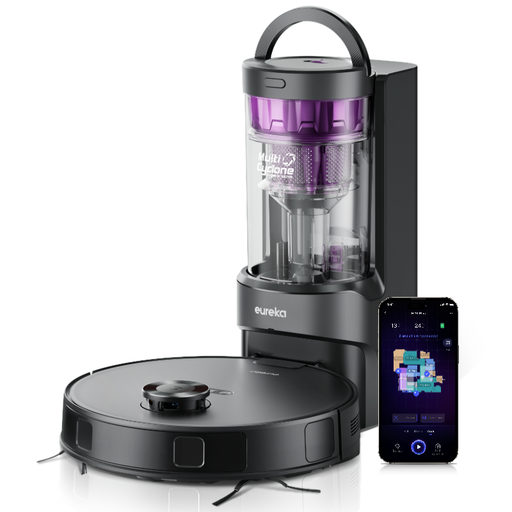
Why it's a match: This model offers the essential features – vacuuming, mopping, and a self-emptying station – for a very accessible price. Ideal for those who want to explore the world of automated cleaning without immediately paying a premium.
It tackles the "high-maintenance station" pitfall with a bagless system and a 10mm mop-lift, features often found only on more expensive models.
The bagless station saves on the long-term cost of dust bags. The combination of 8000 Pa suction power and DuoDetect AI obstacle avoidance offers solid performance for this price range.
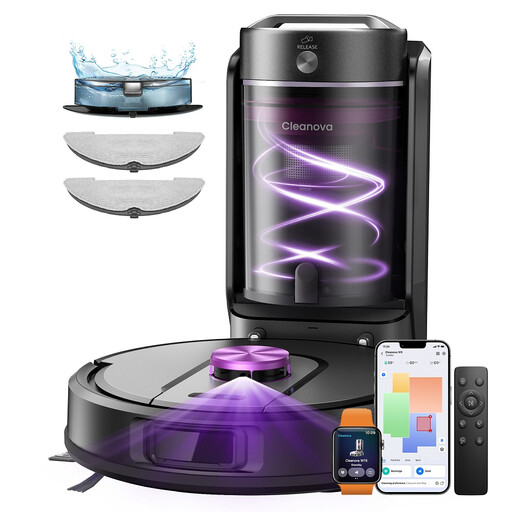
Why it's a match: Pet owners need serious suction power for pet hair and reliable navigation that avoids toys. This model combines very high suction power with precise LiDAR navigation.
This model avoids the "suction power pitfall." The claimed 10,000 Pa isn't just a number; it's specifically aimed at picking up heavier debris like pet hair and cat litter from both hard floors and carpets.
The combination of extreme suction power and a multi-cyclone bagless station makes this a practical choice. The 360° laser navigation ensures efficient coverage, which is essential in a busy household.
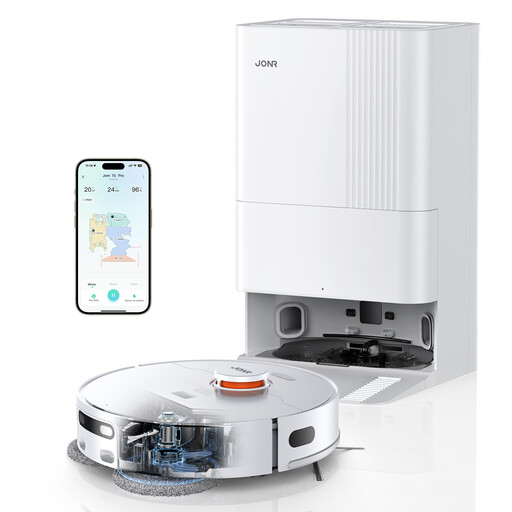
Why it's a match: For those who want as little hassle as possible with cleaning. This model offers a fully automated process, including washing and drying the mop, which minimises daily maintenance.
This model is the answer to the "high-maintenance station" pitfall. It not only empties dust, but its All-in-One Dock also cleans and dries the mops with hot air, so you don't have to mess with dirty, wet mops.
The hot-air drying is a premium feature that prevents odours and bacterial growth. Combined with LiDAR navigation and a tangle-free side brush, this offers a very complete and low-maintenance cleaning experience.
We have compiled a complete, up-to-date list of products that fully meet these strict selection criteria and Dutch safety regulations.
Although they are "automatic," no robot is completely maintenance-free. You can expect the following:
Yes, most modern models are safe for sealed wooden floors and laminate. The key is control over the water flow. Choose a model where you can set the water level (low, medium, high) via the app. This prevents the floor from becoming too wet. Never let a robot stand still on a wooden floor with a wet mop.
Absolutely. A robot with LiDAR cleans faster, more systematically, and misses fewer spots. The ability to set precise virtual walls and no-go zones via the app is a feature you will use a lot in practice. It prevents the robot from getting stuck on cables or knocking over your pet's water bowl. For most households, the investment in LiDAR is more than worth the convenience and improved performance.
