
Someone with little space for charging
You want to keep the hallway floor clear, so you’re comparing a standard charging base with a self-emptying dock.


First, measure the clear passage and the space for the charging station: a compact robot won’t help if its dock gets in the way. A standard charging station usually takes up less room than a self-emptying dock, while automatic emptying can reduce manual maintenance if the dock fits. Also check that the model suits your hallway’s flooring, corners and thresholds; product specifications alone don’t prove how well it will clean.
You want to keep the hallway floor clear, so you’re comparing a standard charging base with a self-emptying dock.
Corners, obstacles or thresholds mean it’s important that the robot can reach the areas of the floor you want it to clean.
You want to cut down on manual maintenance and may be able to set aside extra space for a self-emptying dock.
Start by checking where the robot and its station will go, then consider its reach, floor cleaning and how much maintenance you’re willing to do. The Consumentenbond notes that a self-emptying dock takes up more space than a standard charging station.
| Buying concern | What to look for | Who is this most relevant to? |
|---|---|---|
| Space for the robot and charging station | Measure the robot, dock and the clearance needed around them; compare the space required by a standard base with that of a self-emptying dock. | If I want to keep the passage clear, the overall set-up matters a lot. Around 36% of consumers prioritise space for the robot and charging station. |
| Reaching corners and passages | Measure the narrowest passage and check for obstacles and thresholds at home; assess accessibility separately from cleaning performance. | In a hallway with tight corners or obstacles, I want to know which parts of the floor the robot can actually reach. Accessibility is the main concern for around 29% of consumers. |
| Dirt on your hallway floor | Look at results for your type of flooring and the dirt you want to remove; a mopping function alone doesn’t tell you how well the floor will be cleaned. | If I mainly want to remove crumbs or dust from my own floor, I compare relevant cleaning results. Around 21% of consumers prioritise results on their hallway floor. |
| Manual emptying and parts | Weigh less frequent emptying against the space needed for the dock, and check which dust bags or other parts are compatible with the model. | If you want to empty it yourself less often, you could consider a self-emptying dock if you have room for one. Maintenance is the top priority for around 14% of consumers. |
According to the Consumentenbond, a self-emptying dock takes up more space than a standard charging base; dust bags can also be difficult to find.
Before buying, measure the robot, dock and the clearance needed around them, and follow the placement instructions for the exact model.
Dust on hard floors, dirt in crevices and dirt along edges are different things to consider. A single stated figure doesn’t tell you how well a model cleans your floor.
Where possible, compare results for your type of flooring and the dirt in your hallway; the Consumentenbond assesses these cleaning tasks separately.
According to the Dutch government, your statutory guarantee applies alongside any manufacturer’s warranty. An additional warranty doesn’t automatically give you extra rights.
Check what additional cover actually includes and contact the seller if there’s a fault.
The Roomba Mini is available with either a SlimCharge base or an AutoEmpty dock. iRobot positions the Mini as suitable for tight spaces; this is a manufacturer’s claim, not an independent comparison of cleaning results.
Philips says the Philips XU2000/25 combines vacuuming and mopping, and is controlled via the HomeRun app.
eufy lists the C10 as 7,2 cm tall and says it comes with an automatic emptying station.
This selection includes robot vacuums with different charging and docking set-ups, including models with a mopping function and automatic emptying. Make sure you also measure the space needed for your chosen station.
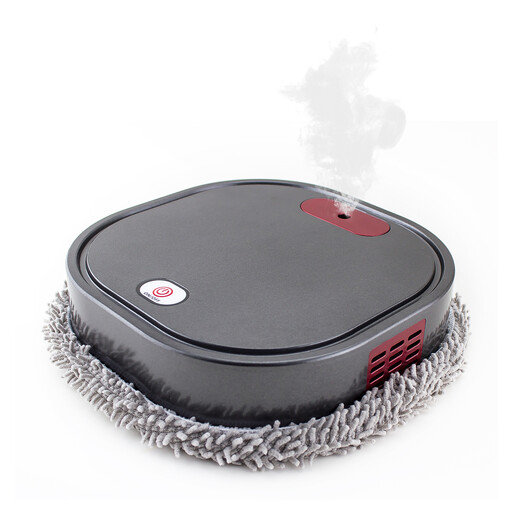 No image available
The product title mentions a cordless design and a spray mop function for indoor floors.
The title states 20–40 dB; the description says it’s not suitable for deep-pile carpets.
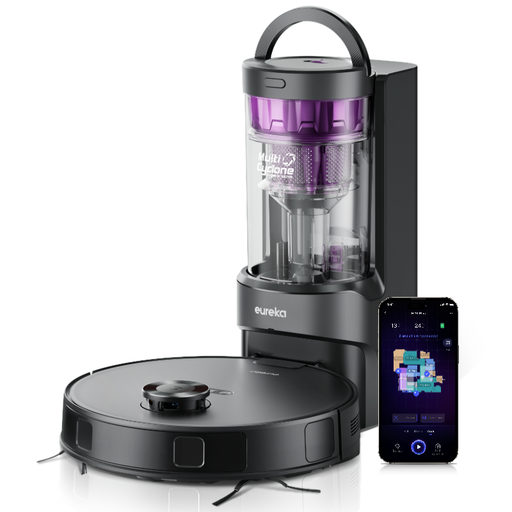 No image available
The self-emptying station is worth considering if you want to empty it manually less often; first, measure to make sure the complete set-up will fit in your hallway.
The product title lists 8000 Pa, 3D obstacle avoidance and a 180-minute run time.
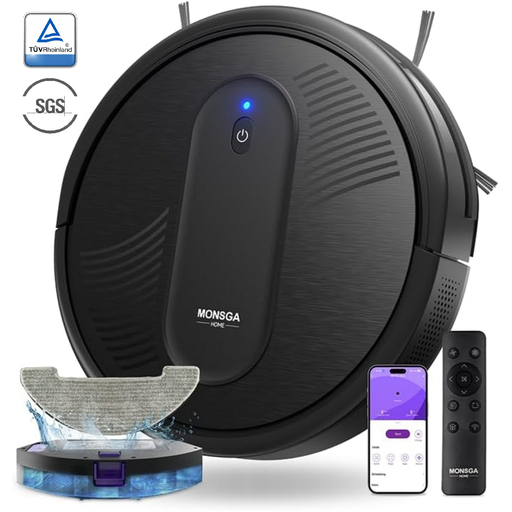 No image available
The product title lists a profile of 3.2 inch; compare this with the clearance under the furniture in your hallway.
The title lists 4000 Pa, a 140-minute run time and control via app, voice or remote control.
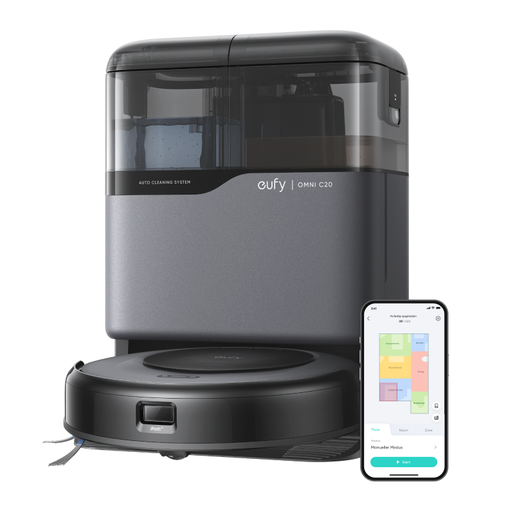 No image available
The product title states that the robot is 8,5 cm tall; also measure the space for the all-in-one station, which needs an additional spot.
The title lists 7000 Pa. Wi-Fi requires a 2,4 GHz network; a network that only uses 5 GHz doesn’t meet this requirement.
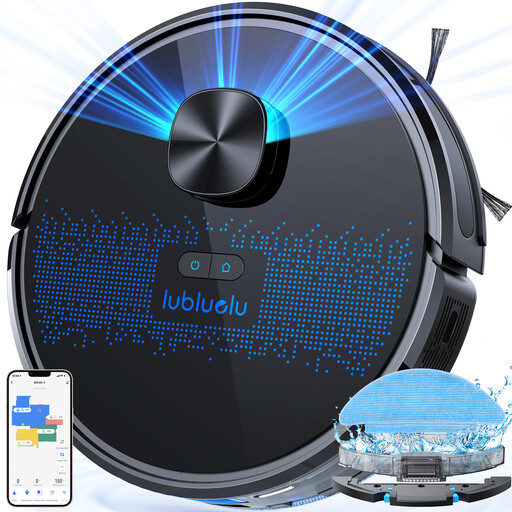 No image available
The product title mentions laser navigation and app control; check that your hallway has enough room around the charging station.
The title lists 4000 Pa and 55 dB. The specified clearance for the charging station is at least 0,5 m on each side and 1,5 m in front.
Follow the instructions for your exact model and leave the required clearance around the dock. For the Roomba Mini with AutoEmpty dock, iRobot specifies a hard, level surface and at least 1,5 metres from a staircase; this guidance applies to that model.
No. Assess vacuuming and mopping separately for your type of flooring. The Consumentenbond distinguishes between different types of mopping systems and tests dirt removal on a range of floor types. So, the presence of a mopping function alone doesn’t tell you whether the results will meet your needs.
According to the Dutch government, the seller must provide a solution if a product is faulty. A manufacturer’s warranty is separate from your statutory right to a product that works properly.
According to ACM ConsuWijzer, online purchases generally come with a cooling-off period of up to 14 days after delivery. Before ordering, check the applicable exceptions and conditions for unpacking, trying out and returning the product.