
Vandaag of morgen in huis

Kwaliteit gegarandeerd

Welkomstaanbiedingen ontgrendelen: GRATIS bezorging | Tot 80% korting | Gratis 30 dagen JoyPlus-proefperiode
Download de app
A robot vacuum that empties itself sounds like the ultimate dream for anyone who dislikes household chores. You set it up once and don't have to think about it for weeks. But the market is flooded with models that promise the world. Unfortunately, clever marketing and vague specifications often lead to a disappointing purchase. Before you invest, it's important to recognise the common pitfalls.
Many buyers fall for the following traps:
robot vacuum with a self-emptying station is meant for convenience. However, some models use expensive, brand-specific dust bags that you constantly have to repurchase. This turns a one-time purchase into a recurring expense.To choose a model that does its job well, it's wise to look beyond the marketing and focus on a few key specifications. These determine whether your new household helper is an asset or a source of frustration.
The navigation method is perhaps the most important component. A LiDAR robot vacuum (Light Detection and Ranging) uses a rotating laser to create a precise, 360-degree map of your home. This has several concrete advantages:
Models without LiDAR are often cheaper, but you'll likely find yourself constantly rescuing them from tricky situations.
High suction power, such as a 10000Pa robot vacuum, is especially useful for households with carpets and pets. It helps to remove deeply embedded dirt and a large amount of hair, making it a great robot vacuum for pet hair. However, also pay attention to the following points:
The self-emptying station is the core feature you're paying for. The main choice here is between a station with dust bags and a bagless robot vacuum.
Based on objective specifications, we have selected a number of models that suit specific needs and avoid the pitfalls mentioned earlier.
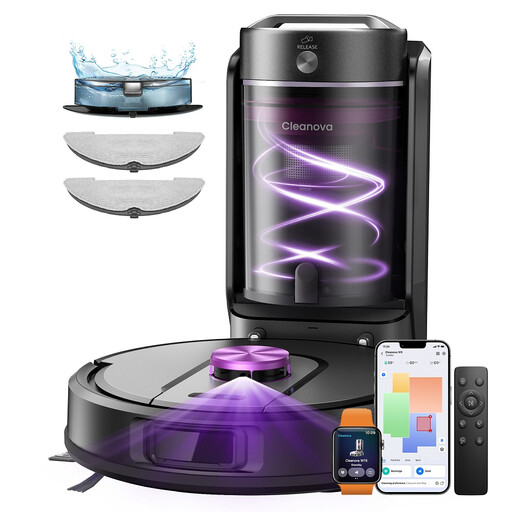
Why This Fits Their Persona: For a household with pets or children, powerful and thorough cleaning is essential. This model combines very high suction power with a bagless station, ideal for daily cleanup of hair and crumbs without constantly buying new dust bags.
The bagless self-emptying station eliminates the hidden cost of dust bags. The 10000Pa suction power here is not just a marketing gimmick, but functional for deep cleaning carpets where pet hair accumulates.
10000Pa suction power for effective pet hair removal. Bagless cyclonic station for lower operational costs and less waste.
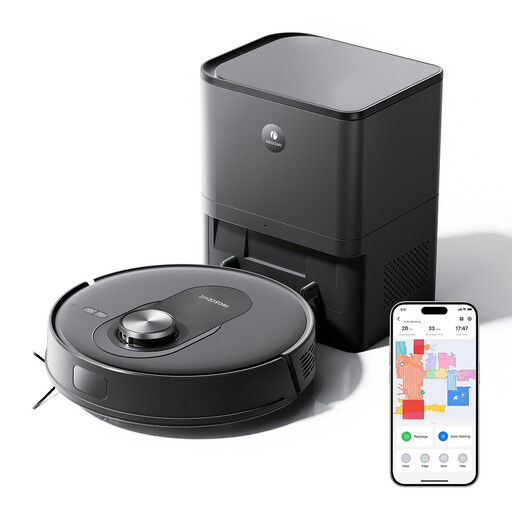
Why This Fits Their Persona: Those who live in an apartment and lead a busy life are looking for an efficient all-in-one solution. This model combines a robot vacuum with mopping function and reliable navigation. The smart robot vacuum with an app makes it easy to set cleaning schedules, even when you're not home.
The intelligent laser navigation (LiDAR) avoids the frustration of a 'dumb' robot that gets stuck or misses spots. It efficiently maps the space for a systematic cleaning.
Combined mopping and vacuuming function for a complete clean of hard floors. Intelligent laser navigation with support for 5 maps, ideal for homes with multiple floors.
We have compiled a complete, up-to-date list of products that meet these selection criteria and comply with Dutch regulations.
This depends on the type of station and your household. A bagless robot vacuum with a large reservoir, like the Vexilar W15 with its 4-litre capacity, may not need to be emptied for up to 90 days, according to the manufacturer. For models with a dust bag, it depends on the size of the bag (usually 2-3 litres) and the amount of dirt. In an average household, this means once every 30 to 60 days.
Yes, absolutely. LiDAR robot vacuum technology uses invisible laser beams to map its surroundings. It does not rely on ambient light, unlike models that use a camera for navigation (vSLAM). Therefore, a LiDAR robot performs just as well in a completely dark room as it does during the day.
The main recurring cost is the dust bags for models that use them. The price of these varies by brand. A bagless robot vacuum does not have this disadvantage. For all models, you will need to periodically replace the filters (HEPA) and brushes to maintain cleaning performance. This is typically necessary once or twice a year, depending on usage.
