
Renter with limited space
Wants to keep the open floor clean without a large station taking up valuable space. Consumentenbond points out that a station with a dust bag takes up more room than a standard charging dock.


In a compact rental home, a robot with a standard charging dock is a sensible place to start if you want to preserve floor and storage space. A mopping or self-emptying station can take care of extra tasks, but it also needs a suitable spot and still requires maintenance. Check how the specific model handles furniture and loose items, too: a particular navigation system alone does not guarantee that a robot will never get stuck.
Wants to keep the open floor clean without a large station taking up valuable space. Consumentenbond points out that a station with a dust bag takes up more room than a standard charging dock.
Wants to know how a robot navigates around chair legs, rugs and cables, and whether it returns to its station. Consumentenbond includes these kinds of obstacles in its robot vacuum cleaner tests.
Is considering mopping or automatic emptying, but wants to weigh these features against the space a station takes up and the maintenance required for pads, water components or dust bags.
First, work out where the robot and station can go. Then decide whether mopping or emptying less often is worth the extra space and ongoing maintenance.
Best for: anyone who prioritises floor and storage space and is happy to empty the dustbin themselves.
Trade-off: emptying and any mop pad maintenance are still manual tasks; also check how it handles furniture and cables.
Best for: anyone who wants to mop a suitable hard floor regularly and cares about the robot’s width. ECOVACS lists the DEEBOT mini as 28,6 cm wide.
Trade-off: measure the station, the access route to it and the space needed to maintain its water and waste components; the stated dimensions say nothing about cleaning results.
Best for: anyone who wants to empty the robot’s dustbin less often and has enough room for a larger station.
Trade-off: the dust bag will eventually need replacing; check the collection system and maintenance required for each version.
| What to consider | What to check before buying | Who should consider this? |
|---|---|---|
| Space for the robot and station | Measure the station’s full footprint and check the robot’s width and the width of any passageways. | If I have limited floor or storage space, I want to know whether both the robot and station will fit somewhere practical. Consumers who mainly want to preserve space make up around 36% of consumers in this scenario breakdown. |
| Navigation around furniture | Compare tests of the specific model for obstacle handling and returning to its station; tidy away loose cables. | If there are chair legs, cables or rugs on the floor, I want to know how the robot handles them and whether it returns to its station. Around 29% of consumers give navigation and obstacles the highest priority. |
| Mopping the open floor | Check that the mopping version is suitable for your floor type and find out how the model handles rugs. | If I also want a suitable hard floor mopped, I weigh that against the maintenance required for pads and water components. Around 21% of consumers put mopping first. |
| Manual maintenance | Check which collection system the version uses and what maintenance is still needed for the brushes, filters and station. | If I want to empty the dustbin less often, I want to know which tasks the station takes care of and what I will still need to do myself. Around 14% of consumers give reducing manual maintenance the highest priority. |
A self-emptying station can take up more floor or storage space than a standard charging dock. Consumentenbond describes this difference for charging stations with a dust bag.
Measure the full space you have available and check the dimensions of the exact version.
You may have to give up floor or storage space; some stations also require you to replace the dust bags.
A stated navigation system does not show how a model handles cables, rugs or furniture legs. Consumentenbond assesses obstacle handling separately.
Where possible, compare test information for the specific model and tidy away loose cables before running the robot.
Mopping systems vary, and a robot will not reach every corner or surface. Pads and any water components also need maintenance.
Check your floor type, the mopping version and how the model handles any rugs before choosing a mopping station.
Allow time to maintain the mop pads and, depending on the version, the water components.
The Roomba 105 Combo is an example of a robot with a standard charging dock and a mopping option. iRobot Netherlands lists ClearView LiDAR navigation and carpet detection while mopping.
The DEEBOT mini is worth considering if the robot’s width and an integrated mopping station matter to you. ECOVACS Netherlands lists the robot as 28,6 cm wide and the station as 38,5 cm high.
The eufy L60 with Self-Empty Station is an example of a version with automatic emptying and map-based navigation. These features do not necessarily apply to other L60 versions.
This selection includes robot vacuum cleaners for open floors with hard flooring or low-pile carpet, with a range of mopping and dust collection features. Check that both the robot and station will fit in your home for each model.
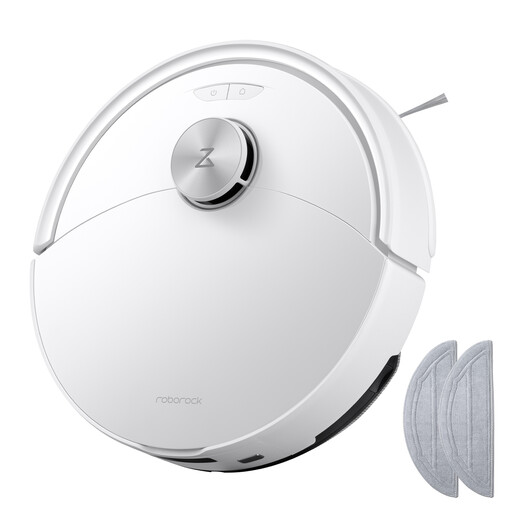 Image unavailable
An option to consider if you want to vacuum and mop hard floors and low-pile carpet.
The product name lists 10.000 Pa, a dual anti-tangle system and an automatically lifting mop.
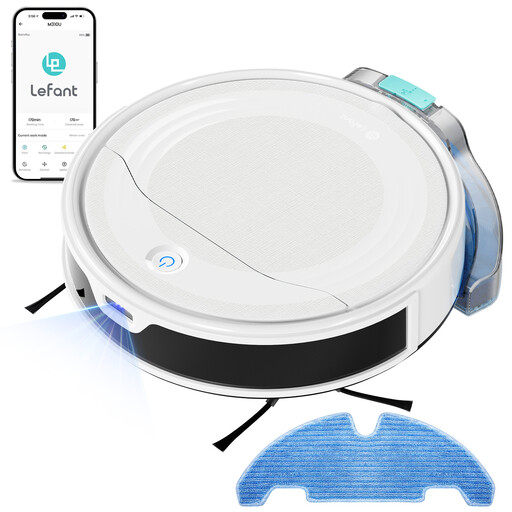 Image unavailable
An option to consider if the robot’s width and height matter for passageways or the space beneath your furniture.
The product information lists robot dimensions of 28 × 7,9 × 28 cm, 6000 Pa, ToF laser navigation and control via the app or Alexa. For mopping, the water tank and mop pad need to be fitted; drain any remaining water after use.
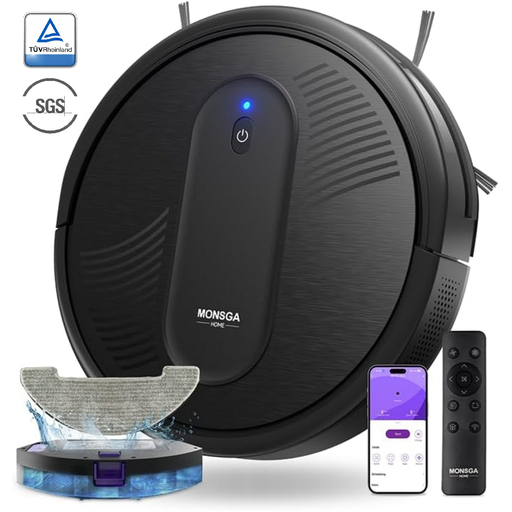 Image unavailable
An option for open floors with hard surfaces or low-pile carpet, if a low profile is important to you.
The product name lists 4000 Pa, a profile of 3,2 inches and a runtime of 140 minutes. Remote, app or voice control and scheduled cleaning are also mentioned.
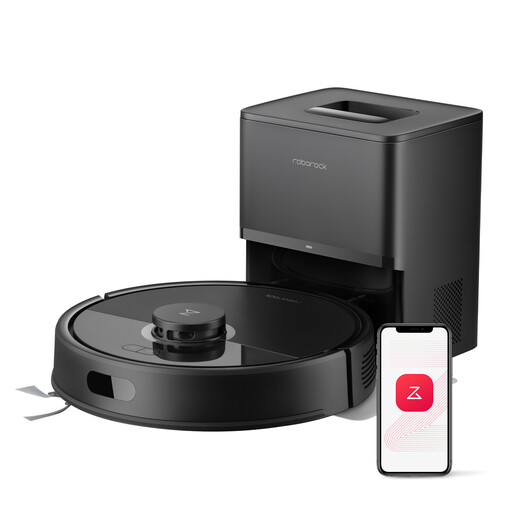 Image unavailable
An option if you want to empty the bin manually less often and have room for a self-emptying station.
The product name and product information list automatic emptying, LiDAR navigation, 8000 Pa and a mop that lifts 10 mm when carpet is detected. According to Consumentenbond, a self-emptying station takes up more room than a standard charging dock.
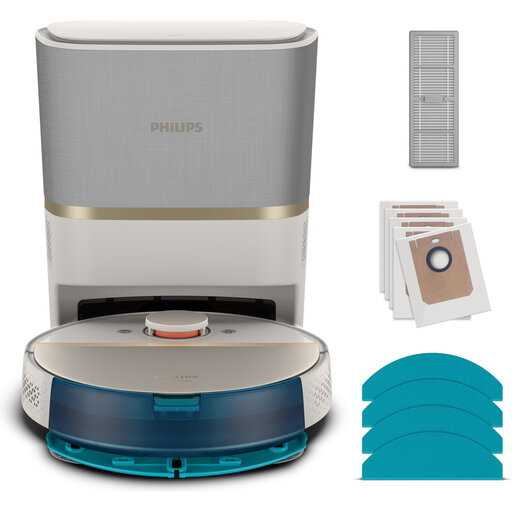 Image unavailable
An option if automatic emptying and mopping are priorities and you have room for the station.
The product information lists 5000 Pa, a runtime of 180 minutes, LiDAR navigation and an automatic emptying station. The app is needed for full functionality; users need to share data to create an account.
No, not for every task. Consumentenbond cites stairs, crevices, high thresholds and awkward corners among the limitations; use a robot mainly to keep accessible floors clean.
First, choose a spot for the station, tidy away loose cables and check that the robot can navigate around furniture and back again. Consumentenbond assesses obstacles and returning to the station as separate parts of its robot vacuum cleaner tests.
A freestanding, movable station is different from renovation work. According to the Dutch government, small changes that are easy to reverse do not require permission, but renovations do. Check your tenancy agreement if you want to attach or change anything permanently.
No. According to ACM ConsuWijzer, the Netherlands’ statutory guarantee does not have a fixed two-year limit. It depends on what you can reasonably expect from the product under normal use; the seller is your point of contact.
Read the privacy policy before buying and check the information about security and updates. The Dutch Data Protection Authority points out that connected devices can collect data about users and other people; this is something to consider when choosing, not a ban on app control.