
A household with lots of pet hair
You want to pick up hair from hard floors regularly and, above all, find out how well the robot collects it and how much brush and dust-bin maintenance is still needed.


When choosing a robot vacuum for pet hair on hard floors, focus on cleaning results for the exact model. A high suction-power figure alone doesn’t tell you how much hair will be left behind. An auto-empty station can mean less manual emptying, but it takes up space and requires compatible dust bags. Even with a robot, you’ll still need to prepare the room, check the edges and maintain the brushes.
You want to pick up hair from hard floors regularly and, above all, find out how well the robot collects it and how much brush and dust-bin maintenance is still needed.
You want to target an accessible room or a visible area. Ease of use, navigation and avoiding missed spots are all important.
You want to clean frequently without emptying the robot’s bin every time, and weigh up whether a larger station and its consumables will suit your home.
Start with how well it cleans hard floors. Then consider whether you want to select a specific room before guests arrive, and how much emptying, preparation and maintenance you’re happy to do.
| What to consider | What should you check? | Who is this for? |
|---|---|---|
| Picking up hair | Look at cleaning results on hard floors for the exact model, and check that you can access the brush for maintenance. | If I mainly want to pick up pet hair from my hard floors, I want to know what the robot leaves behind and how to clean the brush. Around 36% of consumers put hair pick-up first. |
| Targeted cleaning | Check whether you can select a room or area, and how the robot handles obstacles and finds its way around that space. | If guests are nearly at the door, I want to send the robot to the visible area and know whether it will get there in time. Around 29% of consumers prioritise targeted cleaning before guests arrive. |
| Emptying and maintenance | Check whether it has an auto-empty station, which dust bags fit it, and how to clean the brushes and filters. | If I clean often and don’t want to keep emptying a bin full of hair, I weigh up a station against the space and bags it requires. Around 21% of consumers put less frequent emptying first. |
| Space and controls | Measure the clearance under your furniture and check what controls, obstacle detection and no-go zones the exact model offers. | If my room has furniture, cables or thresholds, I want to know whether the robot can follow the route I need and how to set it up. Around 14% of consumers prioritise obstacles and controls. |
A suction-power specification doesn’t tell you how much pet hair will be left on your hard floors. The Consumers’ Association treats hard-floor cleaning as a separate part of its testing.
Look for results for the exact model, and also consider how well it cleans along skirting boards and how easy it is to access the brush.
A station can mean less manual emptying, but it may need compatible dust bags. Brushes, filters and sensors still need maintenance.
Before buying, check which bags fit, how much space the station takes up and how to maintain its components.
Picking up dust and dirt from hard floors and mopping are two different things. The Consumers’ Association tests these cleaning functions separately.
Make picking up hair from hard floors your first priority; only assess mopping if you also need wet cleaning.
Obstacles, thresholds and corners can affect whether the robot reaches the floor you want cleaned, especially when you’re short on time.
Clear its route, set a target area in advance if the model supports it, and leave time to check the edges afterwards.
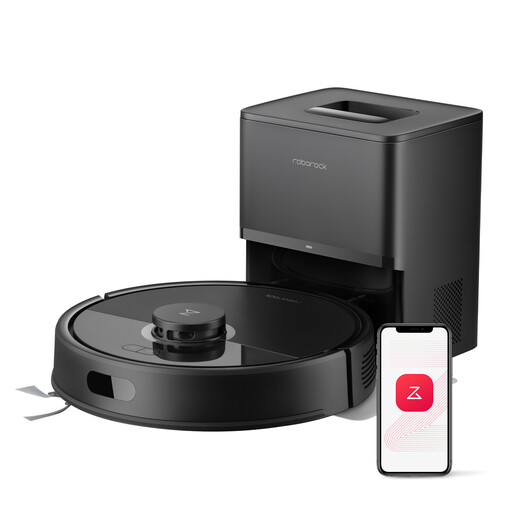
The C10 is a compact robot with an auto-empty station, designed with pet-owning households in mind.
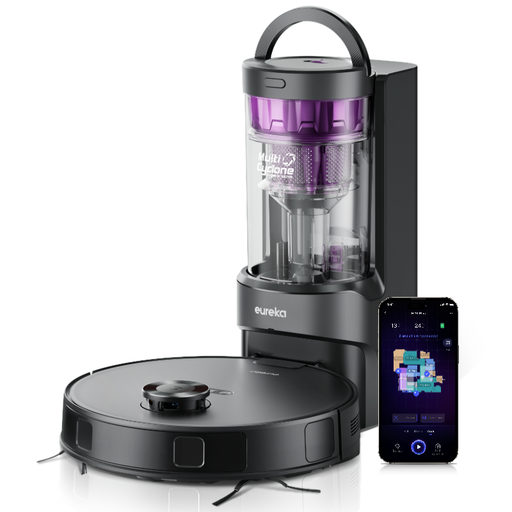
The HomeRun 2000 Series includes the XU2000/25, a robot vacuum and mop with app control.
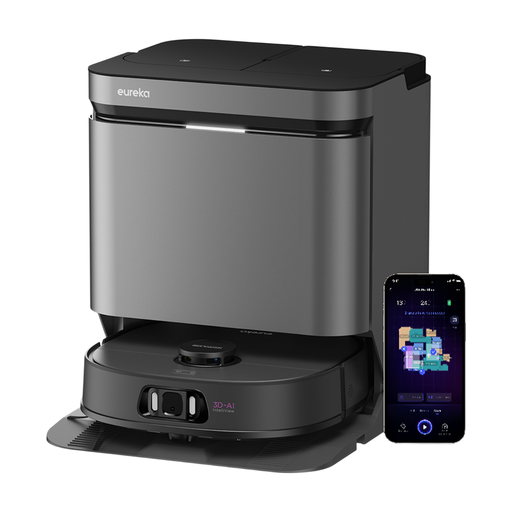
The D30 Ultra is marketed with anti-tangle brushes, mop pads and a self-cleaning system.
The Roomba Combo Essential is a robot vacuum and mop with a spot-cleaning mode described by iRobot.
The DEEBOT range includes various robot series and models.
These models are aimed at households looking to remove pet hair from hard floors. They differ in features such as auto-empty stations, brush technology and mop automation.
 No image available
The product information lists pet hair on hard floors and an auto-empty station as suitable uses.
Stated features: 8.000 Pa suction power, LiDAR navigation, a dual anti-tangle system and automatic emptying.
 No image available
The product information mentions pet hair and hard-floor cleaning; the station is designed to automate mop-pad maintenance.
Stated features: 16.200 Pa, Anti-Wrap Technology, liquid detection, brush lifting and self-cleaning with 75°C hot water.
 No image available
The product information mentions pet hair on hard floors, an auto-empty station and app control with schedules and no-go zones.
Stated features: 8.000 Pa, an anti-tangle function, 3D obstacle avoidance and a stated runtime of 180 minutes.
 No image available
The product information mentions pet hair on hard floors and station functions for washing and drying mop pads.
Stated features: 20.000 Pa, ZeroTangle 3.0 Anti-Tangle, TruEdge 2.0 Edge Cleaning and an OMNI station with mop washing at 75°C.
 No image available
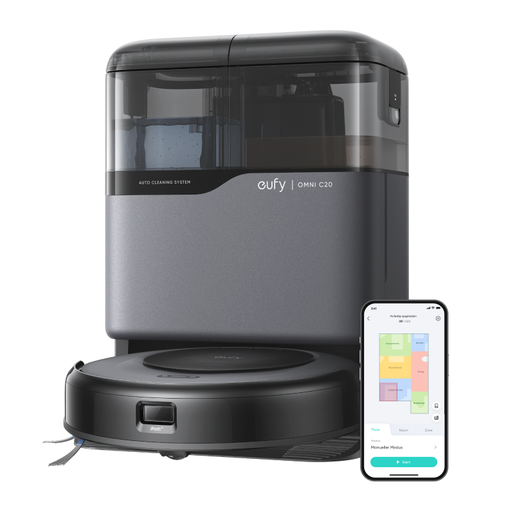
The product information mentions pet hair and a brush with an anti-tangle function; its low profile is designed to clean under furniture.
Stated features: 7.000 Pa, a height of 8,5 cm and an all-in-one station.
Not everywhere. The Consumers’ Association lists stairs, crevices, high thresholds and corners among the limitations; check these areas yourself if needed.
Clear loose items and cables from its route, select the room or area you want if possible, and check that the bin and brush are clean. Obstacles and missed areas can affect navigation; the bin, brushes and sensors also need maintenance.
Check whether the station uses compatible dust bags and whether they’re available to buy. The Consumers’ Association notes that these bags can sometimes be hard to find; brushes, filters and sensors also need maintenance.
No. According to the Dutch government, there is no fixed statutory guarantee period in the Netherlands; you’re entitled to a product that works properly for as long as you can reasonably expect it to. If there’s a fault, contact the retailer; a manufacturer’s guarantee is separate.
For a distance purchase from a business, the Dutch government says you generally have a 14-day cooling-off period. Check the terms of your specific purchase; the cooling-off period is separate from your statutory rights if the product is faulty.