What should you look for?
First compare hair pick-up and stair detection. Then consider whether an emptying station or mopping function suits your space and the amount of maintenance you’re happy to do.
| What to consider |
What should you check? |
Who should give this more weight? |
| Picking up hair from hard floors |
Where possible, look for comparable tests on hard floors using dust and larger debris. Also check the brush design and how well it cleans along edges. |
If I mainly want to keep loose hair off my hard floors, I want to know how the model performs on them and how to clean its brush. Around 29% of consumers prioritise picking up hair from floors. |
| Performance near stair edges |
Check the stair detection on the exact model, keep the sensors clean as described in the instructions and watch the robot during its first run near the stairs. |
If I have an open staircase, I want to know whether the robot can detect the edge. Avoiding obstacles isn’t the same thing. Around 24% of consumers prioritise stair-edge detection. |
| Noise while in use |
Where possible, compare the noise made while the robot is running and while it empties automatically. Also decide when the robot can run. |
If I need to be considerate of people living nearby, I want to take both noise levels into account. Around 18% of consumers say noise is their main concern when buying. |
| Space for the dock and maintenance |
Measure the space available for the dock and check which bags and replacement parts fit the model. |
If space is limited, I want to weigh up a larger station against emptying the robot by hand less often and the maintenance that still needs doing. Around 17% of consumers prioritise space and ongoing maintenance. |
| Mopping paw prints |
Assess mopping results separately from hair pick-up and check whether your floor is suitable for damp cleaning. |
If I want to tackle paw prints as well as loose hair, I want to know what the mopping function adds and what maintenance it needs. Around 12% of consumers prioritise mopping. |
Joybuy products
These models are options to compare for keeping pet hair under control on hard floors. Check hair pick-up and stair detection for each model.
 No image available
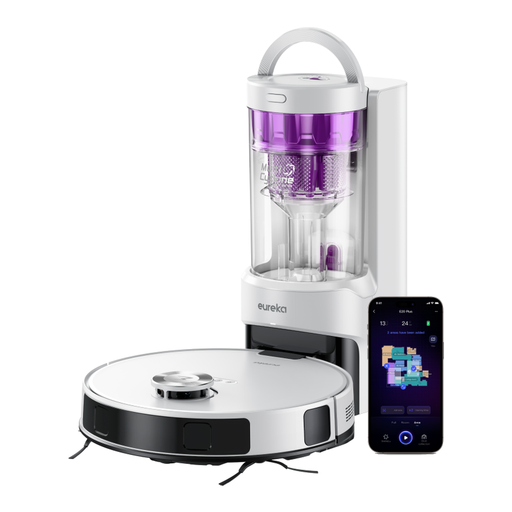
EUREKA E20 Plus
Worth comparing for pet hair on hard floors. Check how well this model actually picks up dirt from floors and detects stair edges.
The product name lists 8000Pa, an anti-hair tangle brush and app control. These details alone don’t prove how well it cleans.
View at Joybuy
 No image available
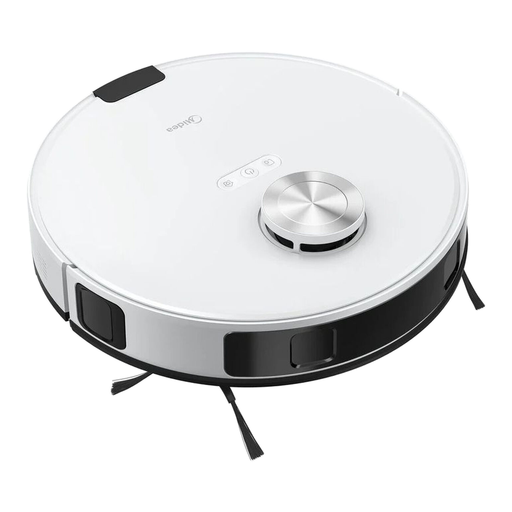
Midea M9, white
A model to compare for hard floors and use on an upper floor. Check stair detection for the exact version.
The product name lists the colour as white.
View at Joybuy
 No image available
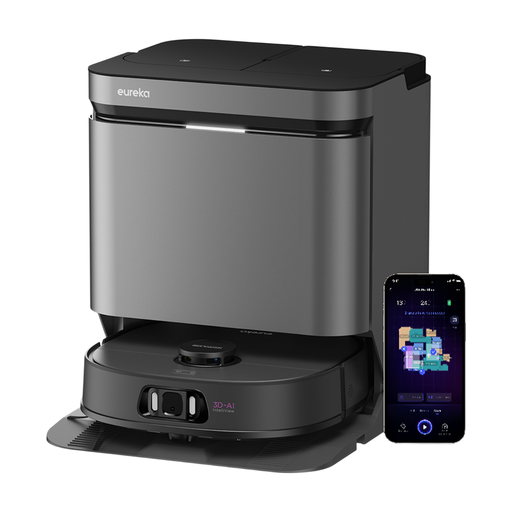
EUREKA J15 Pro Ultra
Worth comparing if you’re considering a mopping function as well as picking up loose hair. Assess mopping and hair pick-up separately.
The product name lists 16200 Pa, anti-wrap technology, liquid detection, brush lift and 75°C hot-water cleaning. These aren’t independent performance assessments.
View at Joybuy
 No image available
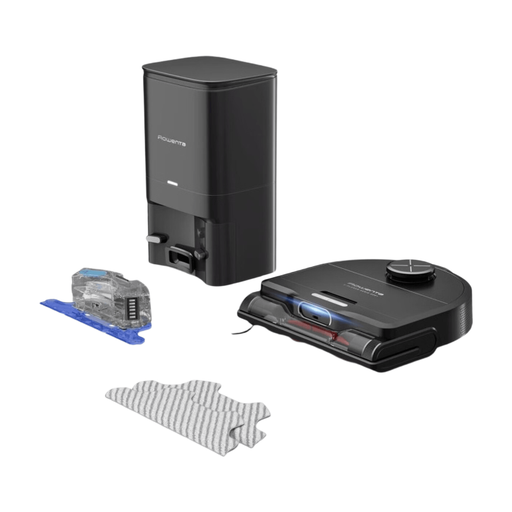
Rowenta X-Plorer Series 220 Plus
An option to compare for hard floors with pet hair. Check this version’s floor pick-up, brush maintenance and stair detection.
View at Joybuy
 No image available
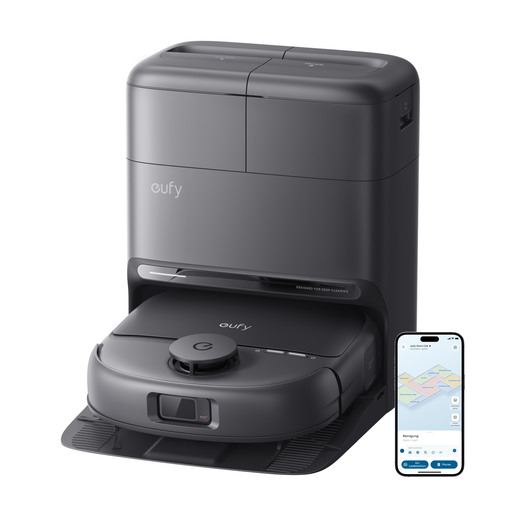
eufy C28 Omni
Worth comparing for pet hair on hard floors. Check its actual hair pick-up and stair detection separately.
The product name lists 15,000 Pa, Zero-Tangle and a HydroJet self-cleaning roller mop. These details aren’t independent confirmation of performance.
View at Joybuy
Frequently asked questions
Can a robot vacuum clean the stairs?
No, a robot vacuum can’t vacuum stair treads. If it can reach an open staircase, check the stair detection on the exact model and watch it during its first run near the stairs.
What maintenance does a robot vacuum need after installation?
You’ll need to clean the brushes, wheels, filters and sensors, among other things; the Consumentenbond lists this as regular maintenance. An automatic emptying station means you don’t have to empty the robot’s dust container by hand as often, but the station bag and any mopping equipment also need attention.
Do I need extra cover when buying in the Netherlands?
When you buy in the Netherlands, your purchase is covered by the statutory guarantee, and the seller is your point of contact if there’s a problem with the product, according to the Rijksoverheid. Extra cover is only an additional benefit if its terms demonstrably go beyond your statutory rights.
Is a CE mark relevant when buying?
Yes. The CE mark is relevant for products covered by EU rules that require it. The European Commission’s Your Europe website emphasises that it isn’t independent proof of cleaning performance.


