
Vandaag of morgen in huis

Kwaliteit gegarandeerd

Welkomstaanbiedingen ontgrendelen: GRATIS bezorging | Tot 80% korting | Gratis 30 dagen JoyPlus-proefperiode
Download de app
A robot vacuum cleaner with a mopping function can make everyday cleaning easier, but not every model suits every household. A family with crumbs and toys has different requirements from someone with pets, lots of carpet or mainly hard floors. What is more, terms such as “powerful robot vacuum cleaner”, “smart navigation” and “fully automatic” only mean something when you know which specifications sit behind them.
So pay particular attention to these three common pitfalls:
Suction power is usually expressed in Pa. Across the range, stated values vary from 2,200 Pa for the Lefant M210P to 30,000 Pa for the Dreame L50s Pro Ultra. Use this figure mainly as a point of comparison within a product category, not as a standalone guarantee of quality.
For pets and long hair, an anti-tangle brush and a well-designed side brush are particularly important in practice. Also check whether the brush can be removed. This makes it easier to remove hair. A robot vacuum cleaner for pets should also have a suitable filter and a sufficiently large dustbin, so you do not have to empty it after every cleaning cycle.
A robot vacuum cleaner with LiDAR navigation generally creates a map using laser distance sensors. This helps with systematic routes, virtual walls and multiple maps. Models such as the Philips HomeRun 2000 Series use LDS radar and, according to the product specifications, support up to five maps.
Also consider the robot’s height and the clearance under your furniture. A low robot can fit more easily under sofas, but a raised laser turret may require extra space. Obstacle avoidance does not automatically prevent every problem: loose cables, socks, toys and thin curtains can still cause the robot to get stuck.
With a basic robot mop, a damp cloth is attached to the underside. This is useful for everyday dust and light footprints on hard floors, but it is not designed to absorb large amounts of water or spilled liquid.
For homes with carpet, an automatic mop lift is useful. The Eureka E20 Plus, for example, specifies a 10 mm mop lift. Other models can detect carpet and adjust the mopping mode. Always check that the stated function is suitable for the height of your carpet.
A robot vacuum cleaner with an auto-empty station empties the dustbin automatically. A more advanced all-in-one station can also wash and dry mop pads, top up the water and clean the station. This reduces manual work, but it does require space and regular maintenance. Check the dimensions and the available space around the station beforehand.
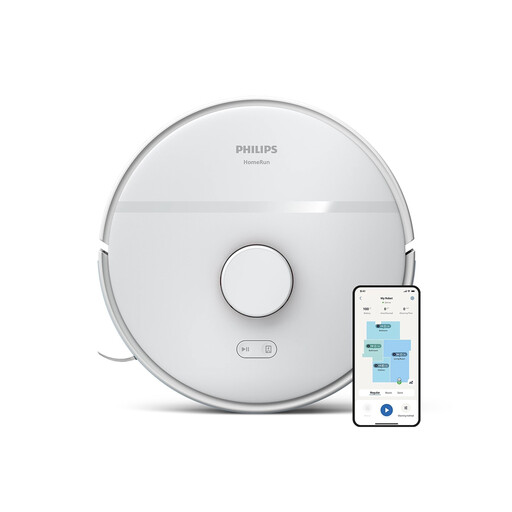
Why it suits this profile: This model combines vacuuming and light damp cleaning on hard floors, with app control and LDS radar navigation. The stated runtime is up to 120 minutes.
The specifications clearly state that it has a passive mop, four suction levels and three water levels. This makes it easier to assess the mopping function than with a general marketing claim.
Stated suction power of 6,000 Pa, automatic carpet boost, control via the HomeRun app and support for multiple maps.

Why it suits this profile: Ideal for households that want to minimise manual maintenance while combining different types of flooring.
The station’s functions are clearly specified: automatic dust emptying, mop washing with 75 °C water, hot-air drying and water refilling.
Stated suction power of 20,000 Pa, rotating mops, TrueMapping 2.0, carpet detection and an OMNI station with a 4-litre clean water tank.
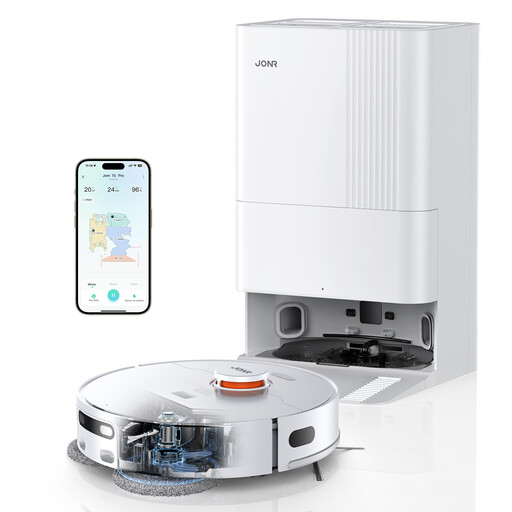
Why it suits this profile: A practical choice for anyone who wants to combine strong stated suction power, LiDAR navigation and automated maintenance.
The product information specifies an anti-tangle side brush and obstacle avoidance. The app also supports no-go zones, schedules and adjustable suction levels.
Stated suction power of 8,150 Pa, LiDAR mapping, hot-air drying and an all-in-one dock. The dust bag and dirty water tank still need to be maintained according to the notifications.
We have put together a complete, up-to-date list of products that fully meet these strict selection criteria and the applicable European safety regulations.
Before buying, check whether consumables are available: mop cloths, filters, brushes, dust bags and cleaning solution. A station with automatic dust emptying can reduce daily effort, but dust bags are an ongoing cost. With a bagless station, this expense is eliminated, but you will need to empty and clean the collection bin yourself.
Also consider where you will place it. A station needs a flat surface and sufficient clearance to dock reliably. For the JONR T5 Pro, a minimum of 50 centimetres on both sides and 1.5 metres in front is specified. Do not place the base next to an area where water regularly splashes.
Use a robot mop only for the purpose for which it was designed. Do not allow it to vacuum flammable liquids, standing water, hot ash or sharp objects. For models with a water tank, prevent leaks by fitting the tank correctly and removing any remaining water after use when instructed to do so in the manual.
Yes, but the capabilities vary. Check whether the model detects carpet and lifts or removes the mop. A mop lift is particularly useful when hard floors and carpet are cleaned during the same cycle.
Expect to empty or check the dustbin regularly, clean the filters and brushes, and rinse the mop cloth. With a self-cleaning station, you will also need to check the clean and dirty water tanks, the base plate and any dust bags.
In addition to the purchase price, electricity, filters, brushes, mop cloths, dust bags and, where applicable, suitable cleaning solution may all add to the cost. A large station can reduce the number of maintenance sessions, but it does not eliminate the need for replacement parts.
