
Vandaag of morgen in huis

Kwaliteit gegarandeerd

Welkomstaanbiedingen ontgrendelen: GRATIS bezorging | Tot 80% korting | Gratis 30 dagen JoyPlus-proefperiode
Download de app
A robot vacuum with a mopping function can remove dust, crumbs and hair every day without you having to reach for a vacuum cleaner and mop yourself. However, not every model is suitable for every home. For example, a high suction power figure on the packaging says little about navigation, maintenance or performance on carpets.
For UK households, three things are particularly important: the layout of your home, the type of flooring and how much manual maintenance you are prepared to accept. Below, you’ll find what to look out for and which models suit different situations.
The term Pa, or pascal, indicates the stated suction pressure. A model rated at 10,000 Pa may appear more powerful on paper than one rated at 4,000 Pa, but this is not a complete measure of performance. Brush design, the air channel, filter and automatic carpet detection also play a part.
According to the product descriptions of some brands, the robot can automatically increase suction power on carpets. Always check whether this is actually listed as a product feature and whether the model is suitable for your type of rug.
The mopping module is generally designed for damp maintenance, not for vacuuming up puddles or removing stubborn, dried-on stains. A robot vacuum with a mopping function therefore works best when you clean regularly and remove spilled dirt manually first.
Also pay attention to how the robot handles carpets. An automatic mop lift can prevent a rug from becoming damp, but check the stated lift height and how well the carpet detection works.
A robot vacuum with a self-emptying station can empty its dust container automatically, but filters, brushes, sensors and mop pads still need to be maintained. For a model with a dust bag, you should also check its capacity and the availability of replacement bags. A bagless station reduces the use of disposable bags, but the collection bin still needs to be emptied regularly.
A robot vacuum with LiDAR navigation uses laser mapping to map rooms, furniture and obstacles. This can help with systematic cleaning routes and with setting up rooms, virtual walls and no-go zones.
A smart robot vacuum with an app generally offers more settings than a model with only a remote control. However, check:
LiDAR does not guarantee that the robot will recognise every obstacle. Cables, reflective surfaces, very dark floors and small objects can still cause problems.
For a robot vacuum for pet owners, Pa ratings are not the only relevant factor. Look for an anti-tangle brush, a suitable main brush and the option to schedule daily cleaning. Hair often collects along skirting boards, underneath furniture and around the wheels.
A product description may, for example, mention 4,000 Pa, 8,000 Pa or 10,000 Pa. These are the brand’s stated technical specifications and are not an independent guarantee of a particular cleaning result. When there is a lot of hair, the brush will still need to be cleaned regularly.
A robot vacuum for carpets and hard floors should be able to switch between different surfaces. Look out for:
Only use clean water in the water tank unless the manufacturer explicitly approves a specific cleaning solution. The robot is not designed for large quantities of liquid or flammable liquids.
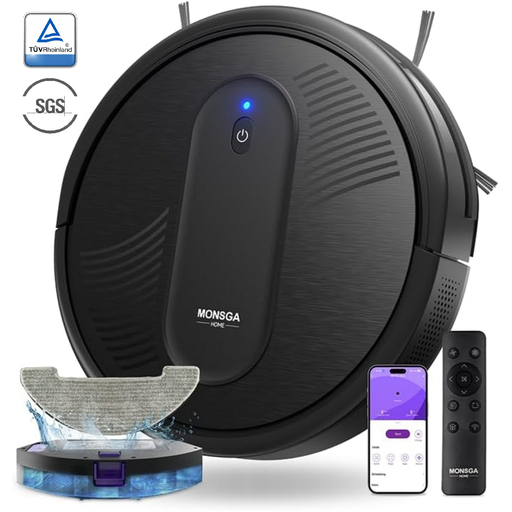
Why it suits this profile: This model is designed for daily vacuuming on hard floors and low-pile carpets. Control via the remote, app and voice function makes it easy to get started.
The product name states 4,000 Pa and a height of 3.2 inches. Before buying, check the exact mopping and navigation functions in the current product information.
The stated advantages include the robot’s low height, 140 minutes of runtime and control via the app, remote and voice function.
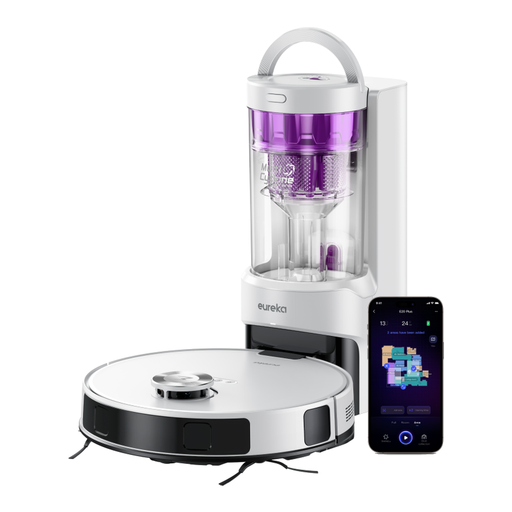
Why it suits this profile: This model is intended for households with pets and multiple floor types. The product description mentions LiDAR, obstacle recognition, a mop lift and a bagless collection bin.
The stated 10,000 Pa, anti-tangle brush and automatic mop lift address important points to consider. Results and maintenance intervals may vary from home to home.
According to the product information, the model has a 2-litre dust container, 180 minutes of runtime and a 10 mm mop lift when carpets are detected.
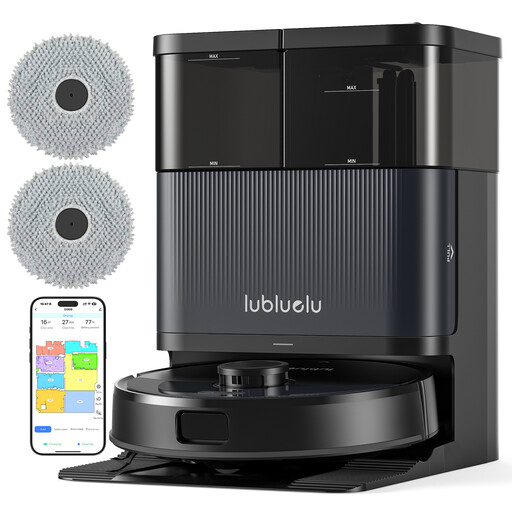
Why it suits this profile: This model is suitable for users looking for a robot vacuum with a mopping function and self-emptying, app control and a stated suction power of 10,000 Pa.
The product information mentions automatic mop lifting, LiDAR mapping and a station. Check the station’s dimensions and the cost of consumables before ordering.
The stated features include app control, LiDAR navigation, carpet detection and maximum suction power of 10,000 Pa.
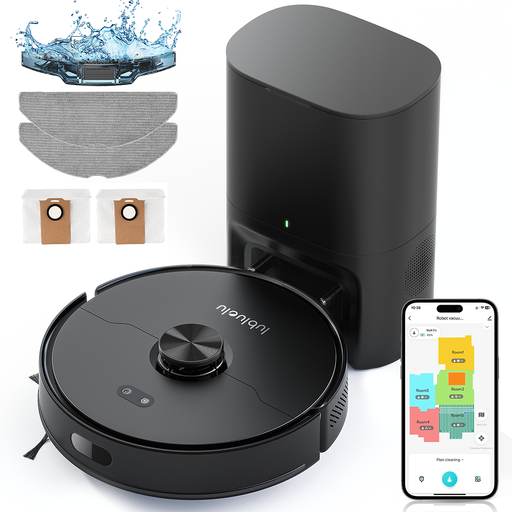
Why it suits this profile: The stated height of 9.7 cm, laser navigation and storage for up to five maps are practical for homes with multiple rooms or floors.
The app supports rooms, schedules and no-go zones. Before the first cleaning run, clear cables and toys from the floor, as stated in the instructions.
According to the product information, the model offers 4,000 Pa suction power, 180 minutes of runtime, five map layers and app control.
Place the charging or self-emptying station on a level surface against the wall. Leave enough clear space around it; for the models mentioned, a minimum of 0.5 metres on both sides and 1.5 metres in front is often recommended.
During the first run, allow the robot to create a complete map. Clear away loose cables, toys and small objects beforehand. You can then set up rooms, schedules and no-go zones.
For reliable operation:
Also check the information about the warranty, returns policy, EU responsible person and CE marking. A CE marking is a declaration of conformity with applicable European rules; it is not a quality ranking or a guarantee of a particular cleaning result.
We’ve put together a complete, up-to-date list of products that fully meet these strict selection criteria and the applicable European safety regulations.
Yes, when the model has carpet detection, a mop lift or adjustable mopping zones. Check the stated maximum mop-lift height and the type of carpet. A robot is mainly suitable for everyday maintenance; deep stains or very high-pile carpets may require additional manual cleaning.
A self-emptying station reduces how often you need to empty the robot’s bin, but it does not eliminate maintenance. Clean the brushes and filters regularly, wash the mop pad after use and check the collection bin or dust bag. Homes with pets may require more frequent maintenance because of hair build-up.
In addition to the purchase price, electricity use, replacement filters, brushes, mop pads and dust bags can all add to the cost. A bagless station avoids the expense of disposable bags, while a station with a dust bag can mean less direct contact with dust. So don’t compare only the price of the appliance; also consider the available accessories and maintenance frequency.
