
Vandaag of morgen in huis

Kwaliteit gegarandeerd

Welkomstaanbiedingen ontgrendelen: GRATIS bezorging | Tot 80% korting | Gratis 30 dagen JoyPlus-proefperiode
Download de app
A robot vacuum with a mopping function can take a lot of the effort out of your daily cleaning, but not every model is right for every home. A flat with hard floors calls for something different from a house with deep-pile carpets, pets and multiple floors. Marketing terms such as “powerful”, “fully automatic” and “smart” also tell you little without specific details.
So, pay particular attention to these three potential pitfalls:
Suction power is usually measured in Pa, or pascals. A robot vacuum with 4.000 Pa may be suitable for everyday dirt on hard floors and low-pile carpets. Models with 8.000 Pa or more are worth considering if you need to pick up lots of sand, crumbs or pet hair.
However, the highest figure isn’t the only thing that matters. Also check:
A robot vacuum for carpets and hard floors needs to do more than just move around and suck up dirt. For wooden floors and other delicate surfaces, adjustable water flow is important. Use clean water only, unless the manufacturer approves a specific cleaning solution.
A robot vacuum with LiDAR navigation uses laser data to map rooms and obstacles. This helps with systematic cleaning, room selection and virtual no-go zones. Look for support for multiple maps if you want to clean more than one floor.
A robot vacuum with an app usually offers options such as:
LiDAR won’t automatically prevent every collision. Cables, thin rug edges, dark surfaces and low objects can still cause problems. Before the first clean, clear as much as possible from the floor and check that there’s enough space around the charging station.
A robot vacuum with a self-emptying base can empty its dustbin automatically, but that doesn’t always mean it will wash or dry the mop. There are clear differences between:
Check the ongoing costs too. Dust bags, filters, mop cloths and brushes need to be replaced or cleaned regularly. A large tank means less frequent maintenance, but it also takes up more space.
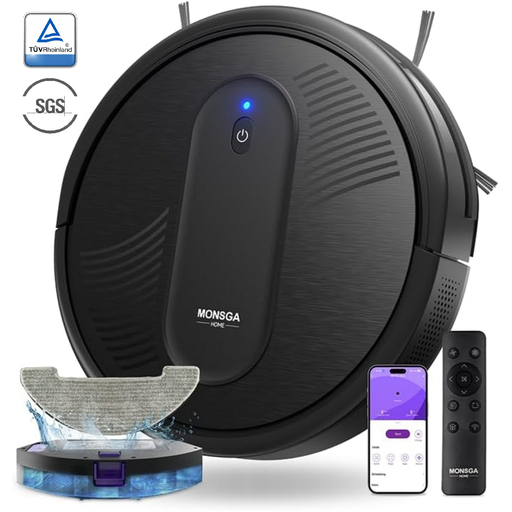
Why it suits this type of user: This model is designed for everyday cleaning on hard floors, low-pile carpets and pet hair. According to the product information, it offers up to 140 minutes of use and can be controlled by remote, app or voice.
The product listing gives its height as 3,2 inch, so it may fit under some furniture. Make sure you check the clearance in your home first, and don’t expect a completely maintenance-free station.
4.000 Pa according to the product name, up to 140 minutes of use and several control options.

Why it suits this type of user: This is an option for households that want the station to take care of as many tasks as possible. According to the product description, the station automatically empties dust, washes the mop with 75 °C water, dries it with warm air and has a 4 litre clean-water tank.
Carpet detection, automatic mop management and an advanced station all help reduce the amount of work you need to do by hand. Be sure to check the station’s dimensions and the space available around it.
20.000 Pa according to the product information, dual rotating mops, TrueMapping 2.0 and several station functions.
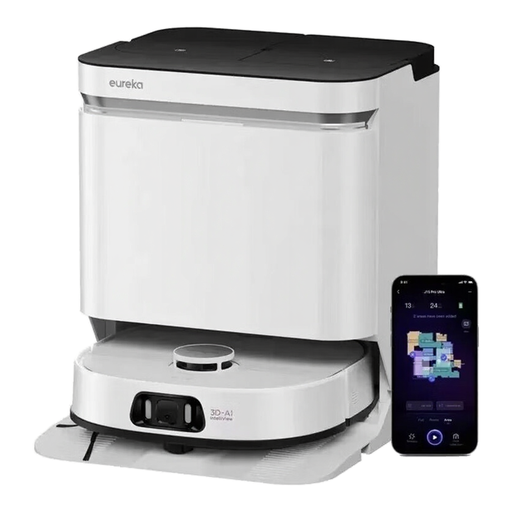
Why it suits this type of user: According to the product specifications, this model is designed for intensive use on different floor types. It has 16.200 Pa suction power, an LDS navigation system, liquid detection and a station that supports washing the mop with 75 °C water and drying it with warm air.
The combination of brush technology, mop lifting and dirt detection is designed to handle hair and varying levels of dirt. Claims about reducing hair build-up come from the brand’s product description and shouldn’t be taken as a guaranteed result.
16.200 Pa, automatic brush and mop lifting according to the specifications, plus hot-water cleaning in the station.
We’ve put together a complete, up-to-date list of products that meet these strict selection criteria and the applicable European safety regulations.
Place the charging or base station on a level, hard surface against a wall. Leave the clearance recommended by the manufacturer; for many models, that means around half a metre on either side and more space in front. Let the robot complete its first full mapping run before setting up rooms or no-go zones.
For safe use:
It can be, as long as the model has low or adjustable water flow and the manufacturer says it’s suitable for your floor type. Use a lightly damp cloth and don’t let water sit in joints or under furniture. You can also visit our page for a robot vacuum for hard floors.
Its lifespan depends on how often you use it, how well you maintain it, the battery and the availability of spare parts. Cleaning the filters, brushes and mop cloths regularly helps keep performance up. The battery will eventually wear out, so check whether a replacement or servicing is available.
As well as the purchase price, you’ll need to factor in electricity, filters, brushes, mop cloths and, where applicable, dust bags or cleaning solutions. A bagless station can help reduce ongoing dust-bag costs, while an all-in-one station may require more water and maintenance. So look at the total running costs, not just the purchase offer.
