
Vandaag of morgen in huis

Kwaliteit gegarandeerd

Welkomstaanbiedingen ontgrendelen: GRATIS bezorging | Tot 80% korting | Gratis 30 dagen JoyPlus-proefperiode
Download de app
A robot vacuum with mopping function can deal with dust, hair and light marks every day, without you having to keep vacuuming yourself. However, not every model is suitable for every home. A flat with hard floors has different requirements from a house with carpets, pets and multiple floors.
Three marketing claims in particular can lead to a disappointing purchase:
For a robot vacuum for pet owners, hair is often a bigger problem than loose dust. So, in addition to suction power, check whether the model has an anti-tangle side brush, a removable main brush or a hair-removal system.
For example, the ECOVACS Deebot T30C OMNI Gen2 lists 20,000 Pa, a three-part V-shaped main brush structure and ZeroTangle 3.0. According to the product description, these features are designed to prevent hair from becoming wrapped around the brush as quickly. This is a product specification, not a guarantee that manual maintenance will never be needed.
A model with 4,000 Pa may be sufficient for a home with mainly hard floors, particularly if it is used regularly. If you have deep-pile carpet or a lot of pet hair, also look for automatic carpet detection, a turbo mode and the ability to lift the mop on carpet.
A robot vacuum with LiDAR navigation uses laser measurements to map rooms and obstacles. This can help with systematic cleaning and setting restricted areas. Check the following:
For models with multiple maps, it is important that you can physically move the robot to another floor without losing the map settings. LiDAR does not prevent every obstacle, either. Cables, toys, loose clothing and dark or reflective surfaces can still cause problems.
If you are looking for a robot vacuum with mop and emptying station, look carefully at what the station actually automates. Some stations only empty the dustbin. Others refill clean water, wash the mop and dry it with warm air.
With automatic mop cleaning with hot water, the temperature is a verifiable product specification, but it is not automatically proof of a hygienic result. The ECOVACS T30C lists 75 °C mop washing, 45 °C hot-air drying, automatic dust emptying, detergent dispensing and a 4-litre clean water tank. However, check that you have enough room for the station and whether drainage and a water supply are unnecessary for the model you choose.
A self-cleaning robot vacuum still requires maintenance. Empty the dirty water tank when the app indicates that it is necessary, clean the sensors and check the mop for hair or dirt. Only use cleaning products approved by the manufacturer.
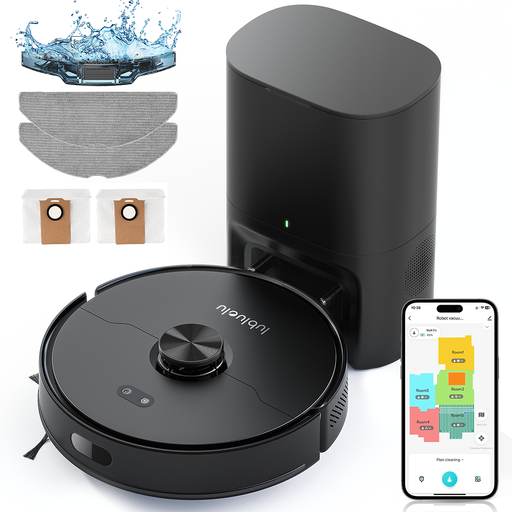
Why it suits this profile: A straightforward choice for anyone who wants to automate vacuuming and mopping on carpets and hard floors for the first time.
The product information mentions laser navigation, multiple maps and adjustable suction power. This means you do not have to rely solely on a high Pa rating.
4,000 Pa, app control, up to five maps and a stated noise level of 55 dB.

Why it suits this profile: Designed for households that want to minimise the amount of work required after each cleaning cycle.
The OMNI station automates several maintenance steps instead of simply emptying the dustbin.
20,000 Pa, TrueMapping 2.0, automatic carpet detection, 75 °C mop washing and 45 °C drying according to the product listing.
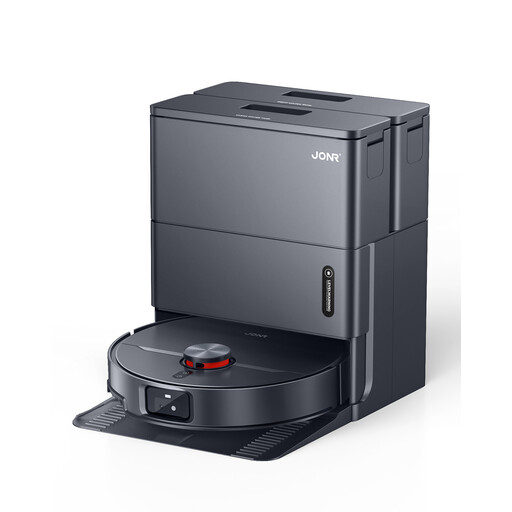
Why it suits this profile: An interesting option for larger households with lots of edges, pet hair and a need for automated cleaning.
The stated hair-removal system, dual extendable arms and AI obstacle recognition focus on areas where standard models may miss dirt.
Up to 20 kPa suction power, 75 °C hot-water cleaning and 45 °C hot-air drying according to the product information.
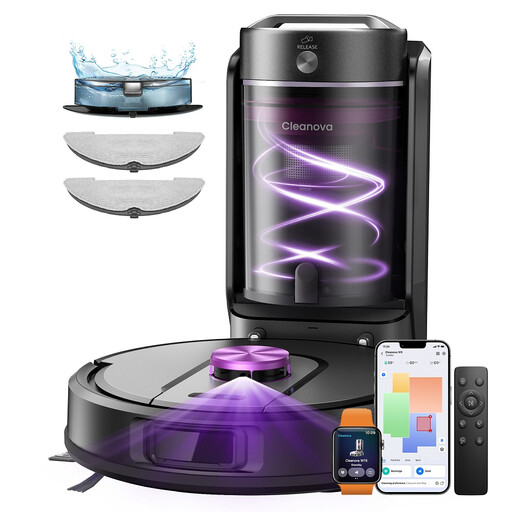
Why it suits this profile: A practical option for homes where carpets, tiles and hard floors alternate.
The product listing mentions three suction levels, three water levels and support for carpets and hard floors. This gives you more control than a single fixed setting.
10,000 Pa, LiDAR navigation, up to five maps and a stated runtime of up to 180 minutes.
Place the station against a wall on a level surface. For many models, leave around 50 centimetres on both sides and at least 1.5 metres in front clear. During the first mapping run, remove cables, toys and loose clothing.
Use clean water when mopping and do not add cleaning products unless the manufacturer explicitly allows this. A robot vacuum with mopping function is designed for light damp cleaning, not for puddles or liquids. Clean the filters and brushes according to the manual and allow washed parts to dry thoroughly.
We have put together a complete, up-to-date list of products that fully meet these strict selection criteria and the applicable European safety regulations.
Yes, if the model has carpet detection and a suitable carpet mode. Also check whether the mop is lifted automatically or whether you have to remove the mopping attachment manually. For deep-pile carpet, the robot’s height and brush design can be decisive.
You will usually need to empty the dirty water tank, refill the clean water tank and check the filters, sensors and brushes. If you have pets, it is advisable to remove hair from the brush more often, even when the model has an anti-tangle function.
In addition to the purchase price, you may incur costs for electricity, filters, mop cloths, dust bags and any approved cleaning product. A bagless station does not use disposable dust bags, while a station with a dust bag may mean less direct contact with dirt. So do not just check the functions; also check which consumables are available and compatible.
