
Vandaag of morgen in huis

Kwaliteit gegarandeerd

Welkomstaanbiedingen ontgrendelen: GRATIS bezorging | Tot 80% korting | Gratis 30 dagen JoyPlus-proefperiode
Download de app
A robot vacuum with a mop function can pick up everyday dust, crumbs and hair without you having to vacuum and mop the house yourself. However, not every model is right for every home in the Netherlands. A smooth tiled floor calls for different features from a home with deep-pile carpet, pets or multiple floors.
Marketing often focuses on high pascal ratings, artificial intelligence or “completely maintenance-free” operation. In practice, performance also depends on the brush, navigation, threshold height, water supply and how much maintenance the station needs.
A high Pa rating sounds impressive, but it doesn’t tell you everything about cleaning performance. The shape of the main brush, airflow and ability to lift hair are important too. For example, a robot vacuum for pet owners benefits from a brush that’s less likely to get tangled with hair.
It’s also worth understanding the difference between vacuuming and mopping. A mop attachment can remove light marks and fine dirt from suitable hard floors, but it won’t clear up spills or stuck-on residue.
A robot vacuum with a mop station can wash and dry the mop or automatically empty the dirt it collects. However, you’ll still need to carry out some maintenance. The dirty water tank needs emptying, filters need cleaning, and the dust bag or container needs replacing when required.
Check which features are actually included: automatic emptying only, or mop washing, hot-air drying and clean-water refilling too?
A robot vacuum with LiDAR navigation will generally create systematic maps of your home. This helps with dividing rooms, scheduling cleaning and setting virtual restricted areas. However, cables, loose clothing, floor-length mirrors and very dark surfaces can still cause problems.
Before the first mapping run, clear the cleaning routes and check that there’s enough room around the charging station. Many models need around 50 cm of clearance on either side and 1.5 metres in front.
A moderate suction setting is often enough for hard floors. If you have carpet or pets, look for:
A powerful robot vacuum with a large battery isn’t automatically the right choice. Also check the height of the device if it needs to clean under sofas or cupboards.
LiDAR uses a laser sensor to map walls and furniture. With many models, you can select rooms in the app, set cleaning schedules and create no-go zones. If your home has multiple floors, it’s useful if the robot can save several maps.
Obstacle avoidance varies between models. A camera or 3D system can offer extra help with shoes, toys and cables, but it’s still best to clear loose items to prevent the robot getting stuck.
A robot vacuum with an automatic emptying station means you won’t have to empty the robot as often yourself. Check the capacity of the dust bag or container, and whether replacement parts are readily available.
If you’re considering a self-cleaning robot vacuum, also check:
Only use products in the water tank that are approved in the product manual. The models in this selection are designed for indoor use and must not be used to vacuum up puddles, flammable liquids or large quantities of water.
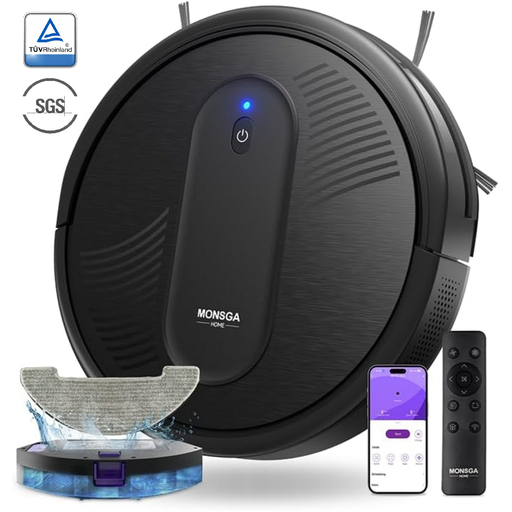
Why it suits this type of user: This model is designed for anyone who mainly wants to vacuum hard floors and low-pile carpet automatically, with control via remote, app or voice assistant.
The stated specifications include a slim height of 3.2 inch and a runtime of up to 140 minutes. Check for yourself that the robot will fit under your furniture.
According to the product specifications: 4,000 Pa suction power, up to 140 minutes’ runtime and scheduled cleaning via the app or remote control.

Why it suits this type of user: A good fit for households that value automated mop maintenance, need to clean different floor types and want a wide range of app controls.
According to the product specifications, the OMNI station offers automatic emptying, mop washing with 75 °C water, drying and self-cleaning. Check how much space you’ll need for the station.
According to the product specifications: 20,000 Pa suction power, TrueMapping 2.0, dual rotating mops, and automatic mop washing and drying.
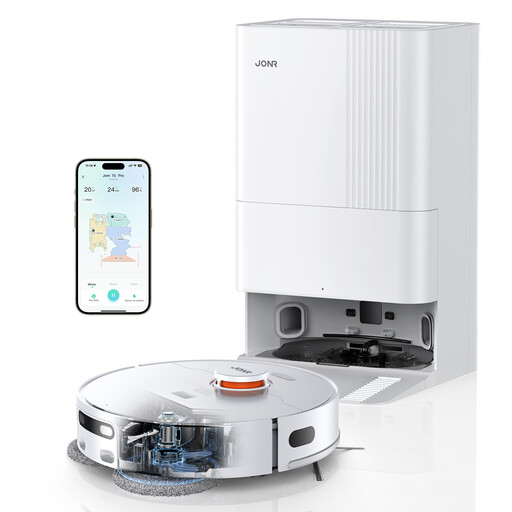
Why it suits this type of user: An option for larger households looking to combine vacuuming and mopping with LiDAR navigation, obstacle avoidance and hot-air drying.
The product specifications list an anti-tangle side brush and an all-in-one dock with hot-air drying. You’ll still need to maintain the dirty water tank and dust bag as instructed in the app.
According to the product information: 8,150 Pa suction power, LiDAR navigation, obstacle avoidance, app-based zones and hot-air drying.
We’ve put together a complete, up-to-date list of products that meet these strict selection criteria and the applicable European safety requirements.
Yes, many models can vacuum carpets. If you have carpets and want the robot to mop as well, an automatic mop lift or a set no-go zone is important. Also check whether the robot can detect carpets and whether the mop height is suitable for your floor type.
Clean the mop after use or as directed in the manual, empty the dirty water tank promptly, and clean the filters and brushes regularly. If you have pets, you may need to empty it more often. An automatic station reduces the work, but doesn’t take care of all the maintenance for you.
As well as the purchase price, factor in electricity, replacement filters, brushes, mop cloths and, if applicable, dust bags. A model with a bagless station doesn’t need disposable dust bags, while a station with a dust bag can mean less direct contact with dirt. Check the prices and availability of replacement parts in advance.
