
Vandaag of morgen in huis

Kwaliteit gegarandeerd

Welkomstaanbiedingen ontgrendelen: GRATIS bezorging | Tot 80% korting | Gratis 30 dagen JoyPlus-proefperiode
Download de app
Balancing a busy life with a clean home can be a challenge. Between work, family, and social commitments, there's often little time left for household chores. A robot vacuum and mop with a self-empty station offers an automated solution that helps you keep your floors pristine with minimal effort.
The market for these devices is expanding rapidly, and the technology is becoming increasingly sophisticated. This, however, doesn't make the choice any easier. As a Joybuy Product Recommendation Officer, I'm here to help you sift through the specifications and features. This article provides practical information to help you find a model that suits your home and lifestyle, based on objective product characteristics.
Before you make a decision, it's helpful to know which specifications truly make a difference. Here are a few key points to consider.
Modern robot vacuums use advanced technology to efficiently map and clean your home. Models with LiDAR (Light Detection and Ranging) scan their surroundings with a laser to create precise floor plans. This allows them to work systematically and ensure no spots are missed.
A robot vacuum with obstacle detection, often supported by AI and cameras, can recognise and avoid specific objects like cables, shoes, or toys. This prevents the robot from getting stuck. Through a robot vacuum with an app, you can then set 'no-go zones', create cleaning schedules, and monitor progress, even when you're not home.
Suction power, expressed in Pascals (Pa), is a key indicator of cleaning performance. For households with pets, a robot vacuum for pet hair with high suction power (from 5000 Pa upwards) is recommended to effectively remove hair from carpets.
Many models are suitable for both carpets and hard floors. A convenient feature is the automatic 'mop-lift', where the mopping plate is raised as soon as the robot detects a carpet. Advanced mopping functions, such as rotating mopping pads or the use of hot water, provide a more thorough clean for stubborn stains on hard floors.
A robot vacuum and mop with a self-empty station takes convenience to the next level. The base station does more than just charge the battery. A self-cleaning robot vacuum returns to the station after each cleaning session, where its dustbin is automatically emptied. The most advanced stations also clean the mop pads with hot water and dry them with warm air to prevent mould and odours. This means you'll barely have to think about maintenance for weeks on end.
Based on specifications and functionalities, we've highlighted a few popular choices for you.
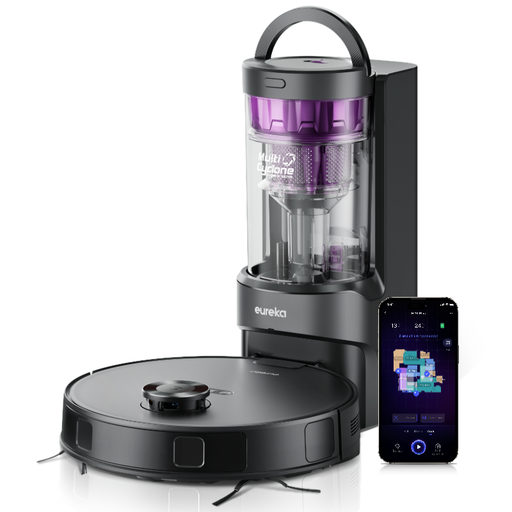
[Limited Deals - €129.99] EUREKA E20 Plus Robot Vacuum Cleaner with 8000 Pa Suction and Self-Emptying Station
Why this model stands out: The EUREKA E20 Plus combines very powerful suction with a bagless self-empty station. According to the manufacturer, this not only saves on the cost of dust bags but is also a more eco-friendly choice.
Pros:
Who is this model for? Ideal for users looking for a powerful, low-maintenance robot vacuum that offers excellent value for money. Its high suction power makes it particularly suitable for households with pets.
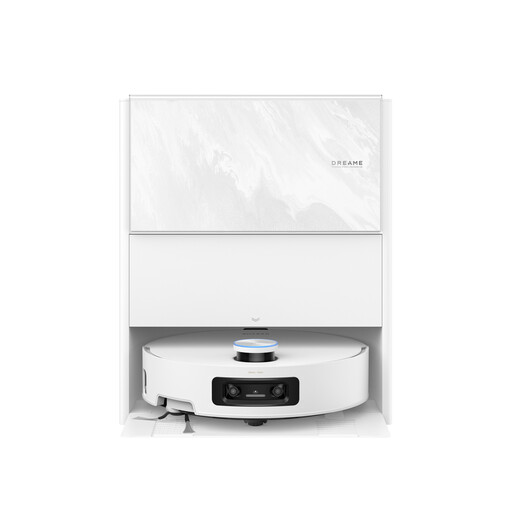
Dreame Aqua10 Ultra Track Complete Robot Vacuum - 19500Pa Suction - 45°C Mop Washing
Why this model stands out: The Dreame Aqua10 Ultra is a technologically advanced model focused on fully automated and thorough cleaning. The station washes the mops with 100°C hot water, and the robot itself mops with 45°C warm water.
Pros:
Who is this model for? Suitable for the tech enthusiast who seeks the most advanced features and is willing to invest in maximum convenience and a hygienically clean result, especially on hard floors.
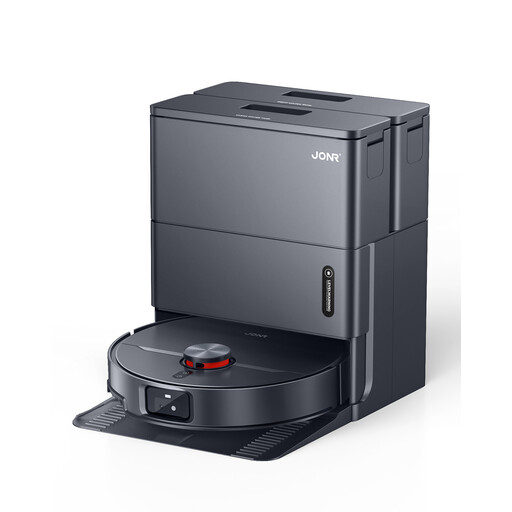
[Limited Deals - €329] JONR X1 Max All-in-One Robot Vacuum Cleaner with 20kpa Suction Power
Why this model stands out: The JONR X1 Max focuses on cleaning edges and corners with its extendable dual arms. The station provides a dynamic hot water wash for the mops, ensuring a hygienic clean.
Pros:
Who is this model for? An excellent choice for those who prioritise a thorough clean along baseboards and in corners. The combination of high suction power and hot water cleaning makes it a strong all-rounder.
The world of smart home appliances is vast, and there are many different models with unique specifications. If the recommendations above don't quite match what you're looking for, there are plenty of other options available.
Discover more smart home solutions in our range and find the appliance that's perfect for you.
How well does a robot vacuum and mop work on carpet? Most modern robot vacuums with a mopping function have a carpet detection sensor. As soon as the robot approaches a carpet, it automatically lifts the mopping plate to prevent the carpet from getting wet. This allows the device to seamlessly switch from mopping hard floors to vacuuming carpets in a single cleaning session.
How much maintenance does a robot vacuum with a self-empty station require? Significantly less than a model without one. Depending on the size of the dustbin in the station, you may only need to empty it once every 30 to 75 days. With a fully self-cleaning station, you will need to periodically refill the clean water tank and empty the dirty water tank. Replacing brushes and filters is typically needed every few months, depending on usage.
Can a robot vacuum really handle pet hair? Yes, many models are specifically designed for this. Look for high suction power (at least 5000 Pa) and a brush design that prevents hair tangles (often made of rubber). A robot vacuum for pet hair can make a huge difference in the daily upkeep of a home with pets.
