
Vandaag of morgen in huis

Kwaliteit gegarandeerd

Welkomstaanbiedingen ontgrendelen: GRATIS bezorging | Tot 80% korting | Gratis 30 dagen JoyPlus-proefperiode
Download de app
A robot vacuum that can also mop sounds like a dream come true for any busy household. No more fussing with vacuums and mops; the robot does the work. But the market is flooded with models promising the world. Unfortunately, promising marketing terms don't always lead to a clean floor. Before you invest, it's important to know where the real pitfalls lie.
As a Joybuy Product Recommendation Officer, I'll help you cut through the marketing jargon. We'll look at the specifications that truly matter, so you can choose a model that fits your home and lifestyle, without any buyer's remorse.
These are the most common problems buyers encounter:
To avoid making a bad purchase, it's wise to look beyond the advertising slogans. Pay attention to the following three technical features that determine whether a robot vacuum with mopping function does its job well.
The way a robot navigates through your home is perhaps the most important factor. Cheaper models often use a gyroscope, which results in a less systematic cleaning pattern.
A model with LiDAR (Light Detection and Ranging) navigation is a significant upgrade. This technology uses a laser to create a precise map of your home. The practical benefits include:
smart vacuum with app, you can easily designate areas where the robot should not go, such as near your pet's food bowl or a high-pile robot vacuum carpet.A robot vacuum and mop in one is only truly useful if the mopping function actually cleans. Note the difference between a static mopping plate and active mopping systems:
Roborock or Ecovacs, automatically lift the mop when they detect carpet.A robot vacuum should take work off your hands, not create more. A model without automation means you have to manually empty the small dustbin and clean the mop after every cleaning session.
A robot vacuum with an auto-empty dock offers a solution. After cleaning, the robot returns to the base station, which automatically:
self-cleaning robot vacuum, the mop pads are also washed and sometimes even dried with hot air to prevent odours.This reduces manual maintenance from a daily task to once every few weeks. This is especially a godsend for a robot vacuum for pet hair, as the dustbin fills up faster.
Based on objective specifications, we have selected a number of models that suit different households.
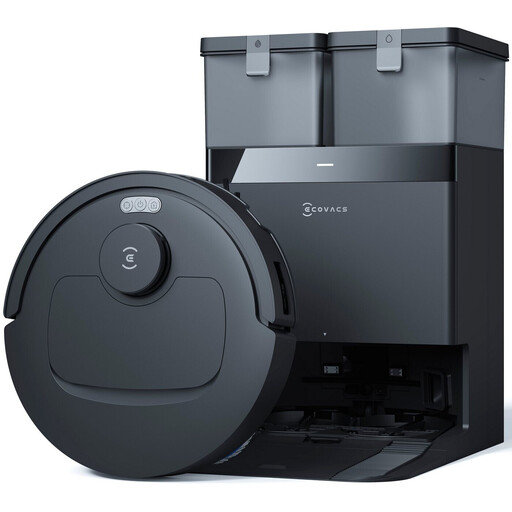
Why This Fits Their Persona: For the busy professional or family seeking maximum automation and minimal effort. This model is designed to operate independently for weeks.
The OMNI station washes the rotating mops with hot water (75°C according to Ecovacs) and dries them, preventing streaks and odours. The TruEdge technology ensures the mop also reaches edges.
Fully automated maintenance (emptying, washing, drying). The rotating OZMO Turbo 2.0 mops actively scrub the floor for a thorough clean.
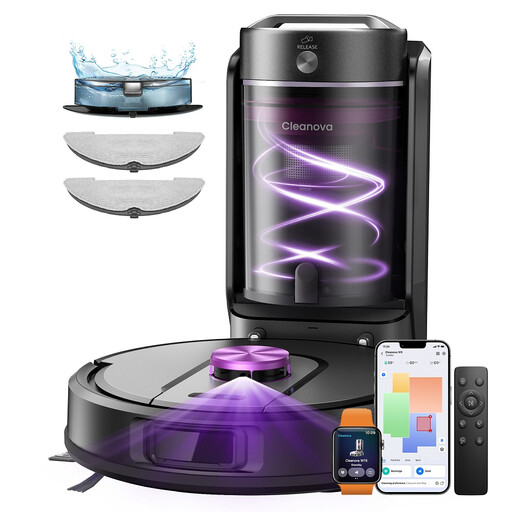
Why This Fits Their Persona: Ideal for families with dogs or cats. The combination of high suction power and a self-emptying station effectively tackles pet hair and dirt without daily maintenance.
The manufacturer claims a suction power of 10,000 Pa, which helps pull hair from deep within carpets. The bagless auto-empty station eliminates the need to constantly empty clogged dustbins.
Combines a 3-in-1 function (sweeping, vacuuming, mopping) with LiDAR navigation for a systematic approach. The bagless station is economical and more environmentally friendly.
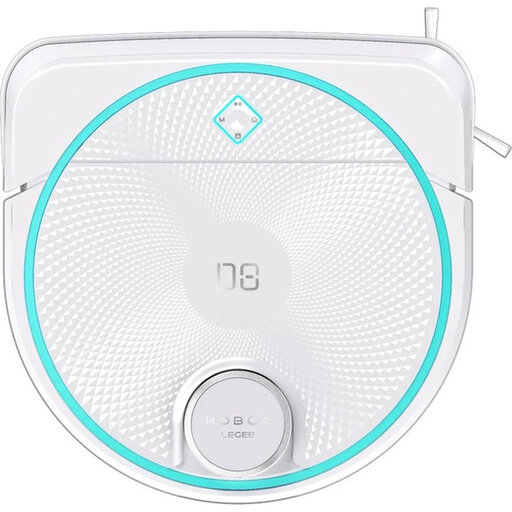
Why This Fits Their Persona: For those seeking a reliable 2-in-1 without immediately paying top dollar for a fully automated station. The D-shape is practical for corners and baseboards.
Instead of a simple wet cloth, this model uses a smart mop pad with AI-spraying technology that sprays water precisely to prevent streaks. The Tangless suction port is designed to suck up hair before it gets tangled in the brush.
The unique D-shape cleans better along edges and in corners than many round models. The ECO compactor compresses dirt, meaning the dustbin needs to be emptied less frequently.
We have compiled a complete, up-to-date list of products that meet these strict selection criteria and safety regulations.
This largely depends on the model. A basic model requires you to empty the dustbin and clean the mop cloth after each cleaning session. A self-cleaning robot vacuum with an all-in-one station reduces this to once every 4 to 8 weeks, depending on usage. Regularly checking the brushes for tangled hair and cleaning the sensors is still recommended for any model.
Modern, advanced models are well-prepared for this. They feature carpet detection. As soon as the robot approaches a robot vacuum carpet, it will automatically increase suction power and lift the mopping plate to prevent the carpet from getting wet. When setting up via the app, you can often also set "no-mop zones" for high-pile carpets or rugs.
Pascal (Pa) is the unit of pressure and measures the force of the vacuum created by the motor. A higher number suggests stronger suction. While a value of 5,000 Pa or more is a good indicator, it's not the only thing that matters. Effectiveness also depends on the design of the brushes (e.g., dual rubber brushes for anti-tangle), the system's seal, and the presence of a carpet boost function. So, don't be fixated on the Pa number alone.
