
Vandaag of morgen in huis

Kwaliteit gegarandeerd

Welkomstaanbiedingen ontgrendelen: GRATIS bezorging | Tot 80% korting | Gratis 30 dagen JoyPlus-proefperiode
Download de app
A robot vacuum with a mop can take care of everyday crumbs, dust and light marks for you. But the reality doesn’t always live up to expectations. A robot with plenty of features on paper may struggle with carpet thresholds, get tangled in cables or need a lot of maintenance.
So don’t focus solely on the number of pascals or an attractive offer. Consider the combination of suction power, navigation, mop management and maintenance. Below, you’ll find the main pitfalls to watch out for, along with models to suit different households.
A higher Pa rating may indicate a powerful motor, but it doesn’t automatically tell you how well a robot cleans corners, along skirting boards or on carpets. The brush, airflow and automatic power adjustment also play a part.
For pet owners, an anti-tangle brush or anti-winding system can be useful. Without one, hair can wrap around the main brush and side brush. Also check whether replacement parts are available and how often the filters and brushes need cleaning, according to the product manual.
On basic models, mopping often involves a water tank and a cloth that trails behind the robot. This may be suitable for light everyday dirt, but you’ll need to wash the cloth and refill the tank by hand.
A robot vacuum with a self-cleaning station can wash and dry the mop pads. This means less hands-on work, but the station takes up more space and may involve extra costs for water, cleaning products or maintenance. Only use products approved by the manufacturer.
LiDAR navigation creates a digital map and helps the robot follow a systematic route. However, loose cables, low-hanging curtains, dark floors and floor-level mirrors can still cause problems. A camera or additional obstacle detection may help, but no system makes tidying up unnecessary.
Measure the clearance under your furniture, too. According to the product information, the Roborock Saros 10 needs at least 7.98 cm of clearance. If you have a low sofa, even an advanced model may not be able to reach everywhere.
For a home with hard floors and low-pile carpet, a model with adjustable suction power is often enough. If you have lots of carpet, pet hair or larger debris, consider models with higher stated suction power and automatic carpet detection.
Look out for these features:
A smart robot vacuum with an app should offer more than just start and stop controls. Useful features include room selection, cleaning schedules, virtual walls and no-go zones. Check in advance whether the model only supports 2.4 GHz Wi-Fi and whether you need an account.
LiDAR is useful for systematic routes and mapping multiple rooms. If your home has more than one floor, support for multiple maps is worth considering. A camera can recognise small objects, but always check the app’s privacy settings and data terms.
A robot vacuum with automatic emptying saves time, particularly if you vacuum every day. Check the type of collection system:
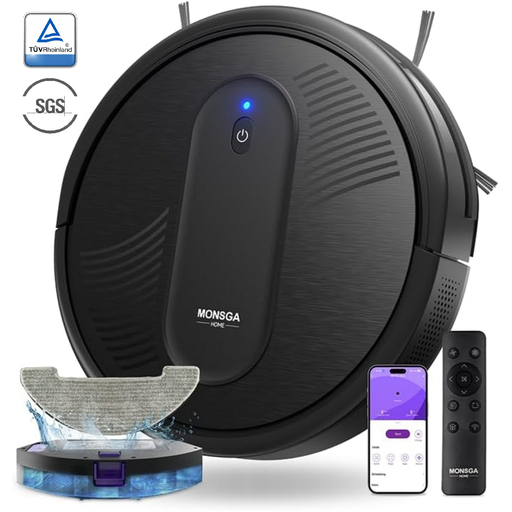
Why it suits this household: This model is designed for basic cleaning on hard floors and low-pile carpet. Control via remote, app and voice assistant gives you plenty of flexibility.
The product name states a suction power of 4000 Pa and a slim 3.2-inch design. Be sure to check the available information about mopping and station functions in advance.
4000 Pa, according to the product listing; suitable for hard floors and low-pile carpet according to the stated intended use.
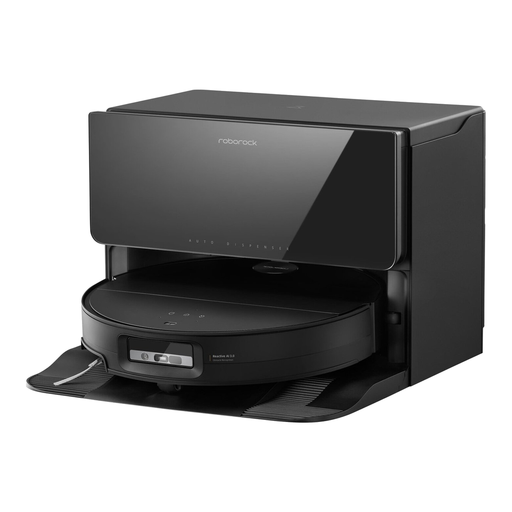
Why it suits this household: A good fit for larger homes and people who value automatic water management, advanced navigation and less day-to-day effort.
The product information lists LDS laser navigation, RGB camera recognition and a dual anti-tangle system. According to the description, the mop lifts when the robot detects carpet.
22,000 Pa and up to 220 minutes of battery life according to the product specifications; station with a 2.5-litre dust bag and self-cleaning function.
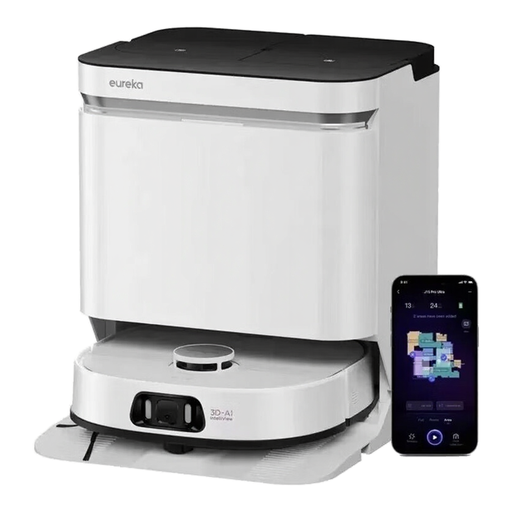
Why it suits this household: A good option for homes with pets, carpets and hard floors, where automatic mop cleaning and hair management are priorities.
According to the product information, this model uses FlexiRazor technology to prevent hair from wrapping around the brush, as well as liquid detection and a brush and mop lift.
16,200 Pa, LDS navigation and a station with a 75°C washing function, according to the stated product specifications.
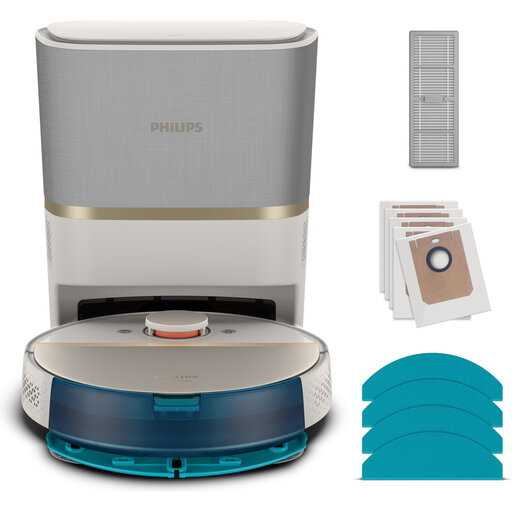
Why it suits this household: A practical choice for households looking to combine vacuuming and mopping with automatic dust emptying and app control.
The product information lists LiDAR-based systematic navigation, object detection and an automatic DualWave dust-emptying function.
Up to 5000 Pa and 180 minutes of running time according to the product information; compatible with Alexa, Google Assistant and app control.
We’ve put together a complete, up-to-date list of products that meet these strict selection criteria and the applicable European safety regulations.
Yes, but how well it works depends on carpet detection and the mop lift. Check how many millimetres the mop lifts and whether the robot can recognise carpets automatically. With deep-pile carpet, you may still need to set a no-go zone manually.
Even a self-cleaning station needs some maintenance. Clean the sensors and brushes regularly, wash or replace the filters according to the manual, and clean the dust and water tanks. Also check the mop pads for odours and residue. A station takes care of many tasks, but it doesn’t replace routine maintenance.
As well as the purchase price, replacement dust bags, filters, brushes, mop pads and, where applicable, cleaning products can all add to the cost. Bagless stations avoid the need for dust bags, but you’ll need to empty them by hand more often. So compare not only the price of the appliance, but also the cost and availability of consumables.
