
Vandaag of morgen in huis

Kwaliteit gegarandeerd

Welkomstaanbiedingen ontgrendelen: GRATIS bezorging | Tot 80% korting | Gratis 30 dagen JoyPlus-proefperiode
Download de app
A robot vacuum and mop can remove dust, crumbs and hair every day, without you having to vacuum and mop your home yourself. However, not every model is right for every home. A flat with hard floors has different needs from a house with pets, deep-pile carpet and several floors.
Look out for these three common pitfalls:
A robot vacuum for pet owners needs to do more than pick up hair: it should also minimise tangles in the main brush. An anti-tangle brush or hair-removal system is therefore just as important as the stated power.
These features are useful for carpets and hard floors:
A stated figure such as 4,000, 10,000 or 20,000 Pa is a verifiable product specification, but it doesn’t guarantee the same cleaning results in every home.
A robot vacuum with LiDAR navigation will usually create a digital map and follow a more systematic route than a model that moves in random patterns. In the app, you can select rooms, set virtual walls and mark areas where mopping isn’t allowed on many models.
Check the following:
A model with basic sensors and random navigation, such as the Rowenta RR6871WH, may be enough for a tidy home with mostly hard floors. Laser mapping is more practical for homes with several rooms, lots of furniture or a complex layout.
A robot vacuum with a self-emptying station automatically collects dirt in a dust bag or container. Some all-in-one stations also wash and dry the mop. This means less day-to-day effort, but it doesn’t eliminate all maintenance.
Before you buy, check:
According to product information from various brands, some stations can work largely unattended for weeks or even months. Treat these timeframes as estimates from the product descriptions: the amount of dirt, pets and cleaning frequency all affect how often maintenance is needed in practice.
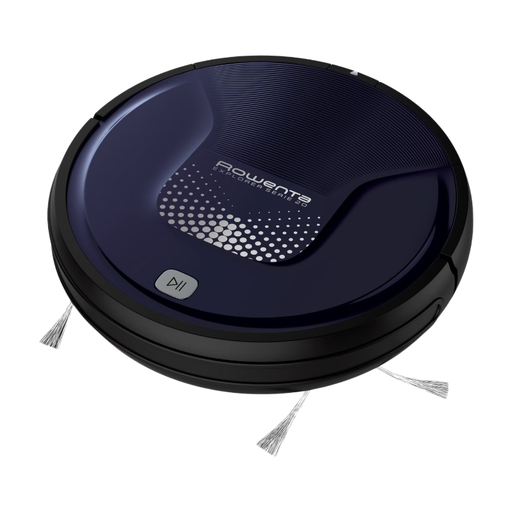
Why it suits this household: A straightforward 2-in-1 robot for homes with mostly hard floors, with controls on the device itself or via the remote control.
The product information lists three cleaning modes and automatic return to the charging station. Navigation is random, so don’t expect advanced room mapping.
Up to 150 minutes of use, mopping and vacuuming in one device, and a height of 8 cm.
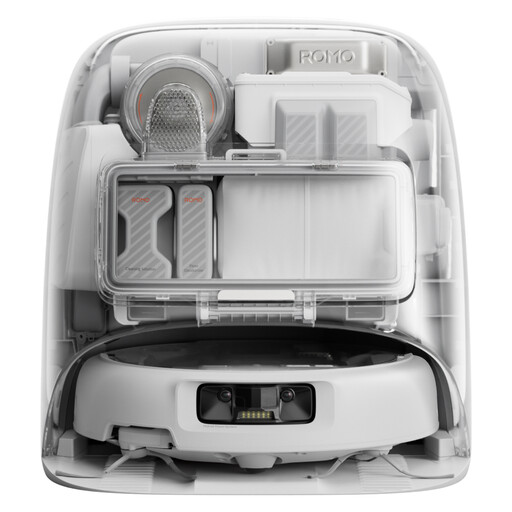
Why it suits this household: For anyone who values high stated suction power, smart obstacle detection and app control.
The description itself warns that small cables, socks and toys may not be recognised. You’ll still need to clear the floor.
According to the product information: 25,000 Pa suction power, dual robot arms and support for multiple surfaces.
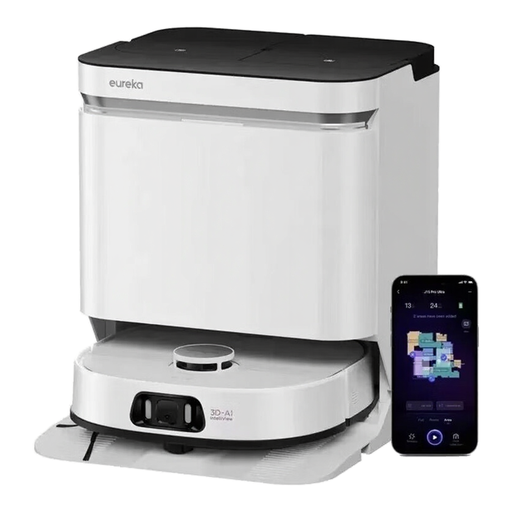
Why it suits this household: An option for homes with pets, carpets and hard floors, for owners who want a station with automated mop cleaning.
The product description mentions an anti-tangle system and a station that automates dust emptying, mop washing and drying. Still, check notifications and tanks regularly.
According to EUREKA’s own product information: 16,200 Pa, FlexiRazor technology and mop washing at 75°C.

Why it suits this household: For larger households looking to combine app control, carpet detection and a comprehensive all-in-one station.
Its features go beyond suction power: the description lists TrueMapping 2.0, automatic carpet detection and adjustable cleaning modes.
According to ECOVACS’ own product information: 20,000 Pa, mop washing at 75°C, drying at 45°C, and automatic dust and water management.
We’ve put together a full, up-to-date list of products that meet these strict selection criteria and current European safety regulations.
Before the first clean, follow these steps:
Don’t use the mopping function to pick up puddles or spilt liquids. A robot mop is designed for damp cleaning, not for collecting water. Also, keep the device away from children and pets while it’s charging or being maintained.
It depends on the model. Look for carpet detection and a mop that lifts automatically. Also set no-mop zones if the robot can’t avoid carpets on its own. Always check the product instructions, as moisture can damage carpets and untreated wood.
Even a robot vacuum with a self-cleaning station needs maintenance. Empty or check the dirty-water tank, clean the filters and sensors, and remove hair from the brush. The mop pad usually needs rinsing and drying after use. How often depends on the size of your home and the amount of dust and pet hair.
As well as the purchase price, remember to factor in electricity, filters, brushes, mop pads and, where needed, dust bags or cleaning solution. A model with a bagless station can save you from buying dust bags regularly, while a station with automatic emptying means less day-to-day effort. So compare more than just suction power: consider maintenance costs and the availability of replacement parts too.
