
Vandaag of morgen in huis

Kwaliteit gegarandeerd

Welkomstaanbiedingen ontgrendelen: GRATIS bezorging | Tot 80% korting | Gratis 30 dagen JoyPlus-proefperiode
Download de app
A robot vacuum with a mopping function can make everyday floor cleaning easier. However, not every model is suitable for every home in the Netherlands. A home with pets, deep-pile carpets or door thresholds calls for different features from a flat with mainly laminate and tiled floors.
Look out for these three common pitfalls:
Suction power is usually measured in Pa, or pascals. A model with 4,000 Pa may be suitable for everyday dust and hair, while higher figures may be useful for carpets or more intensive use. However, don’t compare the figures without considering the rest of the design.
When choosing a robot vacuum for carpets and hard floors, these features are important:
According to manufacturers’ own product information, certain brush systems can reduce hair tangles. Treat this as a product claim, not a guaranteed result in every home. Long hair, pet hair and accumulated dirt still require regular maintenance.
A robot vacuum with LiDAR navigation uses laser scans to create a map of your home. This allows the robot to plan systematic routes, divide rooms into sections and often save multiple maps. It’s handy for multi-storey homes.
Also look for:
A LiDAR tower can increase the robot’s overall height. So check the robot’s height if it needs to clean under beds, sofas or kitchen cabinets. A lower-profile model, such as the eufy Omni C20, which is listed as 8.5 cm high, may be able to get under furniture more easily in some situations.
A robot vacuum with an auto-empty station automatically transfers dust into a bag or container. Some stations also wash and dry the mop pads. Before you buy, check exactly what happens automatically:
A large station takes up more space. Measure the area beside a wall and allow for clear space at the sides and in front of the station. For several models, around 0.5 metres on either side and 1.5 metres in front is recommended.
It’s also worth considering app control. Check whether the model needs a 2.4GHz Wi-Fi network, whether you can select individual rooms, and whether you can set schedules and no-go zones. A remote control can be useful if not everyone at home wants to use an app.
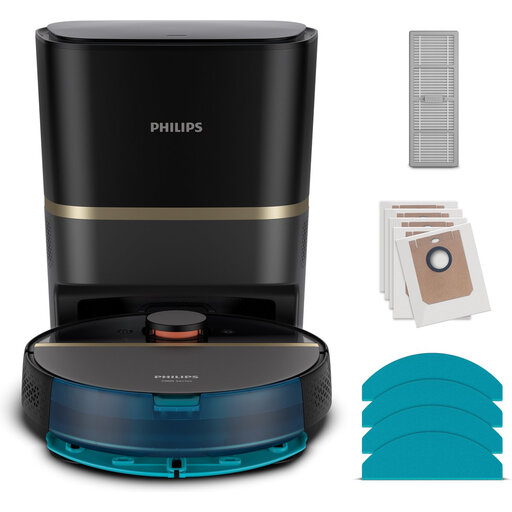
Why it suits this type of buyer: This model combines vacuuming and mopping with LiDAR navigation, automatic dust emptying and app control. Its listed suction power is 5,000 Pa and it runs for up to 180 minutes.
Its features are clearly described: automatic emptying, laser navigation, and a combination of vacuuming and mopping. Just make sure you have enough space for the station.
5,000 Pa, up to 180 minutes’ running time, automatic dust emptying, and support for Alexa and Google Assistant.

Why it suits this type of buyer: According to the product information, this model has an OMNI station with dust emptying, hot-water mop pad washing and warm-air drying. It’s a good fit for households looking to cut down on manual maintenance.
The manufacturer describes each of the maintenance functions separately. You’ll still need to check water levels, detergent instructions and consumables.
Listed suction power of 20,000 Pa, automatic carpet detection, multiple floor maps, and a station with 75°C mop washing and 45°C drying.
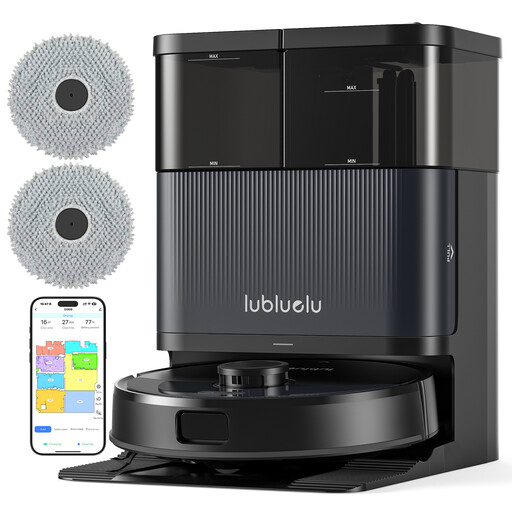
Why it suits this type of buyer: According to the product description, this model is designed for homes with pets, carpets and hard floors. It uses LiDAR, works with app control and can automatically lift its mopping module when it detects carpet.
Carpet detection and an adjustable cleaning mode help prevent the damp mop from travelling over carpet. Hair and filters still need to be cleared regularly.
10,000 Pa according to the product listing, LiDAR mapping, app control, and support for carpets and hard floors.
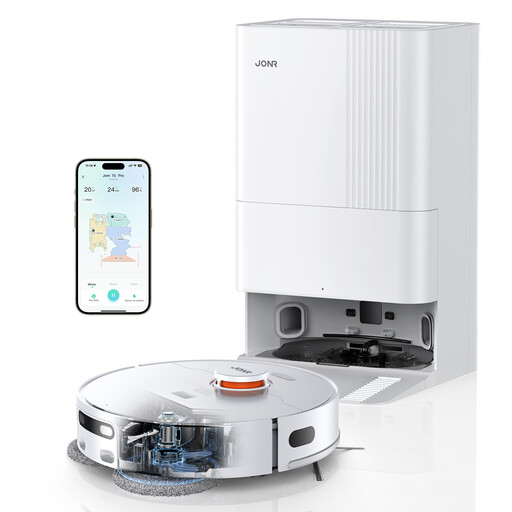
Why it suits this type of buyer: The all-in-one dock, LiDAR navigation, obstacle avoidance and app control make this a practical choice for busy households with multiple cleaning schedules.
The instructions explicitly state that the dust bag and dirty water tank still need attention. This makes it clearer what “automatic” means in practice.
8,150 Pa according to the product listing, LiDAR navigation, warm-air drying, and adjustable no-go zones via the app.
We’ve put together a complete, up-to-date list of products that meet these strict selection criteria and comply with the applicable European safety regulations.
Your robot vacuum will keep working better if you don’t skip the basic care:
Also check the EU plug, voltage, warranty, returns policy and responsible economic operator before placing your order. For a 220 V appliance, it’s important to make sure the version is suitable for use in the Netherlands.
Yes, many models can vacuum carpets. For mopping, an automatic mop lift or an adjustable no-go zone is important. Always check the mop lift’s maximum height and how the robot detects carpets.
Its lifespan depends on how often you use it, how well you maintain it, the condition of the battery, and the availability of brushes, filters and mop pads. Daily use in a home with pets calls for more maintenance than occasional use in a small flat. Clean the sensors and brushes as instructed in the manual, and replace worn parts when they show visible signs of wear.
As well as electricity, you may need to pay for dust bags, filters, brushes, mop pads and, where applicable, approved cleaning solution. A bagless station avoids the need for dust bags, but you’ll still need to empty and clean the dust container. So don’t compare just the purchase price; also consider the parts you’ll need to replace regularly.
