
Vandaag of morgen in huis

Kwaliteit gegarandeerd

Welkomstaanbiedingen ontgrendelen: GRATIS bezorging | Tot 80% korting | Gratis 30 dagen JoyPlus-proefperiode
Download de app
A robot vacuum with a mop can make everyday cleaning easier, but not every model is right for every home. A flat with hard floors has different needs from a house with pets, high thresholds and several types of carpet. Marketing claims about suction power, navigation and “maintenance-free” use also deserve a closer look.
A high Pa rating refers to the stated maximum suction power. That figure doesn’t tell you everything about the cleaning results. The brush design, airflow, filter, flooring and automatic suction adjustment also play a part. A robot vacuum with 20,000 Pa isn’t automatically more suitable for every home than a model with 4,000 or 8,150 Pa.
So, also look out for:
Most models dampen the floor with a mop cloth or rotating mop pads. This is designed for everyday upkeep and light stains, not for soaking up large amounts of water. Check whether you can adjust the water flow and whether the mop lifts automatically on carpet.
Use clean water only, unless the product manual permits a specific cleaning solution. Don’t leave a used mop cloth attached to the robot while it’s wet for a long time. This helps prevent odours and damp patches.
A robot vacuum with an automatic emptying station means you don’t have to empty it by hand as often, but it doesn’t eliminate maintenance. Depending on the model, you may still need to:
Even with a station that dries the mop with warm air or cleans it automatically, regular checks are still needed. Product information for various models notes that maintenance intervals depend on the size of your home, whether you have pets and how often you clean.
A robot vacuum with LiDAR navigation usually creates a map using laser scans. This can help it follow systematic routes, clean multiple rooms and set virtual no-go zones in the app. However, mirrors, very dark surfaces, loose cables and small objects can cause problems.
Leave interior doors open while the robot creates its first map, and clear toys, cables and clothing from the floor. Also check that there’s enough space around the charging station. For example, the JONR T5 Pro requires at least 0.5 metres on either side and 1.5 metres in front.
Measure the clearance under low furniture and check the maximum threshold height. A low-profile robot is more likely to fit under sofas, but there may be less room for a larger dustbin or water tank. In a home with carpet and hard floors, an automatic mop lift is useful. It helps prevent the damp mop from moving over the carpet.
Also consider the type of carpet. Many robots cope better with low-pile carpet than with deep-pile or loosely woven carpet. Always check the product specifications rather than relying on the general category description.
With a robot vacuum controlled by an app, you can often select rooms, set cleaning times, adjust suction levels and create no-go zones. Check beforehand that the app works with your phone and Wi-Fi network. Some models support only certain Wi-Fi bands or require an account.
Voice control via Alexa or Google Assistant can be handy, but it’s no substitute for setting up the map properly. For example, schedule a separate cleaning run for the kitchen and choose a lower water flow for delicate hard floors.
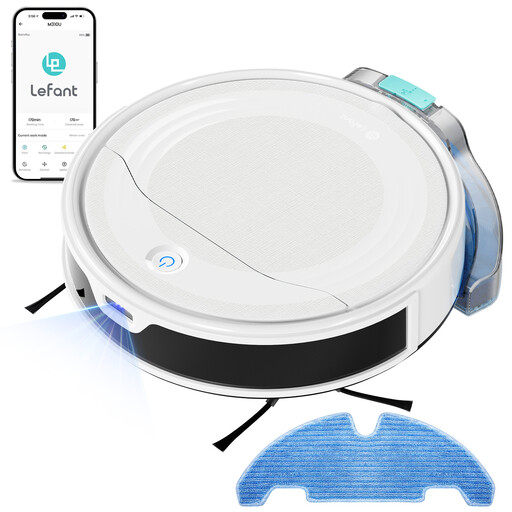
Why it suits this household: This model combines vacuuming and light damp mopping with app control in a relatively compact design. That makes it a practical entry-level option for homes with mainly hard floors and limited carpet.
The product information lists a 500 ml dustbin, a 200 ml water tank and a runtime of up to 170 minutes. The limited water capacity makes it clear that mopping is intended for upkeep, not as a replacement for a thorough mop.
Stated specifications include 6,000 Pa suction power, ToF laser navigation, a HEPA filter and control via Wi-Fi, the app and Alexa.

Why it suits this household: The combination of a comprehensive OMNI station, rotating mop technology and several automated features is ideal for people who want to keep daily chores to a minimum.
The product description lists automatic dust emptying, mop washing with water at 75 °C, warm-air drying and self-cleaning. Be sure to check that you have enough space and factor in the cost of consumables for the station.
According to the product listing: 20,000 Pa, TrueMapping 2.0, automatic carpet detection, a 4-litre clean water tank and app control.
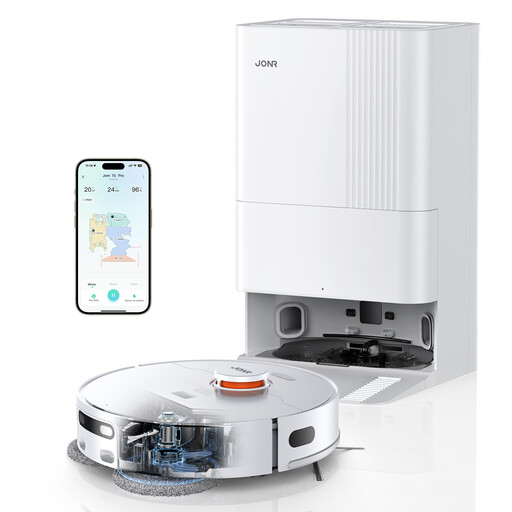
Why it suits this household: This model is aimed at households looking for a powerful robot vacuum and mop with LiDAR navigation and an all-in-one dock for regular use.
The stated anti-tangle side brush helps with hair, but it still needs checking. The station can clean itself, but the instructions say you still need to maintain the dirty water tank and dust bag.
The product listing includes 8,150 Pa, LiDAR navigation, obstacle avoidance, warm-air drying and app control with no-go zones.
We’ve put together a complete, up-to-date list of products that meet these strict selection criteria and the applicable European safety regulations.
Before the first cleaning run, map your home and remove loose cables, toys and small objects. Place the station on a level surface against a wall. Then choose the right mode for each room:
Don’t use a robot to clean up flammable liquids, hot ash, sharp objects or large puddles. Keep the charging contacts dry and follow the supplied manual.
Yes, provided the model can detect carpet and lift the mop, or lets you exclude carpeted areas in the app. If you have deep-pile carpet, check the product specifications especially carefully.
It depends on how often you use it and your household. Ideally, rinse the mop cloth after every mopping run. Check the brushes and filters regularly, especially if you have pets. An automatic emptying station means less manual emptying, but it doesn’t replace these checks.
In addition to the purchase price, you may need to pay for electricity, filters, brushes, mop cloths, dust bags and, in some cases, cleaning solution. So compare not only the product price, but also which parts the station and robot will need over time.
