
Vandaag of morgen in huis

Kwaliteit gegarandeerd

Welkomstaanbiedingen ontgrendelen: GRATIS bezorging | Tot 80% korting | Gratis 30 dagen JoyPlus-proefperiode
Download de app
A robot vacuum with mop can reduce the time spent on daily cleaning tasks, but not every model suits every home. A family with pets has different requirements from someone with hard floors only. Marketing claims such as “smart navigation” or “extreme suction power” also do not always reveal how the appliance will perform in your home.
The following pitfalls are common:
A robot vacuum with mopping function needs to pick up both dust and larger debris. Do not look at the Pa rating alone; also check the stated compatibility with hard floors and low-pile carpet. For pet hair, a suitable main brush and a well-designed debris channel are at least as important as the stated power.
According to the product description for the Lefant M320, this model offers 6000Pa suction power and is designed for hard floors and low-pile carpet. The manufacturer also states that it has a transparent 800 ml dust container and a HEPA filter. These specifications can be verified; actual pick-up performance depends on the floor, debris and selected mode.
A 10000Pa model such as the Vactidy W15 may be interesting for households with pets or carpet. According to the brand’s own information, the W15 has three suction modes and a stated noise level of 60 dB. Treat these as product specifications, not as a guarantee that every type of dirt will be removed in a single cycle.
A robot vacuum with LiDAR navigation uses laser scans to map rooms. This helps with systematic routes, multiple floors and virtual walls. However, check whether the app supports multiple maps and whether you can select rooms individually.
The Q8 Max is offered, according to its product name, with intelligent laser navigation, five maps, app control and a suction station. The Vactidy W15’s product information also lists LiDAR navigation, five maps and up to fifteen no-go zones or virtual walls.
Obstacle avoidance is a separate function. Always check the floor for cables, clothing, toys and curtain edges before starting the robot. The Lefant M320’s product information lists advanced obstacle detection and ultrasonic carpet recognition. This can help with route planning, but a robot vacuum remains dependent on the shape, colour and position of objects.
When choosing a robot mop, look out for:
According to the product specifications, the Lefant M320 has a runtime of up to 210 minutes, automatically returns to the charging station and uses a reusable mop holder. The Vactidy W15 lists a runtime of up to 180 minutes, a bagless auto-empty station with a capacity of 4 litres and automatic resumption after charging.
Place the station on a level surface with sufficient clearance around it. When mopping, take vulnerable materials into account and do not use puddles or spilled liquids as a cleaning area. The safety information for the models mentioned warns that the robot must not drive through wet liquids.
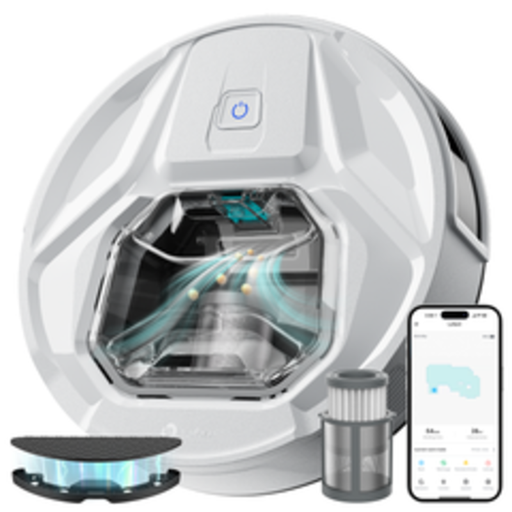
Why it suits this profile: An accessible combination of vacuuming, sweeping and mopping for homes with hard floors and low-pile carpet. The app works via 2.4 GHz Wi-Fi and, according to the product information, supports Alexa and Google Assistant.
The specifications state concrete figures: 6000Pa, an 800 ml dust container, up to 210 minutes of runtime and ultrasonic carpet recognition. This means you do not have to rely solely on vague marketing terms.
6000Pa suction power, HEPA filter, bagless design, reusable mop holder and a stated noise level of 60 dB.
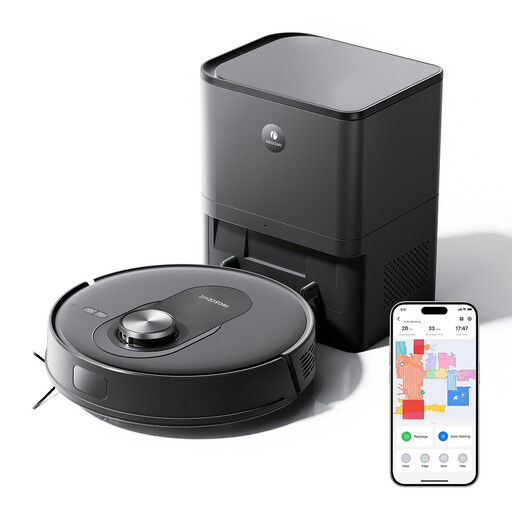
Why it suits this profile: For anyone who wants to manage multiple rooms automatically and values a robot vacuum with an app, laser navigation and a station that collects dust.
The listed features focus on route planning: five maps, laser navigation and app control. However, check the exact contents of the package and the available app functions in advance.
According to the product name: 8000Pa suction power, up to 200 minutes of runtime, a 3-litre dust bag and Alexa support.
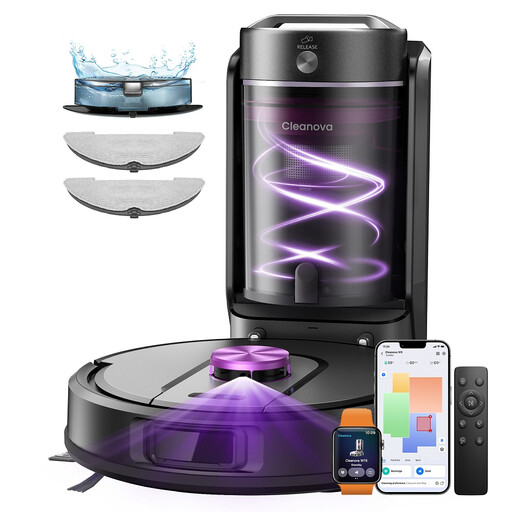
Why it suits this profile: Designed for larger households, families with pets and users who want to set up multiple zones or floors.
In addition to the stated 10000Pa, the product information lists three suction modes, three water levels, LiDAR navigation and adjustable no-go zones. The bagless collection system avoids the need for dust bags, but the station and filters still need to be cleaned.
Stated runtime of 180 minutes, 4-litre bagless station, five maps, app control and compatibility with Alexa, Google Assistant and Siri.
Clean the dust container, main brush, side brush and filters regularly. Wash reusable mop cloths according to the instructions and allow them to dry completely. Also check the charging contacts and water module. With a robot vacuum that has a suction station, you must also maintain the station’s collection container and filter.
Only use accessories and cleaning products approved by the manufacturer. A robot vacuum is not designed to suck up liquids. If your home has stairs, put up a physical barrier, even when the navigation system can recognise obstacles.
We have compiled a complete, up-to-date list of products that fully meet these strict selection criteria and the applicable European safety regulations.
It varies by model. Check whether the robot can recognise carpet and automatically adjust the mopping function. A higher suction setting is often useful on low-pile carpet; do not let the robot mop carpet if the model does not have a separate function for this.
Its lifespan depends on usage, maintenance, battery condition and the availability of replacement parts. Clean the brushes and filters according to the manual and prevent hair from becoming wrapped around the brush axle for prolonged periods. Before buying, check whether mop cloths, filters and brushes are available separately.
In addition to the purchase price, you may need to pay for filters, brushes, mop cloths and dust bags. A bagless station can save on dust bags, while a station with a dust bag may require less hands-on maintenance. Compare the price and availability of consumables before making your decision.
