
Vandaag of morgen in huis

Kwaliteit gegarandeerd

Welkomstaanbiedingen ontgrendelen: GRATIS bezorging | Tot 80% korting | Gratis 30 dagen JoyPlus-proefperiode
Download de app
A robot vacuum with a mopping function can tackle daily dust, crumbs, and hair from your floors, saving you from having to vacuum every time. However, not every model is suitable for every home. A robot mop works differently from a cordless floor cleaner or a wet and dry vacuum cleaner, and marketing claims don't always tell you what you actually need.
Therefore, pay close attention to the flooring in your home, the amount of dirt, and how much maintenance you're willing to do yourself.
A high number in pascals, such as 8,150 Pa or 20,000 Pa, sounds appealing. However, suction power alone doesn't determine how well a robot cleans. The brush, airflow, floor detection, and navigation method also play a part.
For pet hair, an anti-tangle brush and a suitable main brush are important. On carpets, an automatic increase in suction power can be useful. You should also check if the robot can travel over your rugs without the mop making everything damp.
A robot vacuum with a mop and a self-cleaning station can wash its mopping pads and sometimes dry them with hot air. This reduces manual work, but you still need to empty the dirty water tank, clean the filters, and check the components.
If you have a station with automatic dust emptying, you'll also need to replace the dust bag. So, don't just look at whether it has a station, but also consider the capacity of the water and dust containers and the cost of consumables.
A robot vacuum with laser navigation typically creates systematic maps of your home. However, cables, loose clothing, dark surfaces, and floor-level mirrors can still cause problems. It's a good idea to clear away small objects before you create the first map.
Place the charging station on a flat surface against a wall. For many models, a minimum of 0.5 metres of free space on both sides and 1.5 metres at the front is recommended.
For a home with hard floors and low-pile carpets, a model with multiple suction levels is often more practical than a device that only operates at maximum power. A robot vacuum for pets must also be able to pick up hair effectively without the brush getting jammed quickly.
Check if the product description states it is suitable for:
A mopping function is usually intended for light damp cleaning. Do not use the robot to vacuum up puddles or large amounts of water, unless the manufacturer explicitly allows it.
LiDAR or laser navigation helps the robot to create a floor plan and follow efficient routes. Useful app features include room selection, schedules, virtual walls, and no-go zones. In larger homes, support for multiple maps can be beneficial.
Also, pay attention to the height of the robot. A low-profile model can get under more furniture, but a protruding laser turret can increase its overall height.
A robot vacuum with an auto-empty function reduces the need to empty the dustbin every day. Some stations wash the mop with hot water, dry it with hot air, and automatically refill the clean water tank. These are convenient features, but they require space and regular maintenance.
For a larger house, battery life, automatic resume, and map management are relevant. A model that continues cleaning after recharging doesn't need to finish the entire house in a single session.
If you mainly want to tackle dried-on stains or spills, you might be better off with a wet and dry vacuum cleaner. Such an appliance is manually controlled and is usually intended for hard floors, not for carpets.
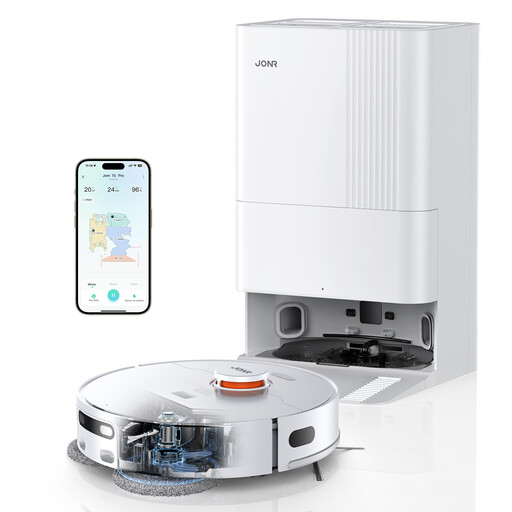
Why it fits this profile: This model combines vacuuming, mopping, LiDAR navigation, and an all-in-one station in a single device. You can set schedules and no-go zones via the app.
The product information mentions 8,150 Pa, an anti-tangle side brush, and obstacle avoidance. The station also features a hot air drying function.
LiDAR maps, adjustable suction levels, and a combined station. However, the dirty water tank and dust bag still require manual maintenance.

Why it fits this profile: The specifications focus on advanced automation for homes with hard floors, carpets, and pets.
The product description lists automatic dust emptying, mop washing with 75°C water, hot air drying, and carpet detection.
20,000 Pa according to the product information, TrueMapping 2.0, and a station with water management, dust emptying, and mop maintenance.
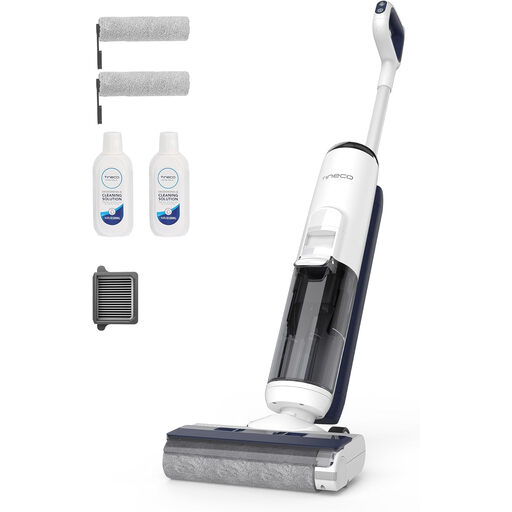
Why it fits this profile: This cordless floor cleaner is designed for hard floors like vinyl, tiles, laminate, and sealed wood. You control it manually to tackle specific spots or more intensive messes.
The product information limits its use to hard indoor floors, making it clear that this is not a complete solution for carpets.
Cordless design, 4.3 kg weight, self-cleaning function, and included extra roller brushes.
We've compiled a complete, up-to-date list of products that fully meet these strict selection criteria and comply with current European safety regulations.
A robot vacuum with a mopping function will last longer if you schedule its maintenance:
With a wet and dry vacuum, you also need to clean the dirty water tank and roller brush after use. These appliances are generally not designed for rough surfaces or carpets.
That depends on the model. Some robots recognise carpets and increase their suction power or lift the mop. Always check this in the specifications. A robot is primarily suited for daily maintenance; stubborn stains may require manual cleaning.
The lifespan depends on use, maintenance, and the availability of replacement parts. Regularly cleaning filters, removing hair from the brush, and emptying the water tanks helps to reduce wear and tear. Check in advance which parts are available to buy separately.
In addition to the purchase price, there may be costs for electricity, mop cloths, filters, brushes, and dust bags for the station. A bagless model might use fewer consumables, whereas an auto-empty station can offer more convenience. Therefore, compare not only the features but also the monthly maintenance costs.
