
Vandaag of morgen in huis

Kwaliteit gegarandeerd

Welkomstaanbiedingen ontgrendelen: GRATIS bezorging | Tot 80% korting | Gratis 30 dagen JoyPlus-proefperiode
Download de app
A robot vacuum with a mop can take care of most everyday crumbs, dust and hair for you. But whether you end up with a handy smart robot vacuum or one that gets stuck frequently depends largely on your home, flooring and expectations around maintenance.
So don’t focus only on high suction power or a smart-looking app. The right choice also depends on navigation, mop management, carpet detection and how much space the base station takes up.
A figure such as 4,000, 10,000 or 20,000 Pa sounds impressive, but it doesn’t tell you everything about cleaning performance. Suction power is just one factor. The brush, airflow, filter, flooring and automatic boost on carpets all play a part too.
For example, a powerful robot vacuum with an unsuitable brush can still collect hair. So check whether it also has an anti-tangle brush, carpet detection and different cleaning modes.
Many models use a damp mop that trails behind the robot. This is mainly suitable for fine dust and light stains. A robot mop usually won’t replace manual cleaning for dried-on marks.
Check the type of mopping system, the capacity of the water tank, and how the mop is washed and dried. If you have carpets, an automatic mop lift is important. Without this feature, a damp mop could touch the carpet.
A robot vacuum with a self-emptying base needs space not only for the robot itself. The station usually needs to sit against a wall, with clear space at the sides and in front. Also consider whether you’re happy to maintain a dust bag, dirty water tank or clean water tank regularly.
According to the product information for various models, automatic emptying doesn’t mean the robot is completely maintenance-free. Filters, brushes, mop pads and tanks still need cleaning.
A robot vacuum with LiDAR navigation uses laser sensors to map your home systematically. This is useful if you have multiple rooms, set cleaning schedules or no-go zones. In the app, you can often select rooms, set virtual walls and save maps for multiple floors.
However, LiDAR won’t prevent every problem. Loose cables, thin clothing and small objects can still cause difficulties. Models with additional camera, infrared or 3D sensors are designed to recognise obstacles. Just check which features are actually listed in the product details.
If you’re looking for a robot vacuum for carpets and hard floors, these points are worth considering:
A high Pa rating is therefore an indication, not a guarantee of the same results in every home.
A robot vacuum with an app usually offers scheduling, room selection, suction settings and virtual boundaries. Check in advance whether the app only works with 2.4GHz Wi-Fi, whether you need an account and what data is shared.
With a self-emptying base, you’ll need to factor in consumables. A model with a dust bag can be hygienic and convenient, but you’ll need to buy replacement bags. A bagless station reduces this ongoing cost, but you’ll need to empty the dust container by hand. Models with a mop-washing function also have clean and dirty water tanks to consider.
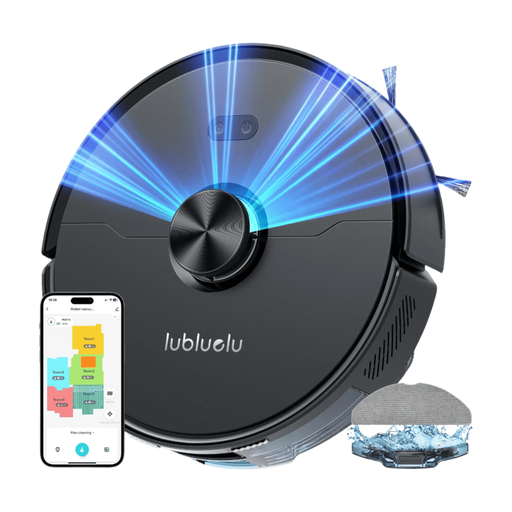
Why it suits this type of user: This model combines vacuuming and mopping with laser navigation, an app and a stated runtime of up to 180 minutes. It’s a good option if you’re looking for an easy-to-use introduction to robot cleaning on hard floors and carpets.
The product information lists laser navigation, app control and a mopping function. Be sure to check that you have enough clear space around the charging station.
Stated suction power of 4,000 Pa, hot-air drying at 45°C and a robot height of around 9.7 cm.

Why it suits this type of user: A good fit if you want mostly automated maintenance and have space for a larger all-in-one station.
The product description lists automatic dust emptying, mop washing with 75°C water and warm-air drying. Check the station dimensions before ordering.
20,000 Pa according to the product information, dual rotating mops, carpet detection and the ability to manage multiple maps.
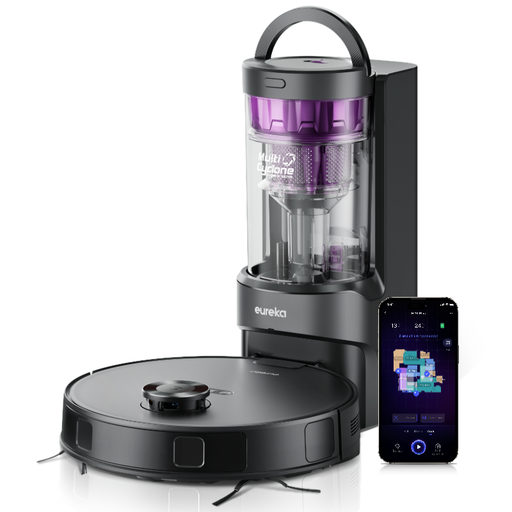
Why it suits this type of user: A practical choice for homes with pets, carpets and hard floors, especially if you want to empty the robot by hand as little as possible.
The product information lists a 10 mm mop lift, LiDAR navigation and 3D obstacle avoidance. These features help when cleaning different types of flooring, but you’ll still need to clear away loose cables.
8,000 Pa according to the product description, a 2-litre bagless dust station and a stated runtime of up to 180 minutes.
We’ve put together a complete, up-to-date list of products that meet these strict selection criteria and the applicable European safety regulations.
That depends on the features available. If you have carpets, look for a model with carpet detection and an automatic mop lift. Check the maximum threshold height too. A robot mop is designed for light damp cleaning, not for vacuuming up puddles or spilled liquids.
Clean the dust container, brush and sensors regularly. Wash the mop pad after use and let it dry completely before putting it back. If the base station has a water tank, you’ll also need to check the clean and dirty water. Always follow the manufacturer’s instructions and switch off the device before carrying out maintenance.
In addition to the purchase price, you may need to budget for electricity, filters, brushes, mop pads and dust bags. A bagless station reduces the need for disposable bags, while a dust station with a bag may mean less direct contact with dust. So compare not only the purchase price, but also the consumables required and how often the robot needs maintenance.
