
Vandaag of morgen in huis

Kwaliteit gegarandeerd

Welkomstaanbiedingen ontgrendelen: GRATIS bezorging | Tot 80% korting | Gratis 30 dagen JoyPlus-proefperiode
Download de app
A robot vacuum and mop can pick up dust, crumbs and hair every day, so you don’t have to keep vacuuming yourself. Yet many households buy a model that isn’t suited to their flooring, layout or cleaning routine. As Joybuy Product Recommendation Officer, I start by looking at verifiable features, not marketing claims.
High suction power sounds appealing, but it doesn’t tell you everything about how well a robot will clean your home. The brush, airflow, floor detection and navigation all play a part too. For example, a robot vacuum with 20,000 Pa may have more power on paper, but that doesn’t automatically mean it will navigate around furniture more effectively or reach every corner.
As well as suction power, look at:
Basic models drag a damp cloth behind the robot. This may be enough for light dust, but it won’t replace a thorough clean for dried-on stains. Check how water is dispensed, whether the flow can be adjusted and how easy the cloth is to clean after use.
As a rule, use only clean water in a robot vacuum and mop, unless the manufacturer specifically approves a suitable cleaning solution. This helps prevent blockages or damage to the water system.
A robot vacuum with a self-cleaning station can take care of many tasks for you, but you’ll still need to empty the dirty-water tank, clean the filters and replace the dust bags. Some stations wash the mop pads and dry them with warm air; just remember to check the tank capacity and the cost of consumables.
For homes with several rooms, a robot vacuum with LiDAR navigation is often a practical choice. LiDAR maps the space systematically, then lets you set up rooms, schedules and no-go zones in the app. Check whether the model can store multiple maps if you want to clean more than one floor.
Also consider where to place the charging station. Many models need around 50 centimetres of clear space on either side and about 1.5 metres in front. Cables, toys and loose clothing can block the robot or get caught in the brush.
A robot vacuum for hard floors and carpets should be able to switch smoothly between surfaces. Automatic carpet detection and an adjustable suction setting are useful in homes with rugs. For a robot vacuum for pet owners, an anti-tangle brush and daily schedules are more important than a high Pa rating alone.
For example, the Lubluelu SL60MAX lists 4,000 Pa, LiDAR 9.0, automatic suction boost on carpets and a self-emptying base. These are verifiable product specifications; how well it performs in practice depends on your flooring, hair length and home layout.
If you want to keep manual maintenance to a minimum, consider a robot vacuum with automatic emptying or a station with a mop-washing function. Check:
An advanced station can make your daily routine easier, but you’ll still need to check the sensors, brushes and tanks regularly.
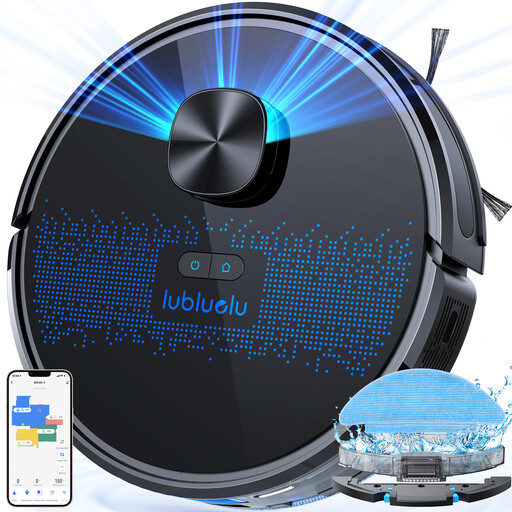
Why it suits this type of buyer: This model combines vacuuming and mopping with app control, laser navigation and storage for five maps. That’s useful in a flat or a home where you want to clean room by room.
The product information lists separate settings for rooms, no-go zones, suction power and cleaning schedules. This means you don’t have to rely solely on an automatic default setting.
4,000 Pa, laser mapping, app control and support for hard floors, carpets and pet hair.

Why it suits this type of buyer: A good choice for households looking for extensive automation and with a mix of hard floors and carpets.
The listed OMNI station features include automatic emptying, washing mop pads with 75 °C water, warm-air drying and water supply.
20,000 Pa according to the product information, TrueMapping 2.0, carpet detection, a 4-litre clean-water tank and app control.
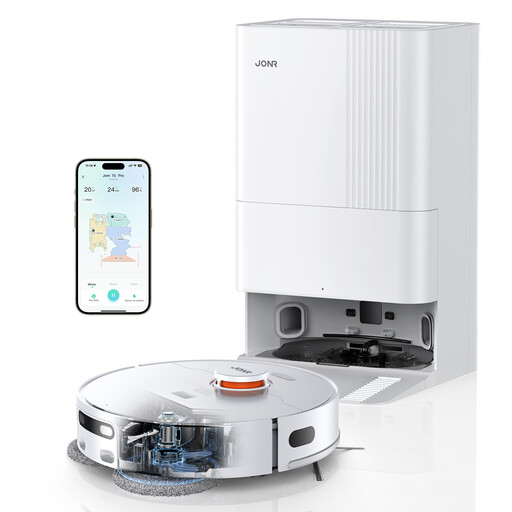
Why it suits this type of buyer: A good option for families and pet owners looking for a powerful robot vacuum with station features and scheduled cleaning.
The listing mentions LiDAR navigation, obstacle avoidance, an anti-tangle side brush and an all-in-one dock. The app supports no-go zones and suction settings.
8,150 Pa according to the product listing, warm-air drying, LiDAR and a combined station.
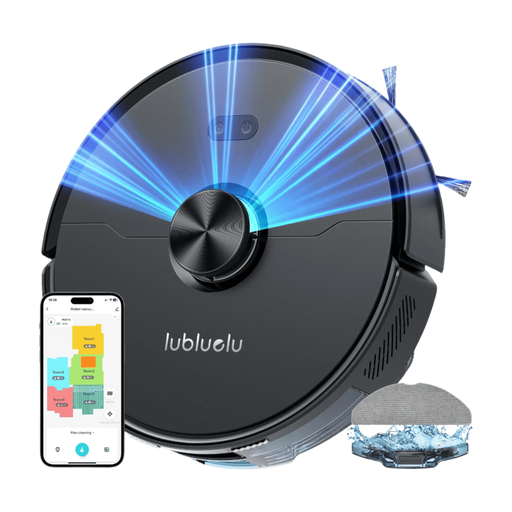
Why it suits this type of buyer: Its capacity and long operating time make it well suited to larger homes where several rooms need cleaning in succession.
The product information lists laser navigation, battery life of up to 180 minutes and a base station with separate dust, clean-water and dirty-water tanks.
4,000 Pa, a stated coverage area of 300 m², 4 litres of clean water and 3 litres of dirty water in the station.
We’ve put together a complete, up-to-date list of products that meet these strict selection criteria and the applicable European safety regulations.
Some models can, particularly those with carpet detection or an adjustable mopping mode. Check whether the mop plate lifts automatically or whether you need to exclude carpeted areas in the app. On low-pile carpets, it’s usually most practical to vacuum and mop separately.
Clean the mop pad after use, empty the dirty-water tank and check the brush and filters regularly. A robot vacuum with automatic emptying still needs maintenance too. The exact intervals vary by model and how often you use it.
As well as the purchase price, you’ll need to factor in electricity, dust bags, filters, mop pads and, if needed, cleaning solution. A model with a large station may need less frequent attention, but its consumables could cost more. Before you buy, check which parts are available and how often the manual recommends replacing them.
