
Vandaag of morgen in huis

Kwaliteit gegarandeerd

Welkomstaanbiedingen ontgrendelen: GRATIS bezorging | Tot 80% korting | Gratis 30 dagen JoyPlus-proefperiode
Download de app
A robot vacuum and mop can tackle dust, crumbs and hair every day, without you having to vacuum constantly. However, not every model lives up to expectations. Households with pets, carpets and hard floors often pay too little attention to maintenance, navigation and how the mopping module works until it’s too late.
As a Joybuy Product Recommendation Officer, I filter the most important product specifications out of the marketing copy. This helps you see which features are genuinely useful and which type of robot vacuum and mop is right for your home.
A figure such as 10,000 Pa sounds impressive, but it doesn’t tell you everything about day-to-day cleaning. The main brush, airflow, filter, floor detection and maintenance all affect the results, too. With pet hair, it’s also important to consider how likely it is to get tangled around the brush.
So check whether the model is suitable for carpets and hard floors, has multiple suction settings and offers an easy way to clean the brush.
Most robot vacuums are designed for light damp mopping. They aren’t made to suck up spills, wet dirt or puddles. Stubborn stains may also need several passes or some manual cleaning.
Use only water or a cleaning solution approved in the product manual. After use, remove any detachable mop and leave it to dry to help prevent odours and moisture build-up.
A robot vacuum with a self-emptying station reduces the amount of daily maintenance, but it doesn’t eliminate it. Dust bags, filters, water tanks, mop pads and sensors still need checking. The station also needs space: place it on a flat surface against a wall, leaving the recommended clearance around it.
With a bagless station, you may not need to replace dust bags, but you will need to clean the dust container and filters more often.
For a robot vacuum for pet owners, a powerful motor and a brush designed to reduce hair tangles are useful. As well as the Pa rating, look for:
Higher suction power can mean more noise, so check the stated noise level too. For example, the Lubluelu S1000 lists a maximum suction power of 10,000 Pa and a noise level of 55 dB in its product information. These are verifiable specifications, but your experience will depend on the selected mode and the room.
A robot vacuum with LiDAR navigation will generally map rooms systematically. This is useful for multiple rooms, floors, no-go zones and scheduled cleaning. Check whether it supports:
An app gives you access to plenty of settings, but check in advance that your home network is supported. Some models work only with 2.4GHz Wi-Fi.
If your home has both carpets and hard floors, carpet detection and an automatically lifting mop can be useful. This helps prevent a damp mop from travelling over the carpet. Check the water tank capacity, too, and whether the mop pads are washed and dried automatically.
Also consider the threshold height, robot height and clearance under sofas. A smart robot vacuum that can’t fit under your furniture will only clean part of your floor.
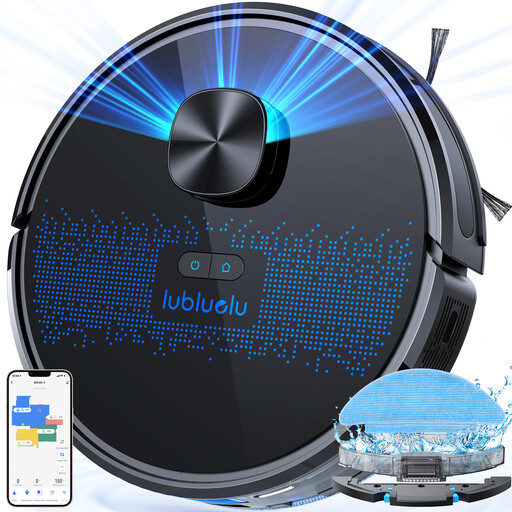
Why it suits this profile: This 2-in-1 model is designed for households that want automated vacuuming and light damp mopping without needing a full-featured cleaning station straight away.
The product information lists laser navigation, five maps, app settings and 4,000 Pa suction power. This lets you set up specific rooms and zones instead of relying solely on a general cleaning programme.
2-in-1 cleaning, app control, five map profiles and a stated noise level of 55 dB.
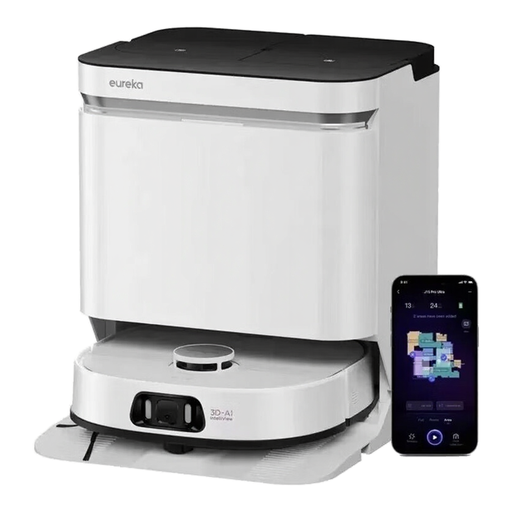
Why it suits this profile: This model is for anyone who values a more advanced station and automatic maintenance features for everyday use.
According to the product description, the station automatically empties the dust, washes the mop with 75°C water and dries it with heated air. Be sure to check how much space it needs and how to maintain the water tanks.
Stated suction power of 16,200 Pa, LDS laser navigation, mop lifting and a station with automatic maintenance features.
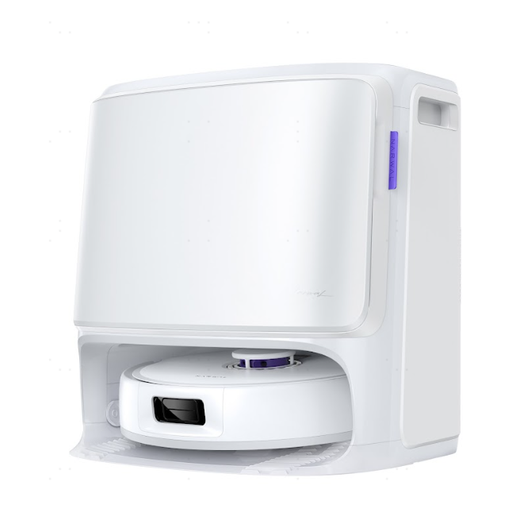
Why it suits this profile: Pet owners and larger households can benefit from a station that collects dust and maintains the mop, as well as a system designed to handle hair, according to the product information.
The product description lists dual anti-tangle brushes, LiDAR navigation, carpet detection and automatic mop lifting. These features are suited to homes with hair, multiple floor types and plenty of everyday cleaning to do.
Stated suction power of 11,000 Pa, 220 minutes of runtime, a 2.5-litre dust bag, and self-cleaning and drying of the mop.
We’ve put together a complete, up-to-date list of products that meet these strict selection criteria and current European safety requirements.
A few regular tasks can help your robot last longer:
A self-cleaning robot vacuum reduces the work involved, but doesn’t eliminate these checks altogether. Also check whether dust bags, mop pads, filters and cleaning solution will be available in the future.
Yes, if the model detects carpets and automatically lifts the mop, or lets you exclude carpeted areas. Check this feature specifically. A standard damp mop can wet your carpet.
It depends on your floors, how often you use it and how much hair it has to deal with. Check the brushes and filters weekly if you use it intensively. A station may empty the dust or clean the mop automatically, but water tanks, dust bags and sensors still need periodic attention.
As well as electricity, you’ll need to factor in filters, brushes, mop pads, dust bags and possibly cleaning solution. A bagless station can reduce ongoing dust bag costs, while a station with a dust bag may mean less direct contact with dirt. Before buying, check which consumables are needed for your chosen model.
