
Vandaag of morgen in huis

Kwaliteit gegarandeerd

Welkomstaanbiedingen ontgrendelen: GRATIS bezorging | Tot 80% korting | Gratis 30 dagen JoyPlus-proefperiode
Download de app
A robot vacuum with a mopping function can tackle daily dust, crumbs and light stains, saving you from having to get the vacuum cleaner and mop out yourself. However, not every model is suitable for every home. A family with pets will have different requirements than someone with mostly parquet or tiled floors.
That's why you should look beyond just high suction power or a fancy app. The actual user experience also depends on navigation, maintenance, carpet detection and the space the charging station takes up.
Manufacturers often advertise a high suction power value, expressed in Pa. This indicates the maximum suction pressure, but it doesn't tell the whole story about cleaning performance. The brush, airflow, filter, floor type and selected cleaning mode also play a part.
A robot vacuum with 4,000 Pa might be sufficient for a flat with hard floors, whereas a household with long-haired pets or deep-pile carpets would benefit more from a powerful model with an anti-tangle brush.
Most robot vacuums with a mopping function use a damp cloth or rotating mop pads. This is intended for daily maintenance and light dirt, not for soaking up large spills or removing every single dried-on stain.
You should also check if the mop automatically lifts when it detects a carpet. Without this feature, you'll need to set up no-mop zones in the app or remove the mopping module entirely. Furthermore, only use water or a cleaning solution recommended by the manufacturer. Many product manuals warn against using unapproved cleaning agents.
A robot vacuum with a self-cleaning station can empty its dustbin and, depending on the model, wash and dry its mop pads. However, the water tanks, filters, brushes and sensors still need to be checked regularly.
For models with automatic emptying, you also need to consider the cost of replacement dust bags and the space required for the station. Before you buy, check that you have about half a metre of clearance on both sides and enough space in front, as specified in the product instructions.
For pet hair, a good main brush, an anti-tangle system and sufficient airflow are more important than the Pa rating alone. A robot vacuum for pets should be able to collect hair effectively without you having to completely clear the brush after every cleaning cycle.
Also consider the capacity of the dustbin and the station. A larger dust bag reduces how often you need to empty it, but the station itself usually takes up more space.
A robot vacuum with LiDAR navigation uses laser sensors to create a map of your home and typically navigates rooms systematically. This is practical for homes with multiple rooms, fixed cleaning schedules and several floors. Some models can even store multiple maps.
However, LiDAR doesn't prevent every problem. The robot can get stuck on loose cables, socks, toys and the edges of curtains. Dark floors, mirrors close to the ground and very low obstacles can also affect its detection capabilities. It's a good idea to clear away small objects before the first run and check the map in the app afterwards.
For a robot vacuum for carpets and hard floors, useful features include automatic carpet detection, adjustable water flow and a liftable mop. Also, pay attention to the maximum threshold height it can cross. A robot may struggle with high transition strips between rooms.
If you have wooden floors, you should check if they are suitable for damp cleaning. Do not use the mopping function on untreated or unsealed surfaces if the manual advises against it. A robot mop is not designed to suck up puddles or large liquid spills.
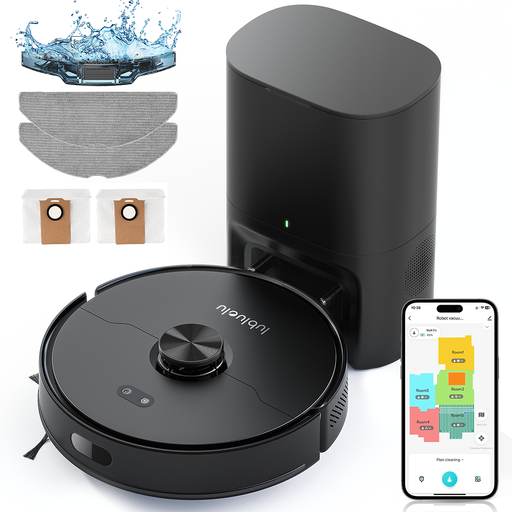
Why it fits this profile: This model combines vacuuming, mopping and app control with laser navigation. The specifications list 4,000 Pa suction power, a 55 dB noise level and storage for up to five maps.
The mapping function and virtual boundaries allow you to set up rooms and no-go zones, so you're not just relying on a general automatic mode.
Laser navigation, storage for five maps, app control and a stated noise level of 55 dB.
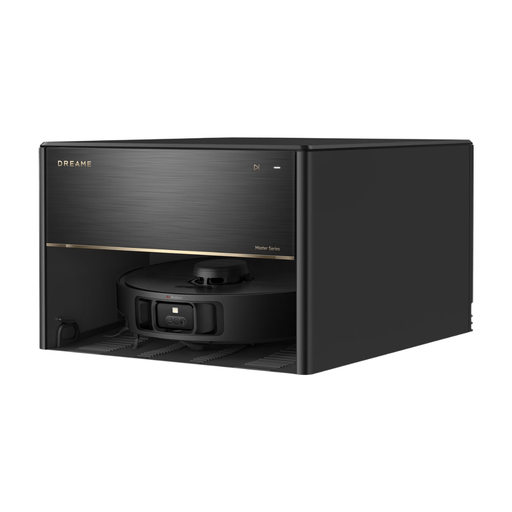
Why it fits this profile: The product information mentions 12,000 Pa, automatic water supply and drainage, an 8-in-1 base station and app control.
The station automates several maintenance tasks. However, do check beforehand if the fixed water connection and the dimensions of the base are suitable for your home.
Stated suction power of 12,000 Pa, automatic water management and a multi-functional base station.
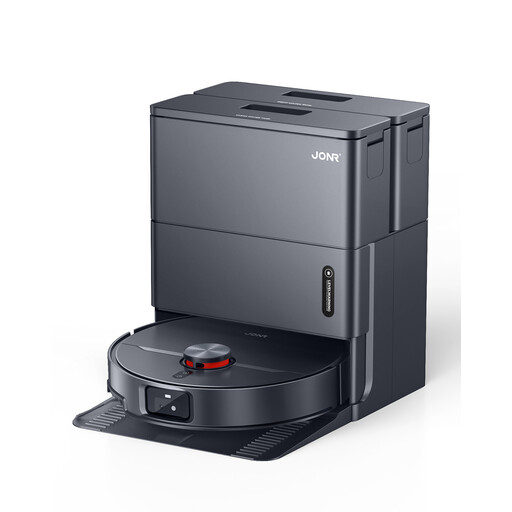
Why it fits this profile: This model is aimed at households looking for powerful suction and automated mop maintenance. The product description mentions 20 kPa, extendable dual arms, 75°C hot water cleaning and 45°C hot air drying.
The system doesn't just focus on suction power, but also highlights hair removal and automatic washing and drying. The water tank and dustbin still need to be checked.
Stated suction power of 20 kPa, dual extendable arms and a station with hot water washing and hot air drying.

Why it fits this profile: The listed features include 20,000 Pa, automatic carpet detection, anti-tangle brushes, mop cleaning with 75°C water and app control.
The combination of carpet recognition and adjustable cleaning modes is helpful for homes with tiles, hard floors and carpets. Set up no-mop zones before letting the robot work on its own.
Stated automatic carpet detection, anti-tangle features, dust emptying, and mop pad washing and drying via the OMNI station.
We've compiled a complete, up-to-date list of products that fully meet these strict selection criteria and comply with current European safety regulations.
Yes, many models can vacuum on carpets. The mopping module will either need to be lifted, removed, or excluded via a no-mop zone. Therefore, always check if the model has carpet detection and what maximum pile height it supports.
That depends on the station. A model with automatic emptying and mop cleaning reduces manual work, but the filters, brushes, sensors, dust bags and water tanks still require periodic attention. Pet owners are advised to check the brush for hair more frequently.
Besides electricity, you need to account for dust bags, filters, mop cloths and any manufacturer-approved cleaning fluid. For a station with hot water cleaning, water and energy consumption may be higher. Therefore, check not only the purchase price but also the price and availability of consumables.
