
Vandaag of morgen in huis

Kwaliteit gegarandeerd

Welkomstaanbiedingen ontgrendelen: GRATIS bezorging | Tot 80% korting | Gratis 30 dagen JoyPlus-proefperiode
Download de app
A robot vacuum and mop can tackle everyday dust, crumbs and hair without you having to vacuum all the time. However, not every model is suitable for every home in the Netherlands. A robot that looks powerful on paper may get stuck on door thresholds, wet your rugs or simply need a lot of maintenance in practice.
As a Joybuy Product Recommendation Officer, I focus on verifiable specifications and practical, everyday use. Read on to find out which pitfalls to avoid, which features really make a difference and which models suit different households.
A high Pa, or pascal, rating refers to the stated suction power. It doesn’t tell you everything about the cleaning results. The brush, airflow, floor detection and navigation all play a part too. For example, a powerful robot vacuum with a poorly designed brush can still collect hair around the roller brush.
So be sure to check:
A basic robot mop may drag a damp cloth across the entire floor. That’s not ideal if you have rugs or carpets. Look for automatic carpet detection and a mop lift. Several models specify a lift of 10 mm. This can help limit contact with low- and medium-pile carpets, but always check the recommended floor types in the product information.
A mopping function is designed for light, damp cleaning. Don’t use the robot to suck up puddles or large quantities of liquid.
A robot vacuum with a self-cleaning station can wash and dry the mop and empty the dust container. Even so, filters, sensors, brushes, dirty water tanks and seals still need maintenance. A station with a large capacity will also need to be emptied or refilled in good time.
When choosing a robot vacuum with automatic emptying, check:
A robot vacuum with LiDAR navigation uses a laser to map the room and usually follows a more systematic route than models that simply bump around at random. Check whether the app supports multiple maps, rooms, virtual walls and no-go zones. This is useful in homes with multiple floors or rooms where the robot shouldn’t mop.
LiDAR won’t prevent every problem. Loose cables, tassels, toys and clothing can still get caught. Clear the floor before the first cleaning run, then check which obstacles the robot can detect.
Several suction settings are useful if you’re looking for a robot vacuum for carpets and hard floors. Hard floors usually need less power than thick carpet. If you have pets, a wide roller brush, an anti-tangle system and an easy-to-access brush housing are more important than a high Pa rating alone.
According to the product information provided by the brands concerned, some models quote figures of 4,000 to 20,000 Pa. These are stated maximum figures; actual performance depends on the selected setting, the floor surface and the condition of the filter.
A basic mop mainly removes fine dust and light stains. According to their product descriptions, models with rotating mops or a roller can scrub the floor more intensively. Stations with hot-water cleaning and warm-air drying automate some of the maintenance, but it’s still important to check the tanks and parts regularly.
Check the space around the station too. Many models need about half a metre of clearance on either side and around one and a half metres in front. Measure the space beforehand, especially if you’re planning to put it in a narrow hallway or kitchen.
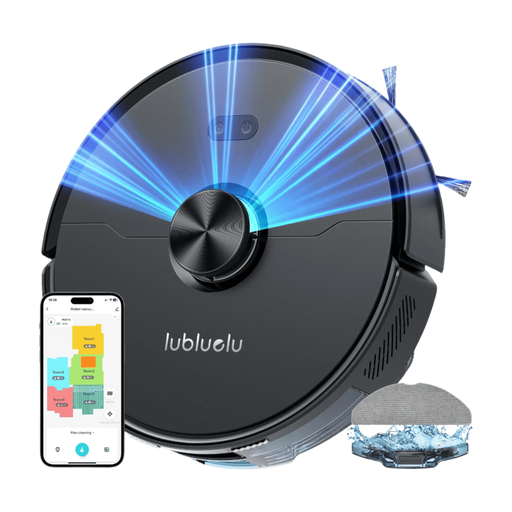
Why it suits this profile: With vacuuming, mopping, laser navigation and app control, this model offers a straightforward starting point for households with hard floors, carpets and pets.
The product information lists laser navigation, multiple maps and a mopping function. At 9.7 cm tall, you’ll need to check in advance that it can fit under your furniture.
A stated suction power of 4,000 Pa, up to 180 minutes of runtime and warm-air mop drying, according to the product specifications.

Why it suits this profile: A good fit if you value automatic mop cleaning, multiple floor-care functions and extensive app control.
The product information lists automatic dust emptying, mop washing at 75 °C, warm-air drying and carpet detection. Check the dimensions of the station beforehand.
A stated suction power of 20,000 Pa, an OZMO Turbo 2.0 mopping system and a station that includes a 4-litre water tank.
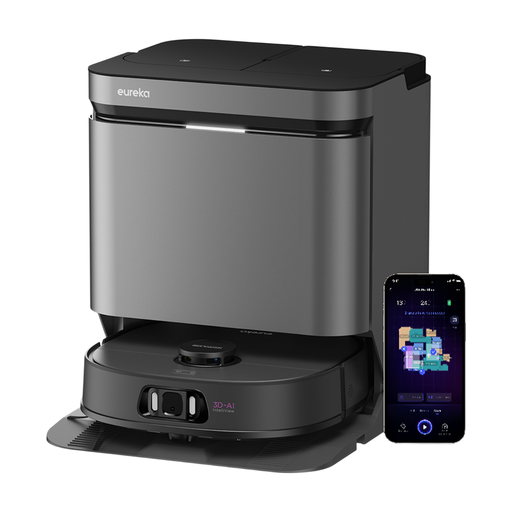
Why it suits this profile: An option for households with lots of hair, mixed floor types and a need for automated mop maintenance.
According to EUREKA’s own product information, anti-tangle technology, hot-water mop cleaning and self-cleaning are all integrated. Check which consumables are available locally.
The stated specifications include 16,200 Pa suction power, FlexiRazor anti-tangle technology and a station that washes and dries the mops.
We’ve put together a full, up-to-date list of products that meet these strict selection criteria and the applicable European safety regulations.
If possible, schedule the robot vacuum to run when everyone is out of the room. Remove cables and small toys, and clean up any spills by hand first. Clean the filter according to the instructions and let washed mop pads dry completely. Don’t use cleaning products in the water tank unless the manufacturer expressly recommends it.
A station with automatic emptying reduces the daily workload, but may involve costs for dust bags, filters and cleaning fluid. A bagless station avoids the need for dust bags, but needs emptying and cleaning more often. So compare not only the purchase price, but also the ongoing costs.
That depends on its carpet detection and how the mop lifts. If you have a mix of floor types, choose a model with an automatic mop lift, no-go zones and a separate carpet mode. A robot isn’t automatically suitable for deep-pile carpet, so check the maximum threshold and carpet height it can handle.
Regularly remove hair and dirt from the brushes, and clean the sensors if navigation becomes less accurate. Rinse the mop after use and empty the dirty water as instructed. If you have pets, cleaning more often makes sense, as hair can build up in the brush and filter more quickly.
As well as electricity, dust bags, filters, brushes, mop pads and cleaning products can all add to the cost. A bagless station can help you avoid ongoing costs for bags, while a station with a dust bag may mean less direct contact with dirt. Before buying, check which replacement parts are available and how often the instructions recommend replacing them.
