
Vandaag of morgen in huis

Kwaliteit gegarandeerd

Welkomstaanbiedingen ontgrendelen: GRATIS bezorging | Tot 80% korting | Gratis 30 dagen JoyPlus-proefperiode
Download de app
A robot vacuum with a mopping function can remove dust, crumbs and hair every day, without you having to vacuum and mop the whole house yourself. However, not all models offer the same practical benefits. A high suction power figure on the box, for example, tells you little about navigation, maintenance or mopping performance.
For households in the Netherlands, three things matter most: whether the robot works on your floors, how much maintenance you’ll still need to do and whether the docking station will fit in the space available. Read on to find out what to look for and which models suit different needs.
Manufacturers often quote a high figure in Pa, such as 8,000, 15,000 or even 22,000 Pa. This is a specification for maximum suction pressure, but it doesn’t give you the full picture of cleaning performance. Brush design, airflow, filter maintenance and how the robot moves over carpet also play a part.
So don’t compare suction power alone. Check whether the model has an anti-tangle brush, carpet detection and multiple cleaning modes. For a robot vacuum for pet owners, hair handling and easy maintenance are often more important than a big number on the box.
A basic robot mop with a damp cloth may be suitable for regular maintenance on tiles, vinyl or laminate. Stubborn marks usually call for rotating mops, a roller or extra downward pressure. On carpet, you’ll want to prevent a wet mop from dragging across the pile.
Look for an automatic mop lift or a carpet avoidance setting. For example, the eufy Omni S1 product specifications state that it has a 12 mm mop lift and is suitable for hard floors and medium- or low-pile carpet. Always check that these features suit your flooring.
A robot vacuum with a self-cleaning station can wash and dry the mop and empty the dust bin. This cuts down on daily chores, but the station still needs space and water, as well as regular maintenance. Check its dimensions and the clearance around it before ordering.
With models that have an automatic emptying station, you’ll also need to factor in dust bags, filters and dirty water tanks. So it’s best not to expect the appliance to be completely maintenance-free. According to some manufacturers’ product information, a dust bag can last for several weeks or months, but the actual lifespan depends on whether you have pets, the size of your floor area and how often you clean.
For a robot vacuum for hard floors and carpet, these features are worth considering:
So the Pa figure is just one part of the picture. A model with 8,000 Pa may be more practical for everyday use than one with a higher maximum figure if it navigates better or is easier to maintain.
A smart robot vacuum with an app often uses laser or camera sensors to map rooms. Look for features such as multiple maps, no-go zones, room selection and a cleaning schedule. These are especially useful in homes with multiple floors or an open-plan kitchen and living area.
Check the Wi-Fi requirements too. According to the product information, the Narwal Freo S supports 2.4GHz Wi-Fi only. If your router mainly uses 5GHz, you may need to take extra care during setup.
When choosing a robot vacuum with automatic emptying, don’t just look at the dust bag capacity. Check:
Only remove the mop after use if the manual instructs you to. For example, the Lubluelu S1000 product information says that the mop should be removed after use and left to air-dry. Keep the sensors, charging contacts and brushes clean, and switch the appliance off before carrying out maintenance.
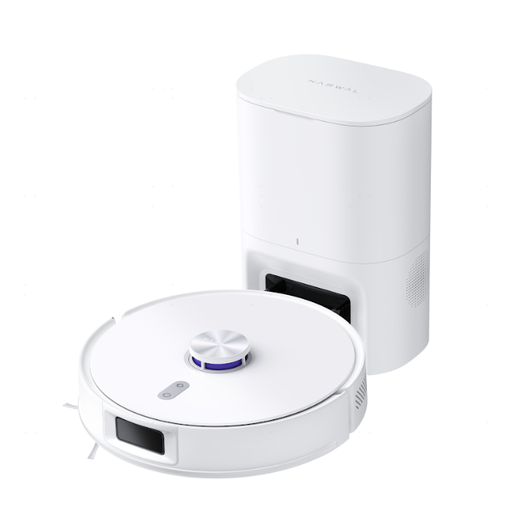
Why it suits this household: This model combines 8,000 Pa, LDS laser navigation, app controls and a station with a 3.5-litre dust bag. It’s a straightforward option for households with hard floors and pets.
The product information lists separate cleaning modes, no-go zones and carpet avoidance. This lets you tailor the mopping function more precisely than you could with a basic damp cloth.
8,000 Pa suction power, LDS navigation, 3D maps, app controls and automatic emptying into a 3.5-litre dust bag.
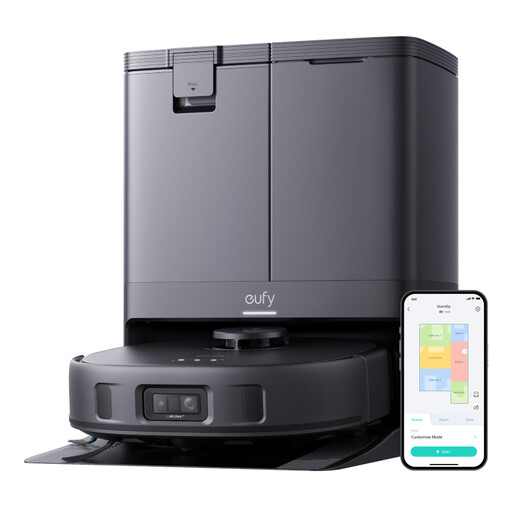
Why it suits this household: Combining 8,000 Pa, smart maps, app controls and automatic care for the cleaning pads, this model is a good fit if you want to keep daily chores to a minimum.
According to the product description, the Omni Station is designed to empty the robot automatically and wash and dry its pads. Do check how much space it needs and what maintenance is still required.
Automatic emptying, mop washing and drying, Wi-Fi app controls, quiet operation according to the product information, and a design for multiple floor types.
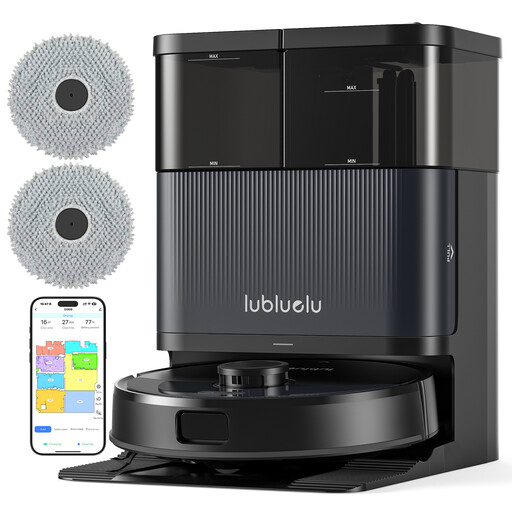
Why it suits this household: With stated suction power of up to 10,000 Pa, LiDAR mapping, carpet detection and app controls, this model is a good match for larger homes and households dealing with pet hair.
The product information lists carpet detection and automatic mop lifting. However, the mop needs to be removed and dried after use.
LiDAR navigation, app-based scheduling, a choice of vacuuming, mopping or both, and stated maximum suction power of 10,000 Pa.
We’ve put together a full, up-to-date list of products that meet these strict selection criteria and current European safety requirements.
It depends on the mopping function and settings. If you have carpet, choose a model with carpet detection, a mop lift or a carpet avoidance feature. Also check the maximum carpet height in the product specifications. Robot mops are mainly designed for hard floors; carpets are generally vacuumed only.
You’ll usually need to check the dust bin, dirty water tank, brushes, filters and sensors. A self-cleaning station also needs cleaning from time to time. Replace dust bags and filters according to the manual, and let the mop dry thoroughly if the model requires it.
As well as the purchase price, you may need to pay for replacement dust bags, filters, mop pads and, sometimes, cleaning solution. Energy use depends on how often you clean, charging time and the station’s drying function. Check which consumables your chosen model uses and how often the manufacturer recommends replacing them.
