
Vandaag of morgen in huis

Kwaliteit gegarandeerd

Welkomstaanbiedingen ontgrendelen: GRATIS bezorging | Tot 80% korting | Gratis 30 dagen JoyPlus-proefperiode
Download de app
A robot vacuum cleaner with mopping function can keep on top of dust, crumbs and hair every day without you having to clean the floor yourself each time. However, not every model is suitable for every British home. For example, a high suction power rating on the packaging says little about performance on deep-pile carpet, while a self-cleaning station still requires maintenance.
In this buying guide, you can compare important specifications, identify common pitfalls and choose a robot vacuum cleaner that suits your floors, pets and cleaning routine.
Manufacturers often quote a high value for strong suction power, expressed in Pa or kPa. This is a useful technical indication, but it does not fully predict the cleaning results. The brush, airflow, filter, clearance from the floor and selected cleaning mode also play a part.
A robot with 4,000 Pa may be sufficient for everyday dust on hard floors. For pet hair on carpet, a model with an anti-tangle brush, automatic carpet detection and a suitable turbo mode may be more practical.
Most robot vacuum cleaners with a mopping function use a damp mop or rotating mop pads. They are designed for light everyday maintenance, not for vacuuming up puddles or removing every dried-on stain.
So check whether the appliance:
Only use water or a cleaning solution permitted by the product manual.
A robot vacuum cleaner with mop and self-cleaning station can wash and dry the mop and empty the dust container. However, you will still need to empty the dirty-water tank, refill the clean-water tank, clean the filters and remove hair from the brushes. If the station uses a dust bag, there are also replacement costs to consider.
Pay attention to the space around the station, too. Various models recommend around 0.5 metres of clearance on both sides and 1.5 metres in front. Without sufficient space, returning to the charging station may be more difficult.
A robot vacuum cleaner with LiDAR navigation uses laser sensors to create a map of your home and generally follows a more systematic route than a model that mainly drives around at random. In a home with multiple rooms, features such as multiple maps, no-go zones and virtual walls are useful.
Obstacle avoidance varies from model to model. Cables, socks, toys and low-hanging curtains can still cause problems. Clear away loose items when creating the first map of your home, and check whether the robot can fit under sofas and cupboards.
For a home with hard floors and carpet, a combination of the following features is practical:
A high Pa rating is particularly relevant when combined with a good main brush and a suitable cleaning route. If you have pets, also consider how easy the brush is to access. A brush that can be removed easily saves time when clearing away hair.
An automatic emptying function reduces the need to empty the robot vacuum cleaner every day. Check the capacity of the dust bag or dust container, and find out how many days or weeks are expected to pass before replacement is recommended. The stated operating time usually depends on the selected mode, flooring and layout.
With app control, you can often select rooms, set cleaning schedules and adjust the suction power or water level. Check in advance whether the app requires a 2.4 GHz Wi-Fi network and what information is needed to create an account. A smart robot vacuum cleaner is only useful if its map and settings are easy to manage.
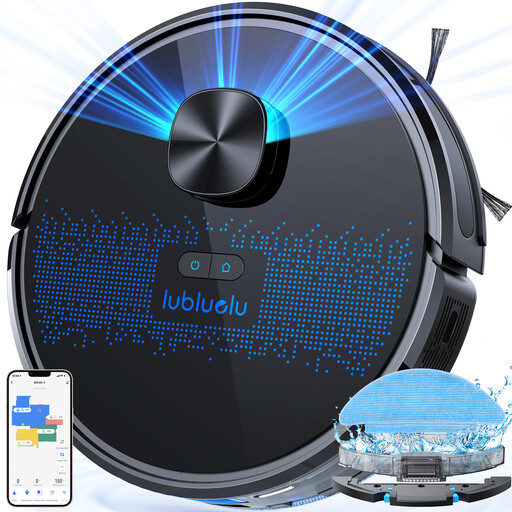
Why it suits this profile: This model combines vacuuming and light mopping with laser navigation, app control and support for up to five maps. That makes it a good fit for small to medium-sized homes looking for a straightforward introduction to automated floor cleaning.
The product information includes separate instructions for vacuuming and mopping, including removing and cleaning the mop. The stated 4,000 Pa should therefore be viewed as a product specification, not a guarantee of performance on every floor.
LiDAR mapping, app settings, five floor maps and an adjustable cleaning schedule.

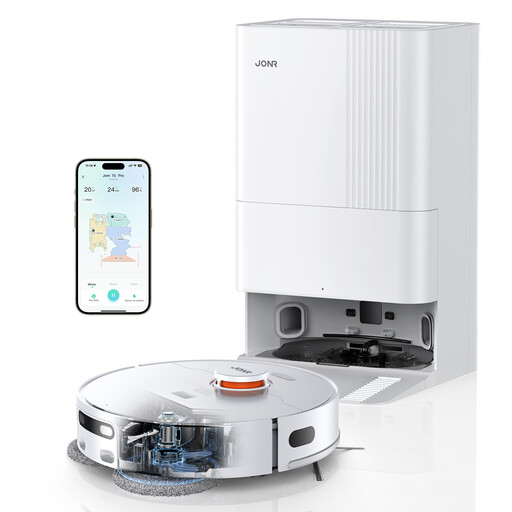
Why it suits this profile: The product specifications list an all-in-one station with dust emptying, mop washing at 75 °C, warm-air drying and automatic refilling. This suits households looking to minimise manual maintenance as much as possible.
The station automates several maintenance tasks, but the product information also lists a 4-litre clean-water tank and an 11.6 kg station. Measure the available space beforehand and remember that the tanks still require maintenance.
20,000 Pa according to the product description, dual rotating mops, a mop-washing function and TrueMapping 2.0.
Why it suits this profile: According to the product description, this model offers 8,150 Pa suction power, LiDAR navigation, obstacle avoidance, an anti-tangle side brush and an all-in-one dock. This makes it an interesting option for families with several rooms and regular dirt on hard floors.
The stated anti-tangle brush can help reduce hair wrapping around the brush, but regular checks are still necessary. The manual also states that the dust bag and dirty-water tank need to be replaced or emptied manually.
LiDAR maps, no-go zones via the app, hot-air drying according to the product information and a stated suction power of 8,150 Pa.
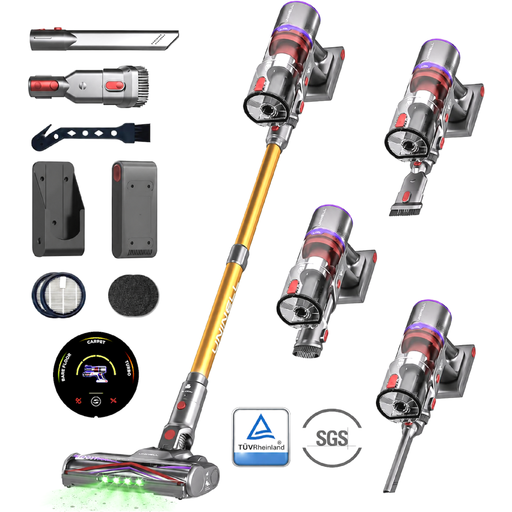
Why it suits this profile: This is not a robot vacuum cleaner, but a cordless stick vacuum for quick clean-ups on carpets, hard floors, furniture and stairs. The product description states up to 65 minutes of runtime and an anti-tangle brush.
You are not dependent on map navigation or a dock. This means you can tackle pet hair on the sofa, crumbs after meals and dirt in corners straight away. The stated runtime varies depending on the mode.
Cordless use, removable battery, LED touch display, 60,000 Pa according to the product listing and a brush designed to help reduce hair wrapping.
We have compiled a complete, up-to-date list of products that fully meet these strict selection criteria and the applicable European safety regulations.
Yes, but check whether the model recognises carpet and automatically lifts the mop. Without a mop lift, moisture can get onto the carpet. Also consider the brush, suction settings and maximum carpet pile height specified for the model.
You will usually need to empty the dirty-water tank, fill the clean-water tank, wash the mop cloths and check the filters or brushes. An automatic emptying function reduces the need to empty the dust container, but replacement dust bags and maintenance accessories can still create recurring costs.
That depends on the model and how you use it. A robot vacuum cleaner uses electricity for charging and may require bags, filters, mop cloths and cleaning fluid. A regular or cordless stick vacuum usually requires more manual effort, but may be more efficient for small cleaning jobs. So do not compare only the purchase price: also consider accessories, maintenance and expected frequency of use.
