
Vandaag of morgen in huis

Kwaliteit gegarandeerd

Welkomstaanbiedingen ontgrendelen: GRATIS bezorging | Tot 80% korting | Gratis 30 dagen JoyPlus-proefperiode
Download de app
A robot vacuum cleaner with a mopping function can tackle everyday dust, crumbs and light stains without you having to vacuum and mop yourself all the time. However, not every model is right for every home in the Netherlands. A flat with mainly PVC flooring has different needs from a house with deep-pile carpet, pets and several floors.
Look out for these three common pitfalls:
A robot vacuum cleaner with mopping and vacuuming functions should suit your floors. For hard floors, a soft brush and adjustable water flow are useful. For carpets, automatic carpet detection, a higher suction setting and a liftable mop are important. This helps prevent the damp mop from running over the carpet.
A model with 4.000 Pa may be enough for everyday dust on hard floors. Homes with pets, rugs or lots of sand in the hallway could look at models with 8.000 Pa or more. Use this as a point of comparison, not a guarantee of performance. Also check whether the main brush and side brush are less prone to tangling with hair. A robot vacuum cleaner for pet owners needs a good brush and filter system above all.
A robot vacuum cleaner with LiDAR navigation will usually create a systematic map of your home. You can then select rooms in the app, set cleaning schedules and create virtual no-go zones. LiDAR is useful in homes with several rooms, furniture and narrow passageways.
Also look for obstacle avoidance. Cables, socks, toys and pet accessories can still cause problems, even with sensors. So tidy away loose items before creating the first map, and keep an eye on the robot during its first few runs. On some models, dark floors, full-length mirrors or low objects can affect navigation.
A robot vacuum cleaner with a self-emptying docking station means you won’t need to empty the dust container every day. Some stations only empty the dust; others also wash and dry the mop. If you’re considering a model with automatic mop cleaning or hot-water cleaning, remember to allow for:
Check the dimensions before ordering. Many stations need around half a metre of clearance on either side and more than a metre in front. Place the station on a flat, hard surface, not on a carpet if the product information advises against it.
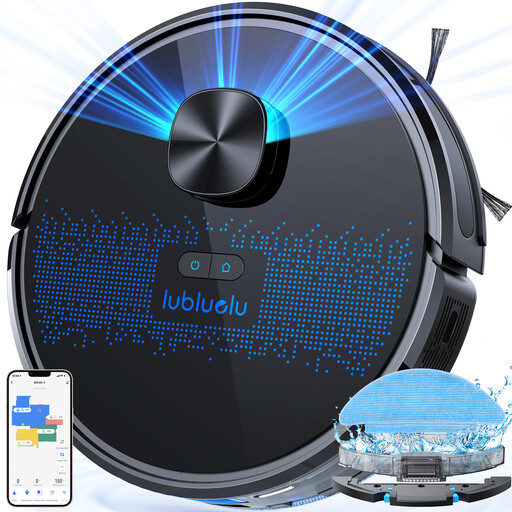
Why it suits this type of home: An accessible model for flats and homes with hard floors, carpets and pets. App control and laser mapping make the initial set-up straightforward.
The product information lists LiDAR navigation, adjustable suction power and up to five maps. That means you don’t have to choose based on the Pa rating alone.
4.000 Pa, app control, systematic routes, and support for carpets and hard floors, according to the product description.

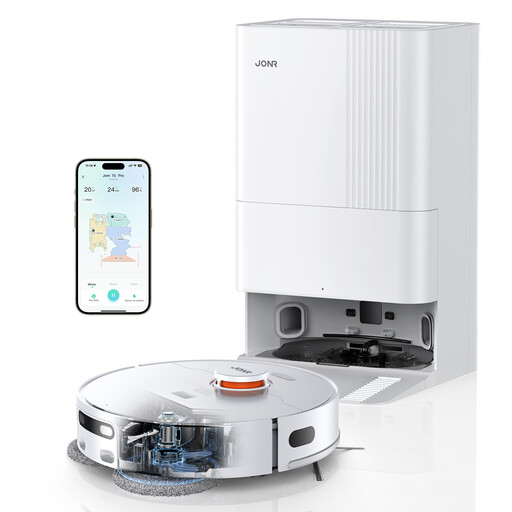
Why it suits this type of home: A good fit for larger households looking for automatic mop cleaning, carpet detection and a docking station that takes care of several maintenance tasks.
The station’s functions are clearly specified: it empties the dust, washes the mop with 75 °C water, dries it with warm air and tops up the water. Be sure to check how much space you’ll need.
20.000 Pa according to the product specifications, dual rotating mops, TrueMapping 2.0 and automatic carpet modes.
Why it suits this type of home: A practical choice if you want to combine stronger suction, LiDAR navigation and an all-in-one docking station with app control.
The specifications mention an anti-tangle side brush and obstacle avoidance. These can reduce maintenance, but you’ll still need to clear loose cables and small toys.
8150 Pa, LiDAR navigation, an app with no-go zones, and a docking station with automatic mop cleaning and hot-air drying, according to the product information.
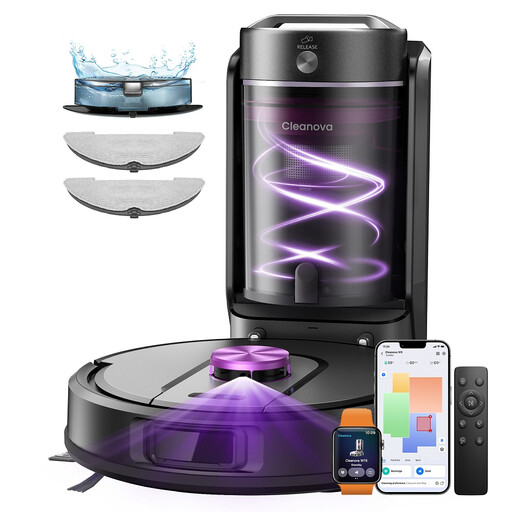
Why it suits this type of home: A handy option for households that value multiple maps, long runtimes and a bagless self-emptying docking station.
According to the description, the station works without a dust bag and offers three suction settings. This makes ongoing consumable costs easier to manage, although the filters and brushes still need maintenance.
10.000 Pa, LiDAR navigation, up to five maps, a stated runtime of 180 minutes, and app, voice and remote control.
We’ve put together a complete, up-to-date list of products that meet these strict selection criteria and current European safety regulations.
Yes, but check whether the mop lifts automatically or whether you need to remove the mopping module. If your home has both carpets and hard floors, carpet detection, adjustable water flow and a dedicated carpet mode are useful features.
It depends on how often you use it, the floor area and whether you have pets. Empty a standard dust container after a cleaning run if it’s full. If you have a self-emptying docking station, check the dust collection area, dirty-water tank and mop regularly. The brushes and filters also need periodic cleaning.
As well as the purchase price, you may need to pay for electricity, filters, mop pads, brushes, dust bags and possibly cleaning products. A bagless station reduces the need for dust bags, while a station with automatic mop cleaning may use more water and require more maintenance. So compare not only the price, but also the consumables you’ll need and the warranty terms.
