
Vandaag of morgen in huis

Kwaliteit gegarandeerd

Welkomstaanbiedingen ontgrendelen: GRATIS bezorging | Tot 80% korting | Gratis 30 dagen JoyPlus-proefperiode
Download de app
A robot vacuum cleaner can automatically clear away everyday crumbs, dust and hair. But the difference between a useful appliance and a disappointing purchase is often greater than the marketing suggests. Not every robot glides over carpets, recognises loose cables or cleans its mop without help.
For households in the Netherlands, three things matter most: the layout of your home, the type of flooring and how much maintenance you’re willing to do yourself. Read on to find out which specifications really count, which pitfalls to avoid and which models suit different needs.
Suction power is often measured in Pa, but that figure alone doesn’t show how well a robot will clean your home. The brush design, air channel, filter and software all play a part too. A powerful robot vacuum cleaner also needs to move hair effectively into the dustbin without the main brush clogging quickly.
So, alongside suction power, check:
A robot vacuum cleaner with a mopping function can be useful for fine dust and light marks, but not every system actively scrubs. A separate damp mop cloth usually needs more hands-on maintenance than rotating mop pads that are washed and dried by a dock.
Check the following:
Claims about stain removal come from the brand’s product information. Treat them as stated features, not a guarantee of the same results on every floor.
A robot vacuum cleaner with an auto-empty dock means less hands-on work, but you’ll often still need to look after the filters, brushes, water tanks and sensors. With a robot vacuum cleaner that has a self-cleaning dock, “self-cleaning” usually doesn’t mean that every part is maintenance-free.
Check in advance:
A robot vacuum cleaner with LiDAR navigation uses lasers to map your home and can usually plan systematic routes. This is particularly useful in homes with several rooms. 3D sensors, cameras or infrared sensors can help it recognise shoes, toys and cables, but always clear loose items away before the first clean.
Also check whether the app offers features such as:
Measure the space under sofas, beds and cupboards. A slim model measuring 7.8 to 8.5 cm can reach places where a taller model might get stuck. Also check the maximum threshold height. A robot that can’t cross a low threshold may need separate cleaning zones.
An automatic mop lift is useful for carpets. The mop lifts when the robot detects carpet. This won’t prevent damp carpets in every situation, so check that your carpet pile falls within the stated specifications.
A robot vacuum cleaner with a mop dock offers more automation than a basic charging dock. Depending on the model, it may wash and dry the mop pads, refill the water and automatically empty the dustbin. However, the features vary considerably between products.
Check the tank capacities, dust bag size and noise level. Product information sometimes gives a usage period such as “up to 45 or 60 days”. This depends on how much dirt there is, how often you clean and the size of your home.
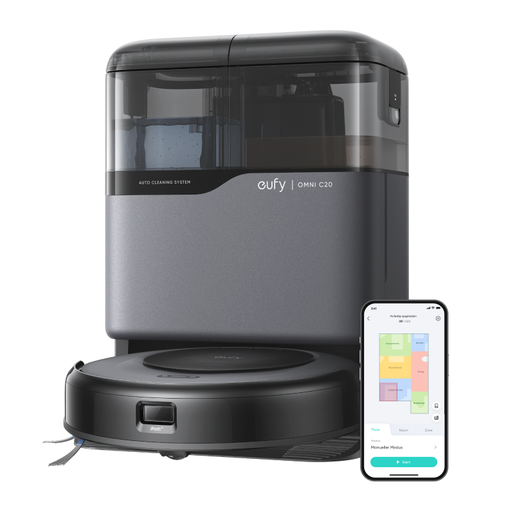
Why it suits this type of user: Combining vacuuming and mopping with an all-in-one dock, this model is a good choice if you want to spend less time on maintenance without going straight for a feature-packed model. According to the product information, the robot is 8.5 cm tall and works with 2.4GHz Wi-Fi.
The product description lists automatic emptying, mop pad washing and drying. That means less day-to-day maintenance than with a basic dock.
Stated suction power of 7,000 Pa, a compact design and mop pads with a stated rotation speed of 180 rpm.
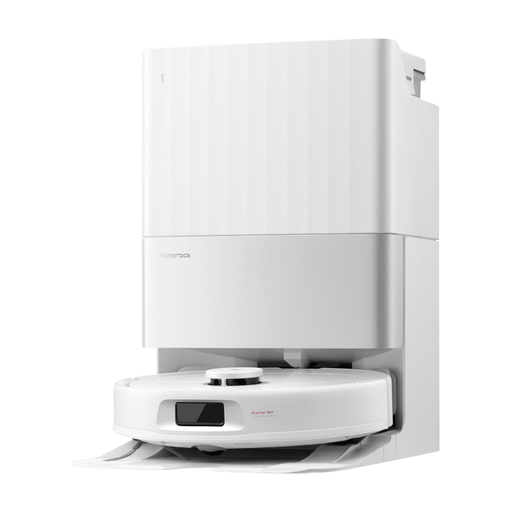
Why it suits this type of user: This model is a good fit for households looking to combine advanced navigation, mopping and a feature-packed dock in one appliance.
The stated PreciSense LiDAR navigation, Reactive Tech obstacle detection and 10 mm mop lift are designed to support route planning and protect carpets.
Stated suction power of 12,000 Pa, multi-floor mapping and a dock that, according to the product information, empties, washes and dries.
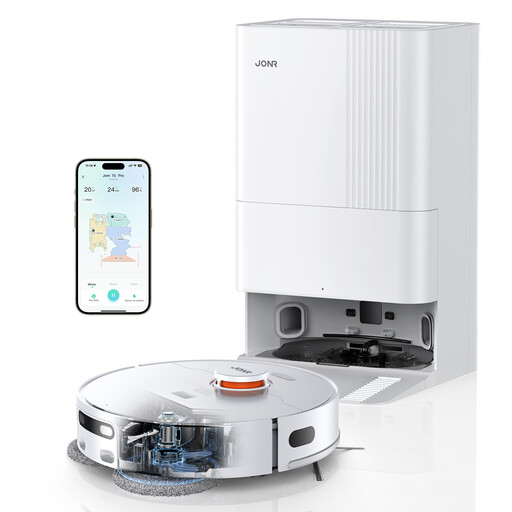
Why it suits this type of user: For larger homes, families or households with lots of everyday dirt, LiDAR navigation, obstacle avoidance and an all-in-one dock are practical features.
The product information lists an anti-tangle side brush and obstacle avoidance. The app also supports no-go zones and adjustable suction settings.
Stated suction power of 8,150 Pa, LiDAR navigation and a dock with hot-air drying.
We’ve put together a complete, up-to-date list of products that meet these strict selection criteria and the applicable European safety regulations.
Yes, many models are designed for both surfaces. Check whether the robot detects carpet, lifts the mop automatically and can handle the thresholds in your home. You may still need to vacuum high-pile carpet by hand.
It depends on the dock. A basic model needs emptying regularly, as well as brush cleaning and mop cloth washing. A robot vacuum cleaner with an auto-empty or mop dock reduces these tasks, but you’ll still need to maintain the filters, sensors, brushes and water tanks as instructed in the manual.
Some models can perform basic functions using the buttons or dock, but managing maps, schedules and no-go zones often requires the app and Wi-Fi. Check the frequency too: some models only support 2.4GHz, while others list support for both 2.4GHz and 5GHz.
