
Vandaag of morgen in huis

Kwaliteit gegarandeerd

Welkomstaanbiedingen ontgrendelen: GRATIS bezorging | Tot 80% korting | Gratis 30 dagen JoyPlus-proefperiode
Download de app
A robot vacuum cleaner can remove dust, crumbs and hair every day without you having to vacuum the house yourself. Models with a mopping function can also damp-clean hard floors. However, not every appliance is suitable for every home. For example, high suction power stated on the packaging says little about navigation, maintenance or performance on carpets.
That is why you should focus mainly on the practical features. Below, you’ll find the common pitfalls that can lead to a disappointing purchase, along with the specifications you should check before buying.
A powerful robot vacuum cleaner is often marketed with a high number of Pa, the unit used for maximum suction pressure. This figure is relevant, but it is not the deciding factor. The brush, airflow, filter, flooring and amount of dirt also affect the results.
A model with 4,000 Pa may be sufficient for a flat with hard floors. In a household with pets, thicker carpets and lots of hair, a higher suction setting combined with an anti-tangle brush may be more practical. According to the manufacturers’ product information, performance can also vary depending on the type and amount of dirt.
A robot vacuum cleaner with a mopping function usually works with a water tank and a cloth or rotating mop. This is useful for daily maintenance on tiles, PVC and other suitable hard floors. However, it does not always replace manual mopping when dealing with dried-on stains or heavy dirt.
Therefore, check:
A station that washes the mop makes maintenance easier, but it does not mean that you will never need to clean the tanks, filters or brushes again.
A robot vacuum cleaner with an automatic emptying station can empty the dust container after a cleaning cycle. This saves you from emptying it by hand, but some stations use disposable dust bags. Check the capacity, expected replacement frequency and availability of original bags.
Bagless stations avoid recurring dust-bag costs, but the collection bin will need to be emptied by hand regularly. Also consider the dimensions of the base station: an automatic system takes up more space than a simple charging base.
A robot vacuum cleaner with LiDAR navigation uses laser scans to map rooms. This helps with systematic routes, multiple rooms and setting no-go zones. For homes with cables, toys and pet accessories, additional obstacle avoidance is useful.
Pay attention to the difference between:
A robot can still get stuck. Therefore, clear away loose cables, clothing and small objects before creating the first map.
Measure the space beneath sofas, beds and cupboards. Slim models measuring approximately 7.8 to 8.5 cm fit in more places, while a robot with a tall LiDAR module may not fit as easily beneath low furniture.
Also check the maximum threshold height. The product specifications of the models in this article range from approximately 1 to 2.2 cm. A robot vacuum cleaner for hard floors and carpets should also be able to recognise carpets and, when mopping, lift the mop high enough. A 10 mm or 15 mm mop lift can help limit moisture on carpets, but always check that this is suitable for the pile height of your rugs.
For a robot vacuum cleaner for pet owners, a good main brush, side brush and anti-tangle function are important. Hair can become wrapped around the brush roller, even when a brand specifies an anti-tangle system.
Check before buying:
A self-cleaning robot vacuum cleaner reduces the daily workload, but regular maintenance is still necessary for consistent performance.
The choices below are linked to verifiable product specifications and different living situations. Descriptions of cleaning results are based on the product information provided by the respective brands.
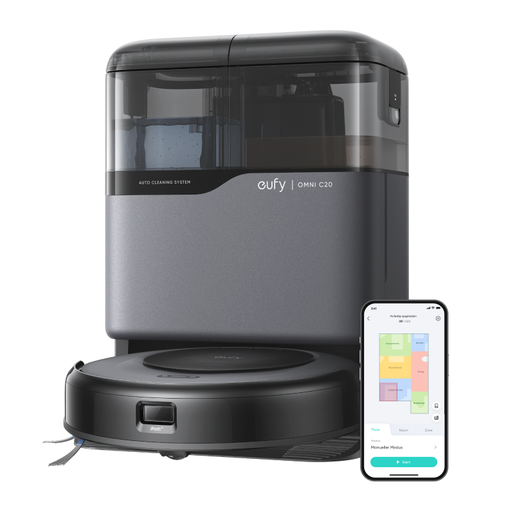
Why it suits this profile: Having dust emptying, mop washing and drying combined in one station makes things straightforward for anyone buying a robot vacuum cleaner for the first time. According to the product specification, the appliance is 8.5 cm high.
The product specification lists 7,000 Pa, a Pro-Detangle Comb and a station with automatic emptying, washing and drying. Please note: this model only supports 2.4GHz Wi-Fi.
7,000 Pa maximum suction power, an 8.5 cm-high body and automatic mop care according to the product description.
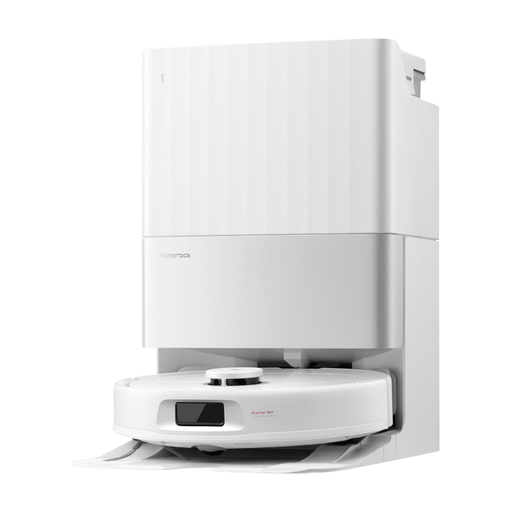
Why it suits this profile: This model is designed for households that value an integrated base station, systematic navigation and extensive app controls.
The listed features go beyond suction power alone: PreciSense LiDAR, Reactive Tech obstacle detection, mop lift and a station that empties the dust container and washes and dries the mops.
12,000 Pa, 180 minutes of operating time, a 10 mm mop lift and a stated two-year warranty.
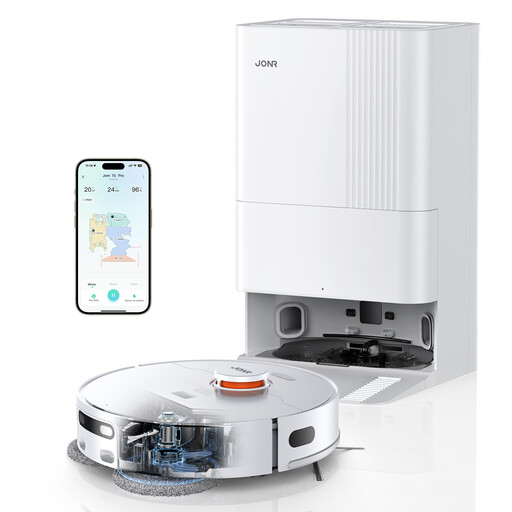
Why it suits this profile: The combination of mopping, LiDAR navigation, obstacle avoidance and an all-in-one dock is well suited to larger or busy households with several cleaning routines.
The stated 8,150 Pa is combined with LiDAR navigation, an anti-tangle side brush and hot-air drying. The dock does need sufficient clear space: 0.5 metres on both sides and 1.5 metres in front.
8,150 Pa, hot-air drying, virtual no-go zones and adjustable suction settings via the app.
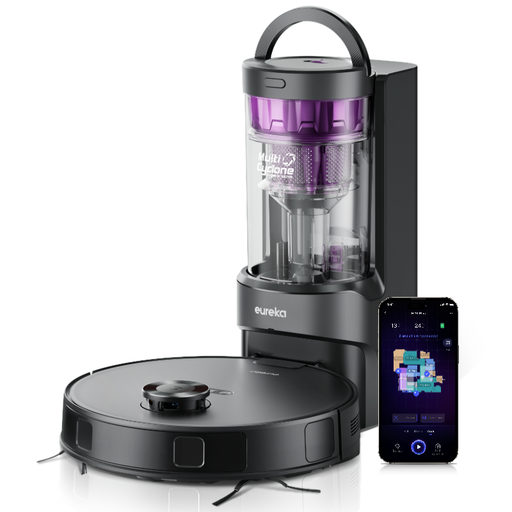
Why it suits this profile: This model is designed for hard floors and carpets, with features suited to households where hair and crumbs are left on the floor every day.
The product description lists a bagless station, 2-litre collection capacity, anti-winding function, LiDAR and a 10 mm mop lift. This takes both maintenance and mixed flooring into account.
8,000 Pa, up to 180 minutes of operating time, a 10 mm mop lift and a 2-litre dust container according to the product information.
We’ve put together a complete, up-to-date list of products that fully meet these strict selection criteria and the applicable European safety regulations.
Use this quick checklist:
Its lifespan depends on usage, maintenance, battery wear and the availability of spare parts. Clean the brushes and sensors regularly, allow filters to dry completely and replace wear parts according to the manual. A higher purchase price does not, by itself, guarantee a longer lifespan.
Energy consumption consists of charging the robot and operating the base station. A station that empties dust, washes mops or uses warm air consumes more than a simple charging base. Therefore, set the robot to work according to a fixed schedule and check the app or manual to see which settings require the most energy.
This is possible with models that have a water tank and mopping module. The robot can then vacuum and damp-clean according to a schedule. You will usually need to refill the water, empty dirty tanks and check the cloths yourself. With a model featuring a more advanced base station, some of these tasks are carried out automatically, but periodic maintenance is still necessary.
