
Vandaag of morgen in huis

Kwaliteit gegarandeerd

Welkomstaanbiedingen ontgrendelen: GRATIS bezorging | Tot 80% korting | Gratis 30 dagen JoyPlus-proefperiode
Download de app
A robot vacuum cleaner can remove dust, crumbs and pet hair every day, without you having to push a vacuum cleaner around your home. However, models vary considerably. A low price may seem tempting, but limited navigation, a small water tank or fiddly maintenance can quickly make a model less practical to use.
So don’t focus only on the biggest number in the product title. Look at the combination of navigation, floor compatibility, maintenance and controls.
A robot vacuum cleaner with high suction power is often advertised with a large pascal figure, such as 4,000, 8,000 or even 20,000 Pa. This figure tells you something about the stated suction pressure, but it’s not the only factor that determines the cleaning results. The brush, airflow, filter and the way the robot moves across the floor all play a part too.
So compare models for the same type of use. Moderate specifications may be enough for hard floors and low-pile carpet. In a home with lots of carpet or pet hair, a rotating brush, anti-tangle design and an easily accessible filter are just as important.
A robot vacuum cleaner with a mopping function usually moves a damp cloth across the floor. This is suitable for everyday cleaning of light marks and fine dust, but it won’t always replace mopping by hand when dealing with dried-on dirt.
Check the water tank capacity, how the robot dispenses water and whether it lifts the mop when it reaches carpet. An automatic mopping robot with a docking station can clean and dry the mop, but it takes up extra space and may involve ongoing costs for dust bags, cleaning solution or filters.
Cables, toys, socks and chair legs can cause a robot vacuum cleaner to get stuck. A smart robot vacuum cleaner with mapping and obstacle detection will usually move around more methodically, but you’ll still need to prepare your home.
Also measure the clearance beneath furniture and the height of thresholds. The stated maximum threshold height varies by product and won’t necessarily apply to every type of flooring.
A robot vacuum cleaner with LiDAR navigation uses lasers to map rooms. This often allows the device to move methodically from room to room, set restricted areas and return to its charging station. Camera- or sensor-based systems can also recognise obstacles, but performance depends on the design and software.
Look out for these points:
A robot vacuum cleaner with long battery life is especially useful for larger homes. Check both the stated running time and the charging time. Actual battery life depends on the suction setting, floor type, navigation and use of the mopping function.
A model that automatically returns to its station and then resumes cleaning may be more practical than one with only a larger battery. Also check that the charging station can be placed on a level surface with enough clearance around it.
A robot vacuum cleaner with an automatic emptying station means you won’t have to empty the dust container by hand as often. Check whether the station uses a dust bag or is bagless, and look at its capacity. With a bagless station, you’ll still need to empty the container regularly.
Also consider:
An app makes scheduling easy, but check in advance which features are available without an account or internet connection.
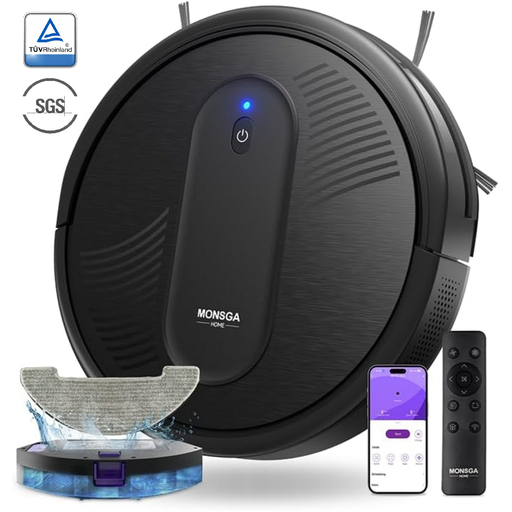
Why it suits this type of user: This model combines vacuuming with control via remote, app and voice commands. Its 3.2-inch height makes it practical for cleaning under low furniture.
The specifications list 4,000 Pa, 140 minutes of running time and support for hard floors, low-pile carpet and pet hair. However, check whether you really need a mopping function in your home.
3.2 inches high; 4,000 Pa stated suction power; app and voice control.
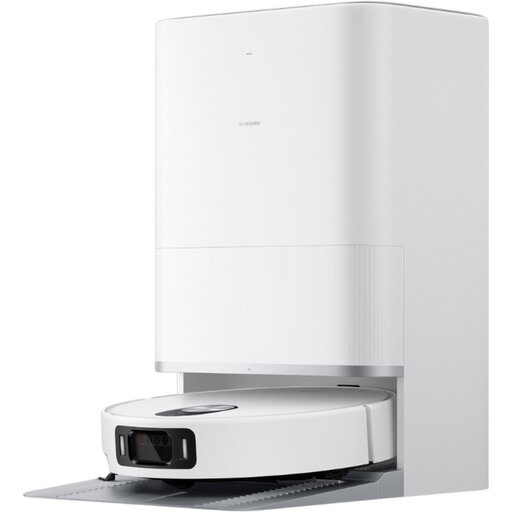
Why it suits this type of user: Ideal for households looking for extensive automation: according to the product information, the station supports vacuuming, mopping, mop cleaning and drying.
The stated LiDAR navigation helps it map rooms methodically. Check there’s enough space around the station, and keep cables and small objects off the floor.
20,000 Pa stated suction power; 5,200 mAh battery; app and control via Google Assistant and Alexa.
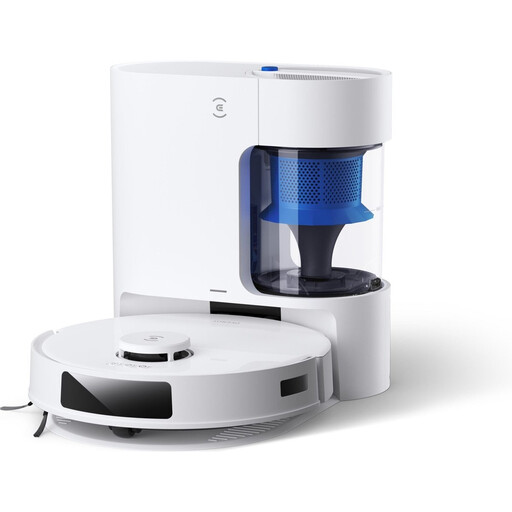
Why it suits this type of user: With a stated running time of 300 minutes, plus vacuuming and mopping, this model is suited to larger homes and households with busy floors that need frequent cleaning.
TrueMapping 2.0 navigation and obstacle detection are clearly specified. The maximum threshold height is 2 cm, so measure any higher transitions in advance.
8,000 Pa stated suction power; 300 minutes of running time; control via ECOVACS HOME and voice assistants.
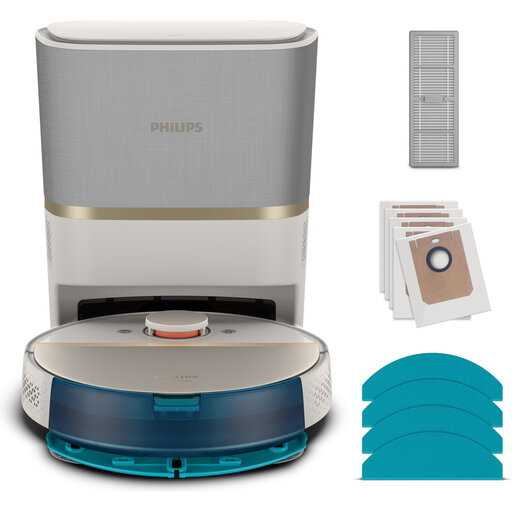
Why it suits this type of user: This model combines a mopping function with an automatic emptying station and a stated running time of 180 minutes.
According to Philips product information, the DualWave station empties the robot automatically. Bear in mind that it uses dust bags and that the app is required for full functionality.
5,000 Pa stated suction power; automatic dust emptying; systematic LiDAR-based navigation.
We’ve put together a complete, up-to-date list of products that meet these strict selection criteria and current European safety regulations.
Before placing your order, run through this quick checklist:
In the European Union, consumers are generally entitled to a minimum two-year legal guarantee when buying a new product. Any additional manufacturer’s guarantee can vary by brand and model.
That depends on the product specifications. Look for support for both floor types, a suitable main brush and carpet detection. If you’re using the mopping function, it’s important that the robot can lift the mop or that you can exclude carpeted areas in the app.
Even a model with an automatic emptying station needs regular checks. Clean the brushes and sensors, empty a bagless container, and wash or replace filters as instructed in the manual. With mopping models, clean the water tank and mop regularly to help prevent odours and build-up.
In addition to the purchase price, you may need to factor in electricity, replacement filters, brushes, mop pads and dust bags. A station with a dust bag may be more convenient, but you’ll need to buy replacement bags regularly. So compare not only the product price but also the maintenance parts you’re likely to need.
