
Vandaag of morgen in huis

Kwaliteit gegarandeerd

Welkomstaanbiedingen ontgrendelen: GRATIS bezorging | Tot 80% korting | Gratis 30 dagen JoyPlus-proefperiode
Download de app
A robot vacuum can clear away dust, crumbs and pet hair every day, without you having to vacuum the house yourself. But there are big differences between models. A low price doesn’t automatically mean low running costs, while powerful suction doesn’t necessarily mean a robot will mop well or recognise obstacles.
Look out for these three common pitfalls:
A powerful robot vacuum is particularly useful in homes with pets, lots of crumbs or carpets. Product listings quote figures such as 4,000, 8,000 or 16,200 Pa. Treat this as one point of comparison, not a guarantee of a particular cleaning result.
For a robot vacuum for carpets and hard floors, these features also matter:
The mop function is designed for light damp cleaning. Don’t use a robot to suck up puddles or flammable liquids, and follow the instructions for any cleaning products.
A robot vacuum with LiDAR navigation uses laser sensors to map rooms. This helps it follow set cleaning routes and create multiple maps and virtual walls. A camera, infrared sensor or additional 3D sensor can help it recognise shoes, toys and cables.
Check the height of your thresholds too. For example, the Rowenta RR8497WH lists a maximum obstacle height of 1.8 cm. In practice, loose rugs, high thresholds and chair legs can still affect the robot’s route. Pick up small objects and cables before creating the first map.
A robot vacuum with an automatic emptying dock cuts down on daily maintenance. Check the type of dust container:
A robot vacuum with a long battery life is especially useful in larger homes or across multiple floors. Check the stated runtime as well as the automatic recharge-and-resume function. Also check the price and availability of filters, brushes, mop pads and dust bags.
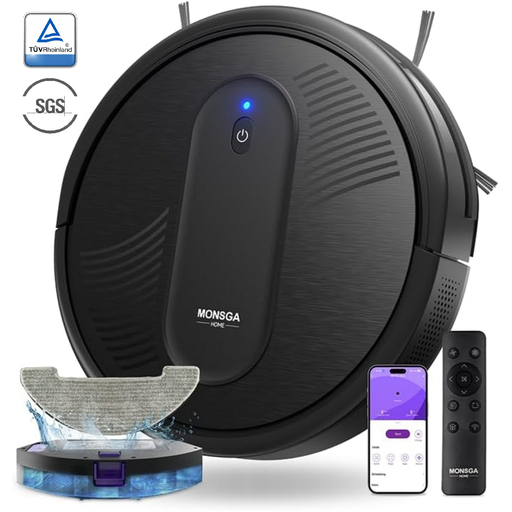
Why it suits this profile: The MR1 is designed for everyday cleaning, with control via remote, app and voice assistant. According to the product listing, it offers 4,000 Pa suction power, stands 3.2 inches tall and has a stated runtime of 140 minutes.
The product information says it’s suitable for hard floors, low-pile carpets and pet hair. Check first that your carpet fits this description; an automatic emptying dock isn’t mentioned.
4,000 Pa according to the product specifications, a stated runtime of 140 minutes and several control options.
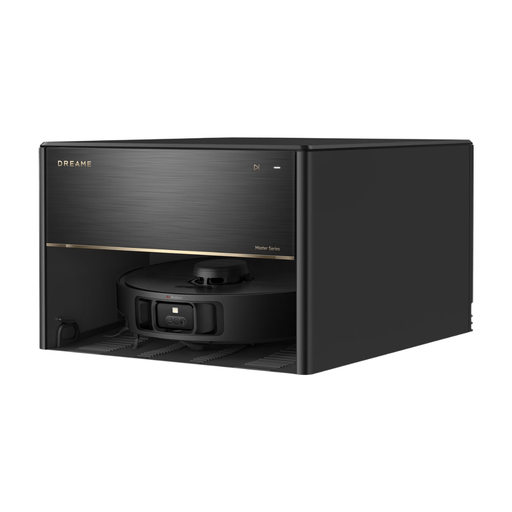
Why it suits this profile: According to the product description, this model combines maximum suction power of 12,000 Pa with an 8-in-1 base station, automatic water supply and drainage, and a laser navigation system.
The specifications cover more than suction power: they also detail water management, mop technology and automatic resuming after charging. Check how much room you’ll need for the dock.
12,000 Pa according to the product listing, a 6,400 mAh battery and a dock with automatic filling and drainage.
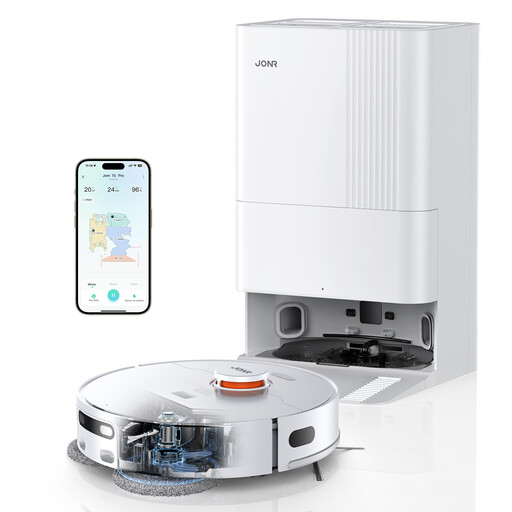
Why it suits this profile: The product information lists 8,150 Pa suction power, LiDAR navigation, obstacle avoidance, an anti-tangle side brush and an all-in-one dock with hot-air drying.
The instructions make clear that the dock doesn’t take care of all maintenance: you’ll need to check the dirty-water tank and dust bag when prompted by the app.
LiDAR mapping, an anti-tangle brush and a dock with hot-air drying, according to the product information provided.
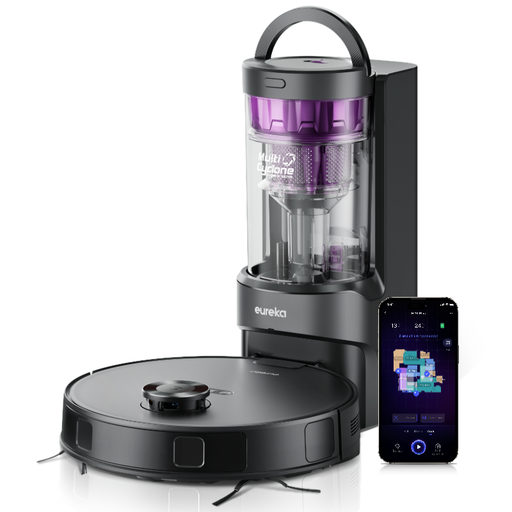
Why it suits this profile: According to the product listing, the E20 Plus offers 8,000 Pa suction power, a 2-litre dust container, a stated runtime of up to 180 minutes and a mop that lifts automatically by 10 mm.
According to the manufacturer, the anti-tangle features and carpet detection are designed to limit hair build-up and prevent wet carpets. Make sure you still check the filters and brushes regularly.
10 mm mop lift according to the product information, 8,000 Pa suction power and a bagless dock with a 2-litre container.
We’ve put together a complete, up-to-date list of products that meet these strict selection criteria and current European safety regulations.
Its lifespan depends on how often you use it, how well you maintain it and whether replacement parts are available. Clean the brushes and sensors regularly, clean the filters according to the instructions and replace worn parts promptly. A model that picks up pet hair every day needs more maintenance than a robot in a small flat without carpets.
It depends on the model. If you have carpets, look for one with an automatic mop lift, carpet detection or a mop attachment that you can remove before cleaning. A robot without these features may drag a damp pad across the carpet.
As well as the purchase price, you may need to pay for electricity, filters, brushes, mop pads and dust bags. A bagless dock can reduce ongoing costs for dust bags, while a more advanced dock offers greater convenience but may need water, cleaning and extra parts. Check the total maintenance costs before making your choice.
