
Vandaag of morgen in huis

Kwaliteit gegarandeerd

Welkomstaanbiedingen ontgrendelen: GRATIS bezorging | Tot 80% korting | Gratis 30 dagen JoyPlus-proefperiode
Download de app
A robot vacuum can make everyday cleaning easier, but not every model is suitable for every home. A household with pets, deep-pile carpet and several floors has different requirements from a flat with mainly hard floors.
Marketing copy often emphasises a high Pascal rating, smart features or an advanced station. However, these terms mean little on their own when it comes to ease of use. Pay particular attention to the combination of navigation, brushes, mop maintenance and the layout of your home.
High suction power sounds appealing, but real-world performance also depends on the main brush, airflow, filter and flooring. A robot vacuum for pet hair, for example, benefits from a brush that is less likely to become clogged with hair. Also check whether the stated power applies to the highest setting according to the product information.
A water tank and mop pad do not automatically make a robot vacuum a low-maintenance mopping robot. Some stations only empty the dust container. Other models wash and dry the mop pads or refill the water automatically. So check which tasks you still need to carry out yourself, such as emptying the dirty-water tank or rinsing a mop pad.
A robot vacuum with LiDAR navigation can generally create systematic maps, but cables, loose clothing, dark surfaces and mirrors can still cause problems. Even a robot vacuum with obstacle avoidance needs a tidy floor. Check the height of your furniture, thresholds and the space available around the charging station in advance.
For hard floors, fine-dust collection and edge cleaning are important. On carpet, what matters most is how the robot handles fibres and hair. A robot vacuum for carpet and hard floors can be useful if your home has different types of flooring. An automatic mop lift also prevents a wet mop from travelling over carpet, provided the model supports this feature.
An anti-tangle brush or anti-tangle side brush is practical for long hair and pet hair. Also check the capacity of the dust container and how the filters are cleaned or replaced.
LiDAR maps a room using lasers and often supports features such as room selection, virtual walls and no-go zones. A robot vacuum with app control can set cleaning schedules and adjust suction levels. Pay attention to the Wi-Fi requirements: some models work exclusively with 2.4GHz Wi-Fi.
A smart robot vacuum is only useful if the app is easy to understand and the map can be corrected easily. Create the first map with interior doors open and small objects removed from the floor.
A robot vacuum with a self-emptying station reduces the need to empty the dustbin every day. Check the capacity of the dust bag or dust container, and find out whether there are ongoing costs for bags, filters, brushes and mop pads.
With a robot vacuum featuring automatic mop maintenance, check whether the station only dries the pads, or also washes them, refills the water and cleans the base plate. According to the product information from various brands, water tanks, sensors and mop pads still require regular maintenance.
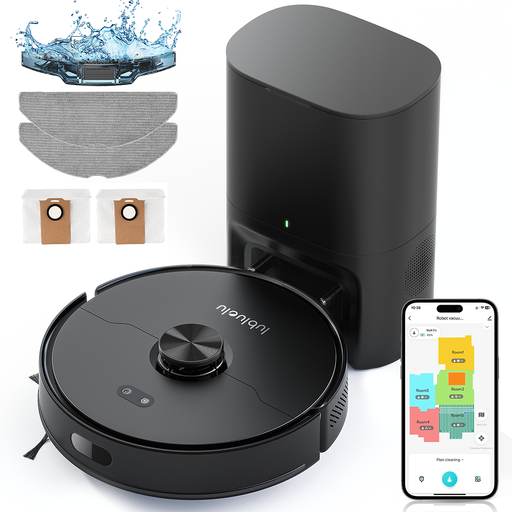
Why it suits this profile: This model combines vacuuming and mopping with laser navigation, app control and storage for up to five maps. It is a good fit for households looking for straightforward core features.
The product information specifies 4000Pa, laser navigation and adjustable suction levels. This allows you to compare specifications instead of relying solely on marketing terms.
4000Pa suction power, 55dB according to the product information, app control and five stored maps.

Why it suits this profile: According to the product information, households wanting to spend less time on manual mop maintenance get a station with automatic emptying, 75°C mop washing, hot-air drying and a water tank.
The mopping functions are clearly specified: washing, drying, self-cleaning and automatic emptying. However, check the dimensions of the OMNI station before ordering.
20,000Pa according to the product information, dual rotating mops, 75°C mop washing and TrueMapping 2.0.
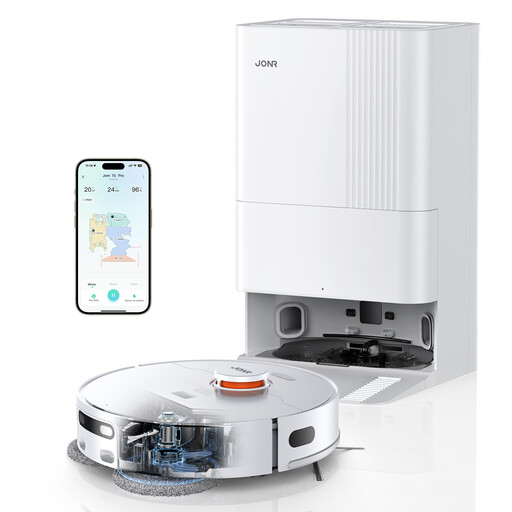
Why it suits this profile: According to the product information, the combination of 8150Pa, LiDAR navigation, obstacle avoidance and a station with hot-air drying is suitable for larger or busy households.
The anti-tangle side brush is designed to tackle hair build-up. The instructions also state that the dust bag and dirty-water tank still need to be checked regularly.
8150Pa according to the product information, LiDAR, no-go zones via the app and hot-air drying.
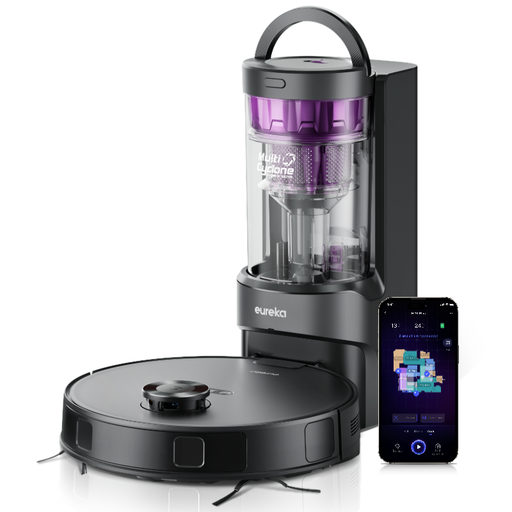
Why it suits this profile: According to the product information, this model is designed for carpet, hard floors and pet hair. The 10mm mop lift can help prevent the carpet from being cleaned with a wet mop.
The product information mentions anti-tangle technology, 3D obstacle avoidance and a bagless station. However, check whether the capacity is suitable for the amount of hair in your household.
8000Pa, 180 minutes of operating time, a 2-litre dust container and a 10mm automatic mop lift according to the product information.
We have put together a complete, up-to-date list of products that fully meet these strict selection criteria and the applicable European safety regulations.
For a reliable start:
This varies by model. Check the specified maximum threshold height and whether the robot detects carpet. A mop lift is relevant when you combine hard floors and carpet.
Its lifespan depends on usage, maintenance, the battery and the availability of replacement parts. Clean the brushes and sensors regularly, fit the filters correctly and prevent the robot from vacuuming up liquids or sharp objects.
In addition to the purchase price, filters, brushes, mop pads and dust bags can create ongoing costs. A bagless self-emptying station does not use dust bags, while a station with a bag generally needs emptying less often. So check the maintenance parts before ordering.
