
Vandaag of morgen in huis

Kwaliteit gegarandeerd

Welkomstaanbiedingen ontgrendelen: GRATIS bezorging | Tot 80% korting | Gratis 30 dagen JoyPlus-proefperiode
Download de app
A robot vacuum cleaner can clear away dust, crumbs and pet hair every day, so you don’t have to keep going round the house with a stick vacuum. However, not every model is right for every home. For example, a high suction-power figure on the box tells you little about the robot’s navigation, maintenance or performance on carpets.
As Joybuy Product Recommendation Officer, I focus on verifiable specifications and the conditions in which you’ll use the appliance. This helps you avoid paying for features you don’t need or missing out on an important one.
A robot vacuum cleaner with 12,000 Pa may seem automatically more powerful than a model with 4,000 Pa. However, the Pa rating doesn’t tell the whole story. The brush, airflow, suction setting, flooring and way the robot picks up dirt all play a part. For pet hair, an anti-tangle brush is often more useful than a higher figure alone.
Also check whether the stated suction power is a maximum figure. According to manufacturers’ own product information, this is usually measured under specific conditions, and actual performance can vary from one floor to another.
On many models, the mopping function consists of a water tank and a damp cloth. This is suitable for light dust and everyday marks, but may not tackle dried-on dirt. Check the tank capacity, water-flow control and whether the mop can be lifted over carpets.
A robot vacuum cleaner with a mopping function but no mop lift could leave a carpet damp. An automatic mop lift of, for example, 10 mm is therefore useful if you have a mix of hard floors and carpet.
A robot vacuum cleaner with a self-emptying base means you’ll need to empty the dust container by hand less often, but it doesn’t eliminate maintenance. Brushes, filters, sensors, mop pads and water tanks still need to be checked. A dock with a dust bag also requires replacement bags. A bagless dock avoids this recurring purchase, but its dust container still needs to be emptied regularly.
For a robot vacuum cleaner for carpets and hard floors, automatic carpet detection is useful. The robot can then adjust its suction setting or lift the mop. Also look at:
For households with cats or dogs, a robot vacuum cleaner for pet owners with a removable brush is often practical. According to brands’ own research or product information, certain anti-tangle systems can reduce hair build-up. Treat such percentages as manufacturer claims, not as guaranteed results in every home.
A robot vacuum cleaner with LiDAR navigation uses lasers to map rooms and plan cleaning routes. This can be useful in homes with several rooms, furniture and narrow passageways. Check whether the model supports multiple maps if you want to clean different floors.
Cameras, infrared sensors and 3D obstacle detection can help the robot avoid cables, shoes and toys, but always clear loose items away before its first cleaning run. Dark surfaces, mirrors at floor level and very small objects can still pose a challenge for some robots.
Long battery life is especially useful in larger homes. Don’t just check the stated run time; also see whether the robot can automatically resume cleaning after recharging. A robot vacuum cleaner with app control usually offers features such as:
Check in advance whether the robot only supports 2.4GHz Wi-Fi. This can matter when setting it up on older or split home networks.
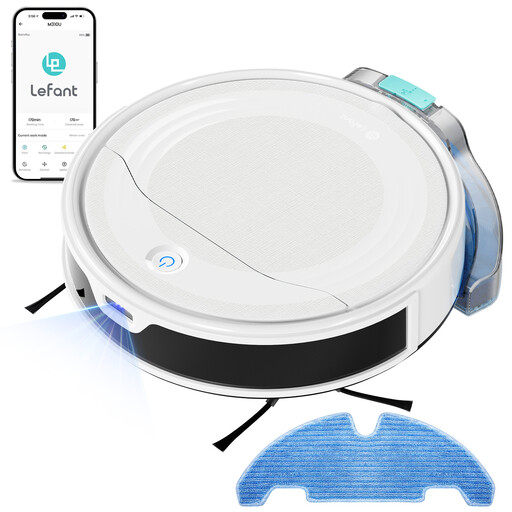
Why it suits this type of user: This model combines vacuuming and mopping with app and Alexa control. Its specifications list 6,000 Pa, a 500 ml dust container and a run time of up to 170 minutes.
The specifications clearly state the water and dust capacities. Bear in mind that the water tank should be emptied after mopping to prevent leaks or marks.
6,000 Pa maximum suction power, HEPA filter, 170-minute battery life and control via an app or voice assistant.
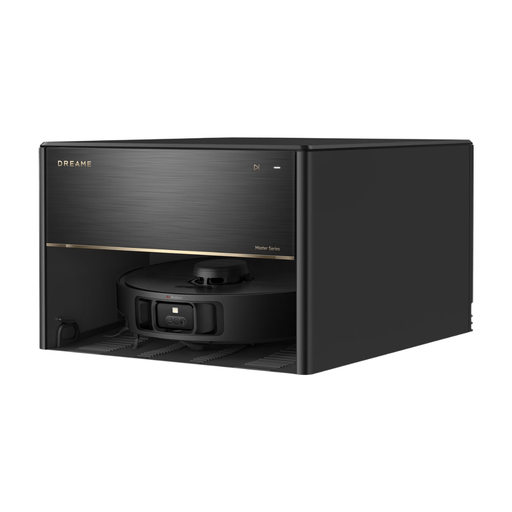
Why it suits this type of user: According to the product information, the compact dock features automatic water supply and drainage. This makes it a good fit for households looking to minimise hands-on maintenance.
This model focuses not just on suction power, but also on water management, mop maintenance and automatic dust emptying. Do check that you have enough space around the dock.
12,000 Pa maximum suction power, 6,400 mAh battery, LiDAR navigation and a dock with several maintenance functions.
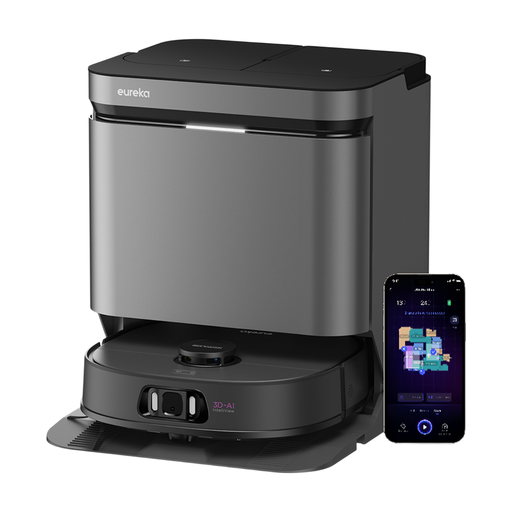
Why it suits this type of user: According to the product description, this model is designed for households with lots of dirt and pet hair. It features an anti-wrap system, a mop lift and an advanced maintenance dock.
It’s about more than just 16,200 Pa: the listed features also include a hair-resistant brush, liquid detection, brush and mop lifts, and automatic mop cleaning.
16,200 Pa maximum suction power, LDS navigation, a self-cleaning dock and FlexiRazor anti-wrap technology, which the manufacturer says it has designed to prevent tangles.
We’ve put together a complete, up-to-date list of products that meet these strict selection criteria and comply with current European safety regulations.
Place the charging dock on a level surface with clear space in front of it. Fully charge the robot, install the app that goes with it and let the appliance map your home before its first clean. Pick up cables, toys and small objects from the floor. Then set up rooms, cleaning schedules and no-go zones.
Its lifespan depends on how often you use it, how well you maintain it and whether spare parts are available. Clean the sensors and brushes regularly, replace filters as instructed in the manual and check that the battery still has enough capacity. A robot vacuum cleaner that picks up pet hair every day will generally need more brush maintenance than one used in a small flat without pets.
As well as electricity, you may need to budget for filters, brushes, mop pads, dust bags and cleaning products. A bagless dock can save you the cost of dust bags, while a dock with a dust bag is often cleaner and easier to empty. So compare not just the purchase price, but also the consumables and how often the appliance needs maintenance.
