
Vandaag of morgen in huis

Kwaliteit gegarandeerd

Welkomstaanbiedingen ontgrendelen: GRATIS bezorging | Tot 80% korting | Gratis 30 dagen JoyPlus-proefperiode
Download de app
A robot lawn mower without a boundary wire sounds simple: set it up, configure it and let it mow automatically. In practice, your garden layout, satellite reception and the maximum gradient all affect how well a wireless robot lawn mower performs. Comparing models is especially important for large lawns, gardens with several zones, and gardens with trees or narrow passages.
A robot lawn mower with RTK navigation often uses a reference station, antenna mast or gateway. This needs to be positioned in an open spot with a clear view of the sky. Placing it under a canopy, close to a high wall or among metal objects can weaken the signal.
So, check in advance:
According to the brand’s product information, an AI robot lawn mower with obstacle recognition can identify objects such as pets, toys and garden tools. That doesn’t mean you can leave everything on the lawn. Small, low or partly hidden objects can still be difficult to detect.
Remove loose cables, toys and garden tools before starting the automatic lawn mower. Ponds, deep edges, steps and flower beds should also be set as virtual no-go zones or physically fenced off.
A figure such as 800 m², 1,000 m² or 2,500 m² indicates a recommended working area. Actual capacity depends on the mowing schedule, slopes, ground conditions, grass growth and the time the robot needs to recharge.
When choosing a robot lawn mower for large gardens, it’s worth looking beyond the maximum area. Check the battery life, charging time, cutting width and whether you can manage several zones separately.
RTK navigation uses correction signals to pinpoint the mower’s position more accurately than standard GPS. Combined with cameras or 3D ToF sensors, it can follow virtual boundaries and avoid obstacles. According to Greenworks’ product information, the C8 uses RTKVISION 2.0 with RTK GPS, two cameras and 3D ToF sensors.
However, installation still matters. Check the manual to see what might affect the signal, such as dense trees, walls and narrow passages. A robot lawn mower with obstacle recognition is especially useful if your garden isn’t entirely rectangular, but you should check the map carefully before activating the automatic schedule.
Note the difference between a percentage and degrees. A 45% gradient is roughly equivalent to 24 degrees; it’s not the same as 45 degrees. Also check whether the stated gradient capability applies across the entire working area or only in ideal conditions.
A robot lawn mower for slopes needs good grip. Wet clay soil, loose gravel and damp grass can reduce traction in practice. Also bear in mind any sharp transitions between the lawn and patio.
A wider cutting deck can cover a larger area more quickly, but it needs enough space to turn. For a neat finish, a regular schedule and correctly set cutting height are particularly important.
Before you buy, check:
A robot lawn mower with an app is useful if you have several lawn areas, but check whether it needs Wi-Fi, Bluetooth, a mobile connection or a separate gateway.
The selection below is based on product specifications that can be checked against the supplied product information. Brand claims about accuracy, recognition or efficiency have not been independently verified.
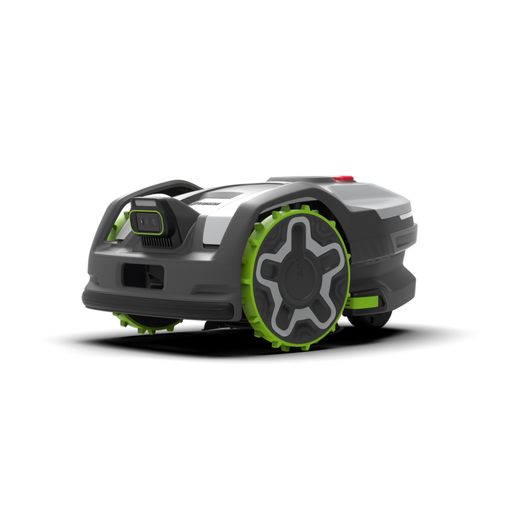
Why it suits this type of user: The C8 is designed for lawns of up to 800 m² and combines automatic mapping with virtual boundaries. This makes it straightforward to set up if you’re using a wireless robot lawn mower for the first time.
The specifications list an RTK mast, virtual boundaries and multi-zone management. Position the mast according to the instructions, then check the map in the app before activating the schedule.
Stated mowing area of up to 800 m², a cutting width of 200 mm, a cutting height of 20–90 mm and a noise level of 58 dB(A).
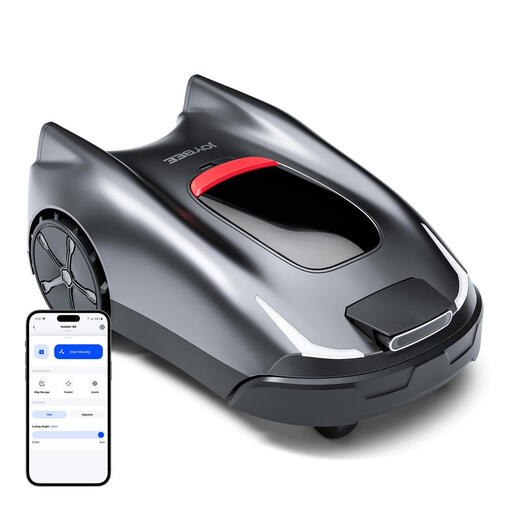
Why it suits this type of user: According to the product information, this model is designed for larger, complex gardens with multiple zones, slopes and obstacles.
The K2 uses RTK, VSLAM, a camera and 3D ToF sensors. According to the product information, the app supports up to 50 no-go zones, but a good map and a clear signal location are still essential.
Stated gradient capability of up to 45%, a cutting width of 22 cm, a cutting height of 25–60 mm and app-based zone management.
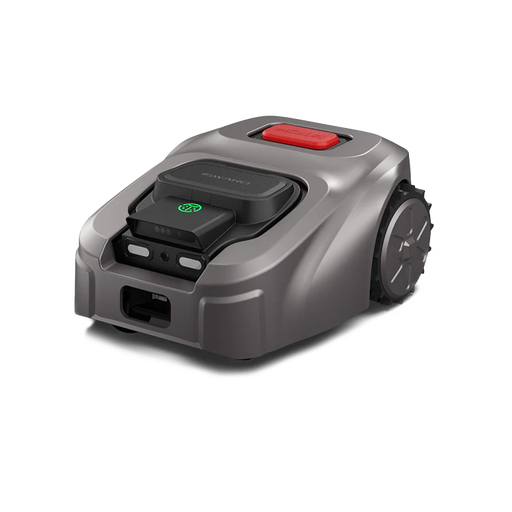
Why it suits this type of user: Its stated capacity of up to 2,500 m² and support for up to 20 maps make it suitable for large gardens or those divided into separate areas.
The product specifications list sensors for obstacles, rain, lifting and overturning. These support automatic operation, but don’t replace supervision around children, pets or complex edges.
Stated mowing area of up to 2,500 m², a run time of around 160 minutes per charge and a maximum gradient of 57% within the working area.
We’ve put together a complete, up-to-date list of products that meet these strict selection criteria and the applicable European safety regulations.
It depends on the navigation system and where the RTK station is positioned. Dense trees can interfere with satellite signals. Choose a model with additional vision or camera sensors, and check during setup that it maps the area under trees correctly.
Electricity costs depend on charging power, how often it needs to charge and the mowing time you set. Also consider ongoing costs for blades, replacement batteries if needed, and maintenance. An automatic mower that often has to return to recharge may use more electricity than one that divides the lawn into zones more efficiently.
Its lifespan depends on use, storage and maintenance. Clean the underside regularly, keep grass away from the charging contacts and store the robot in a dry place during cold winter weather. Always follow the manufacturer’s maintenance and safety instructions.
