
Cooking for one
You usually want to cook one bulb or a small portion, so you have little use for lots of unused oven space.


If you only roast one bulb now and then, you may not need an extra compact oven. First try a suitable oven you already own, or use an air fryer with an appropriately sized ovenproof dish. A compact fan oven makes most sense if you also regularly cook other oven dishes. Compare the usable interior space and features; wattage alone won’t tell you how much electricity one cooking session uses.
You usually want to cook one bulb or a small portion, so you have little use for lots of unused oven space.
You want to use the appliance for rolls, vegetables or other dishes on a baking tray too.
You often cook small portions and weigh up the size and energy use per session against the extra features.
Choose this if: you regularly cook other dishes in an ovenproof dish or on a baking tray, as well as roasting garlic.
The trade-off: extra oven space and features can be useful, but they may not be necessary for one bulb.
Choose this if: you mainly cook small portions and can use a suitably sized ovenproof dish.
The trade-off: a dish that’s too large can restrict air circulation; follow your model’s instructions.
Choose this if: you already have a suitable oven and only roast garlic occasionally.
The trade-off: heating a large oven for one bulb may not be efficient if you do it often.
| What to consider | What to look for | Who should consider this? |
|---|---|---|
| Size | Measure the space on your worktop and check that your ovenproof dish or baking tray will fit inside. | If I usually cook one bulb, I don’t want to choose an oven with space I’ll barely use. The right size is the main purchasing concern for around 36% of consumers. |
| Versatility | Check the fan function, the heat settings you need and the accessories included. | If I also want to bake rolls or vegetables, I’ll need to check that the features and accessories are suitable. Versatility is the main reason to buy for around 29% of consumers. |
| Energy use | Where figures are available, compare energy use for the same cooking task; don’t work it out from the wattage alone. | If I often cook small portions, I want to factor in the energy used per session. This is the main purchasing concern for around 21% of consumers. |
| Use and cleaning | Check how accessories are removed and which parts are dishwasher-safe. | I want to be able to position a dish safely and clean it easily after use. Ease of use and cleaning are top priorities for around 14% of consumers. |
The stated power rating and the electricity used for one cooking session aren’t the same thing. Preheating time matters too.
Where possible, compare energy use for the same cooking task and factor in preheating time.
Foil or a dish that’s too large can restrict airflow and affect how the food cooks.
Follow the instructions for your exact appliance and leave space around a suitably sized ovenproof dish.
Extra oven space offers little practical benefit when you’re only cooking one bulb; it’s most useful if you’ll use it for other dishes too.
Think about how often you bake other things and whether an appliance you already own is suitable.
The OV207B is a 20-litre freestanding fan oven supplied with a baking tray and wire rack. It’s for anyone who wants to cook other oven dishes as well as garlic.
According to Tristar, the OV-3652 is a 20-litre fan oven with separately adjustable top and bottom heating.
The Princess 112741 is a 20-litre fan oven supplied with a baking tray, wire rack and crumb tray.
The TO 2056 is a fan-assisted mini oven with a capacity of around 30 litres, for anyone looking for more oven space and extra uses as well as roasting garlic.
The Philips NA221/00 is a basket-style air fryer, making it an alternative to a freestanding oven rather than the same type of appliance.
These product picks include freestanding fan ovens with different capacities, as well as basket-style air fryers for small portions. If you’re considering an oven, think about whether you’ll use the extra space for other dishes.
 No image available
A freestanding fan oven for small portions and other baking.
Capacity: 22 litres. Suitable for baking tins up to 25 cm. The five heating settings include fan-assisted modes; the temperature can be set up to 230 °C and the timer runs for up to 60 minutes.
 No image available
A fan oven with extra space for anyone who wants to cook other oven dishes as well as garlic.
Capacity: 45 litres; power: 2000 W. The six functions include top and bottom heating and grilling. It’s a roomy choice if you mainly want to use the appliance for one bulb.
 No image available
A mini oven for small quantities and small baking tins.
Capacity: 10 litres. Suitable for baking trays up to 20 cm; the temperature can be set from 80 to 230 °C. The timer runs for up to 30 minutes, so you’ll need to reset it for a longer cooking session.
 No image available
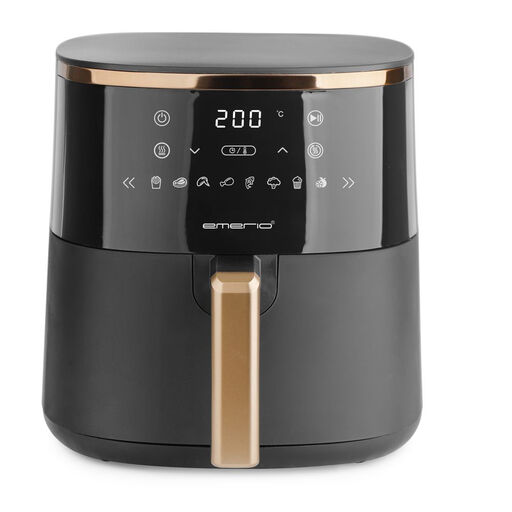
A basket-style air fryer for small portions; this isn’t a freestanding fan oven.
Capacity: 4,2 litres. Temperature setting: 60–200 °C. The product information states that the basket is dishwasher-safe. Check that an ovenproof dish will fit and leave room for air circulation.
 No image available
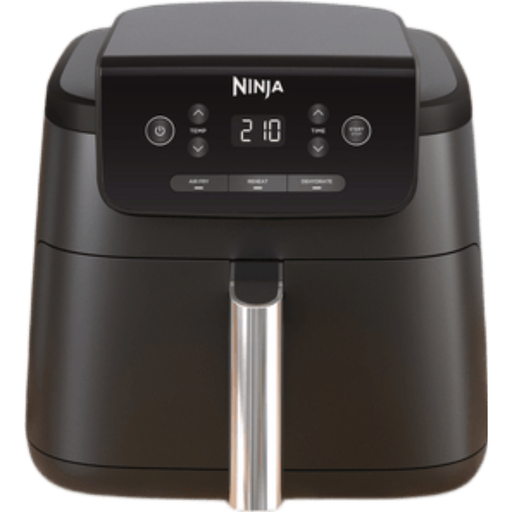
A basket-style air fryer described as suitable for one or two people; it isn’t a freestanding fan oven.
Capacity: 4,7 litres. The temperature can be set from 30 to 210 °C. Listed features include baking and a crisper rack.
Yes. A recipe from Hussemusse describes roasting a whole bulb in a preheated fan oven at 165 °C for 45 minutes. Use this as a recipe example, not a guaranteed setting for every appliance. Check that the cloves are soft and take care around hot steam.
It can, as long as the dish is ovenproof and fits in the basket. Philips lists glass, ceramic, metal and silicone dishes among the options for its air fryers. Leave space around the dish for air circulation, and check your model’s instructions and dimensions.
Don’t store homemade garlic oil at room temperature for long periods: the Voedingscentrum warns of the risk of botulism in homemade garlic in oil. The US Centers for Disease Control and Prevention advises keeping homemade garlic oil refrigerated and throwing it away after four days. This guidance applies to garlic oil, not to every cooked bulb of garlic.
For a standard online purchase, you generally have a statutory cooling-off period of up to 14 days after delivery; check whether an exception applies. You’re also entitled to a statutory guarantee if the product doesn’t perform as you could reasonably expect under normal use. ACM ConsuWijzer distinguishes between the statutory guarantee and any additional manufacturer’s guarantee.
The applicable rules depend, among other things, on the appliance and its electrical specifications. The NVWA describes the Low Voltage Directive for electrical equipment within the relevant voltage range. According to the European Union, a CE marking is the manufacturer’s declaration; there is no central EU body that issues a certificate for it. Check the information for the specific model.